Sumba Journal
A Private Sumba Holiday Package Price Guide for Discerning Travelers
11 min read
- Accommodation Tier: From world-renowned resorts like NIHI Sumba to design-forward boutique hotels.
- Logistics & Transport: The mandatory use of private 4×4 vehicles and expert local guides.
- Itinerary Customization: Access to exclusive experiences, private surf sessions, and authentic cultural immersions.
An Editor’s Dispatch from the Edge of the World
The air in Sumba carries a specific gravity. It’s a heady mix of dry savannah, sandalwood smoke from a distant village, and the faint, briny tang of the Indian Ocean crashing against shores unseen. A group of children, their laughter echoing across a field of ancient megalithic tombs, pause their game to watch our Land Cruiser pass. This is not the Bali of your Instagram feed. This is something older, wilder, and infinitely more profound. For years, my work at Departures has taken me to the world’s most coveted locales, but Sumba remains a place apart. It demands more from the traveler—more patience, more curiosity, and, frankly, a more significant financial commitment. The question I receive most often from discerning clients is not “Should I go?” but “What is the real private Sumba holiday package price, and what am I truly paying for?” The answer, I’ve found, lies not in a simple line item, but in the unparalleled access to one of the last truly animist cultures on Earth, delivered with a level of comfort that belies the island’s raw frontier spirit.
Deconstructing the Sumba Price Tag: Beyond the Villa
Understanding the cost of a Sumba journey requires a fundamental shift in perspective. Unlike established luxury destinations, the premium here is placed on seamless logistics in a challenging environment. Sumba is vast—at 11,052 square kilometers, it is more than twice the size of Bali but with a fraction of its infrastructure. As a contact at a bespoke travel firm recently told me over coffee in Singapore, “Sumba isn’t a plug-and-play destination. The investment is in the unseen: the expert guide who can negotiate access to a sacred Pasola ceremony, the skilled driver who can navigate 150 kilometers of unpredictable roads after a rainstorm, the charter flight logistics.” The primary arteries of the island are few, and venturing off them requires robust 4×4 vehicles, which can cost upwards of $200 per day with a driver. There are only two main airports, Tambolaka (TMC) in the west and Waingapu (WGP) in the east, served by a limited number of daily flights from Bali on carriers like Wings Air. This inherent scarcity creates a high barrier to entry, naturally preserving the island’s character. A well-crafted sumba island tour package absorbs these complexities. The price reflects not just a room and a meal, but the meticulous, behind-the-scenes orchestration required to make a journey through this untamed landscape feel both adventurous and effortless. It’s the cost of solitude, of authenticity, and of having the wild heart of Indonesia revealed to you, and you alone.
The Accommodation Spectrum: From World-Class Resorts to Eco-Chic Retreats
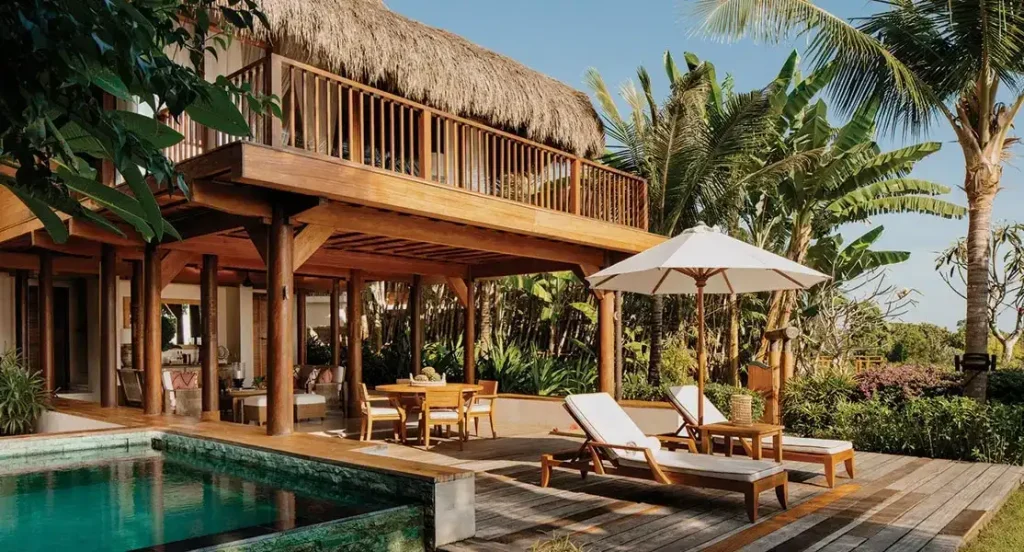
The single largest determinant of your private Sumba holiday package price is your choice of accommodation. The island offers a surprisingly diverse, albeit compact, portfolio of high-end properties. At the apex is the legendary NIHI Sumba, a property that has graced the cover of nearly every prestigious travel publication for good reason. With rates for its 28 villas starting around $1,500 per night and soaring to over $20,000 for the multi-villa owner’s estate, NIHI is a destination in itself. The price is largely all-inclusive, covering exceptional meals, most non-alcoholic beverages, and a host of activities, from visiting the Sumba Foundation to group yoga sessions. Occupying a new, vital space in the market are boutique luxury players like Cap Karoso and The Sanubari. Located in the island’s west, these properties cater to a design-conscious traveler, blending modernist architecture with local Sumbanese motifs. A stay at one of Cap Karoso’s 47 studios or 20 villas, for instance, might range from $600 to $1,500 per night. These hotels offer a more à la carte experience, providing a superb home base from which to explore with your private guide. For a more grounded, though no less comfortable, experience, eco-lodges such as Ngalung Kalla and Maringi Eco Resort offer rates in the $250 to $500 range. Maringi is particularly noteworthy as it also serves as the campus for the Sumba Hospitality Foundation, providing a direct connection to the community. A comprehensive Sumba Island Tour Pricing & Cost Guide can help you weigh the unique value proposition of each property against your budget.
Curating Your Itinerary: The Cost of Exclusive Access
A Sumba itinerary is not a checklist; it’s a curated narrative woven by a skilled guide. The cost of this expertise is a critical component of any package. A driver might get you from point A to B, but a true cultural interpreter—an experience that can add $100-$150 per day to your cost—is the key that unlocks the island’s soul. They facilitate respectful entry into traditional villages like Ratenggaro, with its soaring 30-meter-high thatched roofs and ancient megalithic tombs, ensuring your presence is a welcome one. They can explain the intricate symbolism of an ikat textile, a process that can take a weaver up to a year to complete for a single piece. Signature experiences carry their own premium. Access to “Occy’s Left,” NIHI Sumba’s famed private wave, is famously restricted to just 10 surfers per day, a privilege reflected in the resort’s rates. The most dramatic example is the Pasola festival. This ancient and often violent ritual, involving spear-wielding horsemen, takes place only once a year in February or March. As noted by Indonesia’s official tourism portal, indonesia.travel, its timing is determined by Marapu priests and the arrival of sea worms. A private package built around this singular event can command a 30-50% price increase, as demand for guides, vehicles, and rooms skyrockets. This is the price of witnessing a tradition that has remained unchanged for centuries, a living piece of history.
Seasonality and Logistics: Timing Your Investment
The rhythm of the seasons has a direct and significant impact on the private Sumba holiday package price. The island experiences two distinct periods: the dry season (roughly May to October) and the wet season (November to April). The absolute peak season falls within the dry months of July and August, coinciding with European and North American summer holidays. During this time, the landscape is a golden-brown savannah, the skies are clear, and prices are at their zenith, often 25-40% higher than in the shoulder season. Availability at top resorts is scarce, and I advise clients to book a minimum of 9 to 12 months in advance for these dates. My personal preference, and a recommendation I often give, is the shoulder season: April-June and September-October. The first post-rain months of spring offer a spectacularly lush, green Sumba, while the later months retain the dry weather with fewer crowds. You can expect more competitive pricing and greater flexibility. The wet season offers the lowest rates but comes with a caveat. While the island is intensely vibrant, heavy rains can occasionally render rural roads impassable, potentially disrupting even the best-laid plans. The major exception, of course, is the Pasola festival period. Regardless of the season, all journeys begin with a flight from Bali’s Ngurah Rai International Airport (DPS), typically costing between $150 and $300 for a round-trip ticket to Tambolaka (TMC). Understanding these nuances is key to maximizing the value of your Sumba investment, a topic explored in depth in The Definitive Sumba Island Tour Guide.
A Tale of Two Budgets: Illustrative Sumba Packages
To make the financial commitment more tangible, let’s outline two potential scenarios for a 7-day, 6-night Sumba immersion. These are estimates, as every bespoke journey is unique, but they provide a clear framework for what your investment can secure.
The Ultra-Luxe Escape: ~$18,000 – $25,000 per person
This represents the pinnacle of Sumbanese luxury. The package would center around a stay at NIHI Sumba, perhaps in one of their exquisite one-bedroom Marangga Villas. The price would be virtually all-inclusive, covering round-trip airport transfers, all meals crafted by world-class chefs, and a wide array of non-alcoholic beverages. Your days would be filled with included signature experiences: private equestrian sessions on the beach, treks to hidden waterfalls, and visits to Sumba Foundation projects. Critically, this level of investment would likely secure a coveted slot for surfing the private “Occy’s Left” wave and include several “Spa Safari” treatments. The private Sumba holiday package price at this tier is for the traveler who desires complete immersion with zero logistical friction.
The Boutique Explorer: ~$6,500 – $9,000 per person
This approach offers a rich, authentic experience with a focus on design and exploration. The itinerary might involve a split stay: three nights at a chic western resort like Cap Karoso, followed by three nights in the east at a property like Morinda Villa to appreciate the island’s diverse landscapes. This package would include a dedicated private 4×4 vehicle with an expert driver and cultural guide for the entire duration. While only daily breakfast would typically be included, this allows for the flexibility to discover local warungs and dine at different hotel restaurants. The itinerary would be packed with curated excursions, from visiting the royal village of Praiijing to a private boat trip for snorkeling in crystal-clear waters. This is the ideal package for the active, curious traveler who values both high comfort and deep cultural engagement. For those ready to take the next step, you can Book Sumba Island Tour arrangements that align with this philosophy.
Quick FAQ: Your Sumba Investment Questions Answered
Is Sumba significantly more expensive than a luxury trip to Bali?
Yes, and for good reason. A top-tier luxury week in Bali might cost between $5,000 and $7,000 per person. A comparable experience in Sumba starts around $7,000 and goes up steeply from there. The price difference is rooted in exclusivity and logistics. Sumba lacks Bali’s mass-tourism infrastructure, meaning every high-end experience relies on a more complex and expensive supply chain, from importing fine wines to maintaining a fleet of reliable 4x4s.
What is typically not included in a package price?
Even in many “all-inclusive” packages, you should budget separately for premium alcoholic beverages, international flights to and from Indonesia, comprehensive travel insurance (which I consider non-negotiable), and gratuities for your guide and driver. A customary tip is around 10-15% of the service cost, a gesture that is deeply appreciated.
Can I save money by traveling Sumba independently?
While technically possible, I strongly advise against it for the first-time, discerning traveler. Navigating the island without a pre-arranged plan is exceptionally difficult. There is no reliable public transport, English is not widely spoken outside the resorts, and gaining access to the most compelling cultural sites requires the established relationships that only a reputable operator possesses. The perceived savings are often lost to logistical headaches and missed opportunities.
How does Sumba’s unique culture factor into the value?
The island is a rare bastion of the ancient Marapu religion, a form of ancestor worship that predates the arrival of major world religions in the archipelago. As detailed on its Wikipedia page, this belief system permeates every aspect of life, from the architecture of their homes to their complex funeral rites. A well-designed sumba island tour package facilitates respectful and insightful interactions with this culture, an experience that is truly priceless.
Sumba is not a transaction; it is a transformation. It is an investment in an experience that is becoming increasingly rare in our hyper-connected world: the chance to witness a place of profound, raw beauty and ancient traditions, largely untouched by the homogenizing forces of modern tourism. It challenges, inspires, and ultimately rewards the traveler who is willing to look beyond the price tag and see the immense value within. To begin crafting an itinerary that reflects your personal travel philosophy, explore the bespoke options available through a premier sumba island tour operator. They possess the deep, on-the-ground knowledge necessary to translate a budget into a truly unforgettable journey.
Keep reading
More from the journal.