Sumba Journal
East vs West: Which Sumba Travel Experience is Best for You?
10 min read
- Choose West Sumba for: Premier beachfront resorts, legendary surfing, and streamlined logistics from Tambolaka airport.
- Choose East Sumba for: Encounters with authentic tribal culture, monumental megalithic tombs, and the island’s finest ikat weaving.
- For a complete journey: A 7-10 day itinerary combining both regions offers the most comprehensive and rewarding exploration of the island.
The thud of hooves on dry earth echoes across a vast savannah. In a nearby village, the sharp, earthy scent of indigo dye hangs in the air, a precursor to the scent of sandalwood smoke that will follow with the evening rituals. This is not a place you simply visit; it’s a temporal shift you experience. Sumba, an island nearly twice the size of Bali with less than 10% of its population, confronts the discerning traveler with a fundamental choice. It’s a decision that will define your entire journey: do you venture into the wild, resort-lined West, or the ancestral, untamed East? As an editor who has spent considerable time navigating this dichotomy, I can tell you the answer is less about geography and more about your own spirit of discovery.
The Great Divide: A Tale of Two Sumbas
To understand Sumba is to understand its division. The island is administratively and culturally split into two primary regions: West Sumba (Sumba Barat) and East Sumba (Sumba Timur), each with its own capital and airport—Tambolaka (TMC) in the west and Waingapu (WGP) in the east. This isn’t merely a line on a map; it’s a palpable shift in landscape, culture, and energy. The 140-kilometer road that connects them is a journey through changing worlds, taking a solid three to four hours by private car. Spanning over 11,000 square kilometers, the island’s scale is deceptive; its rugged terrain and limited infrastructure make thoughtful planning essential. West Sumba, particularly the southwestern coast, has become the face of Sumbanese luxury tourism. It’s where you’ll find the internationally acclaimed resorts and the dramatic coastal scenery that fills travel magazines. The West is polished, more accessible, and geared toward a seamless, high-end vacation. East Sumba, by contrast, remains the island’s cultural and historical anchor. It is a land of sprawling, arid savannahs, horse-herding tribes, and villages dominated by colossal megalithic tombs that speak to a vibrant, living animist faith. The experience here is less about poolside service and more about profound cultural immersion.
West Sumba: The Epicenter of Barefoot Luxury and Surf
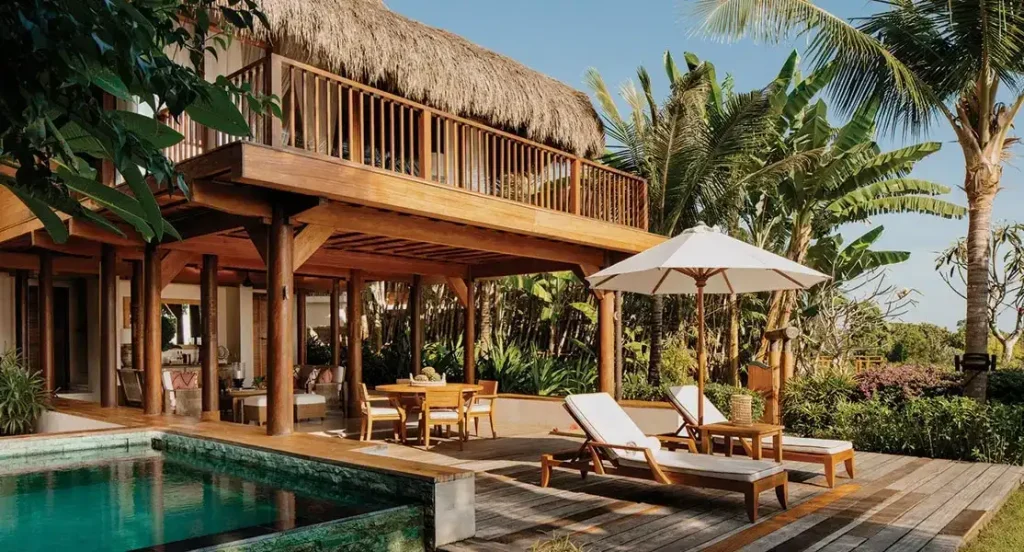
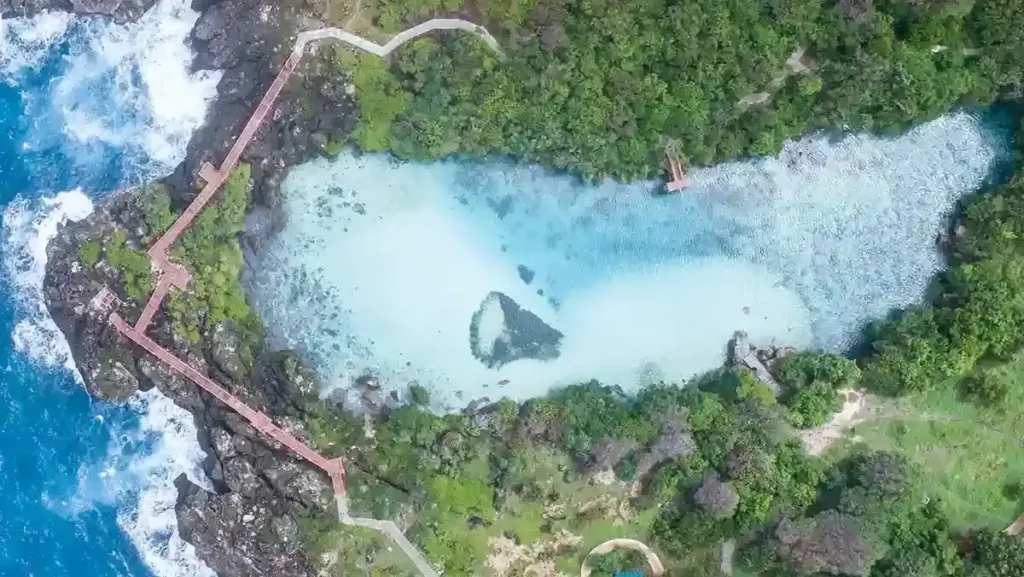
For many, the Sumba travel experience begins and ends in the Southwest. This is the domain of NIHI Sumba, the resort that single-handedly placed the island on the global luxury map, and its equally sophisticated counterparts like Lelewatu. The appeal is immediate and powerful. The coastline here is a dramatic composition of limestone cliffs, pristine white-sand beaches, and turquoise water. Iconic sites like the otherworldly Weekuri Lagoon, a crystal-clear saltwater lake separated from the ocean by a rocky ridge, and Bawana Beach, famed for its monumental rock archway, are all located within this region. The logistics are streamlined; from Tambolaka airport, most premier properties are less than a 90-minute transfer away. But the West’s true siren call for many is the surf. “Occy’s Left,” the legendary wave that breaks directly in front of NIHI, is one of the most exclusive and perfect waves on the planet. Access is famously restricted to a mere 10 surfers per day, ensuring an uncrowded and almost spiritual experience on the water. This exclusivity is a hallmark of the Western Sumba approach. Even the island’s most famous cultural event, the Pasola festival—a ritualized battle between mounted horsemen—is most accessible in the western districts of Kodi and Lamboya each February and March. For a detailed breakdown of what this level of access and luxury entails, our Sumba Island Tour Pricing & Cost Guide provides essential financial context.
East Sumba: A Journey into the Land of Kings and Megaliths
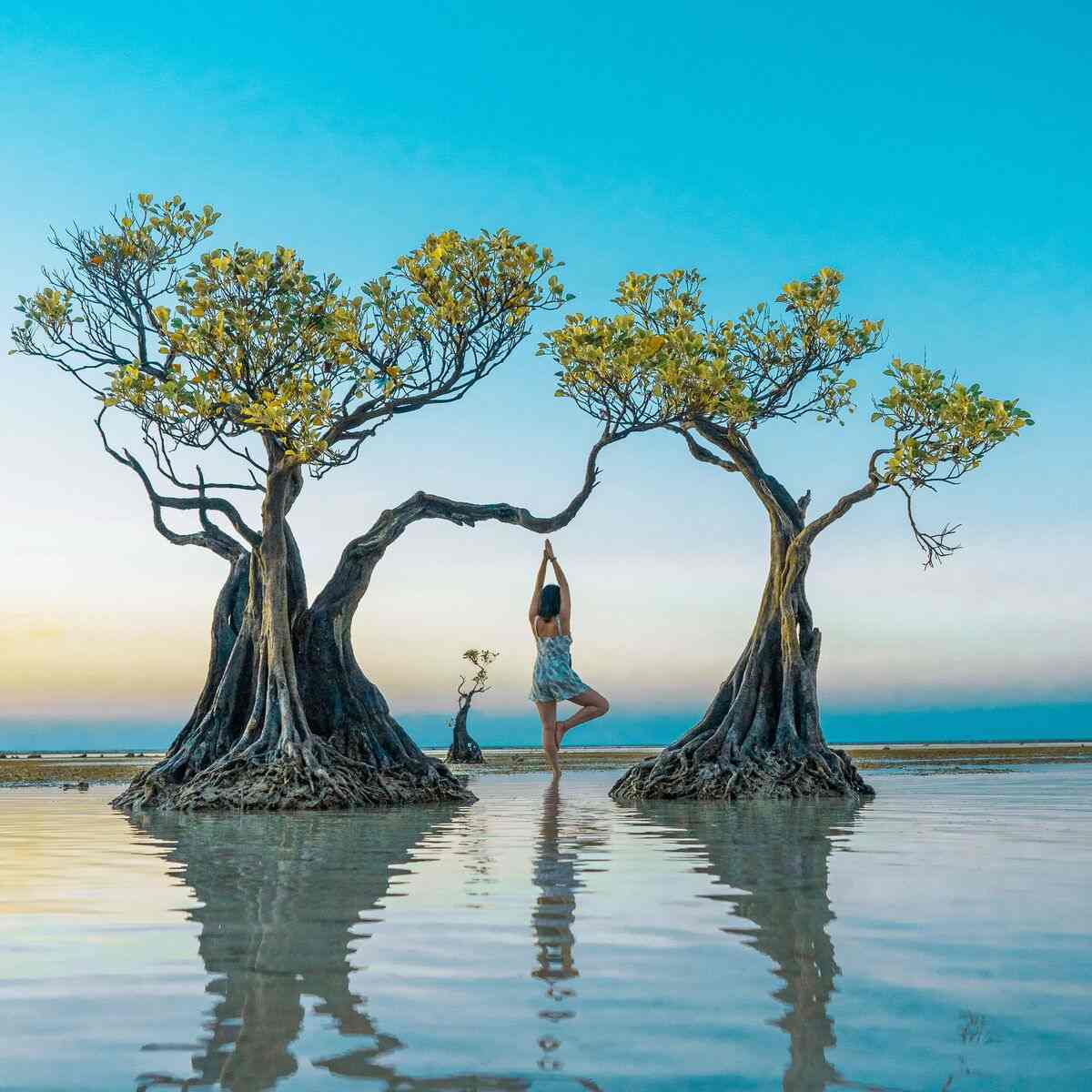
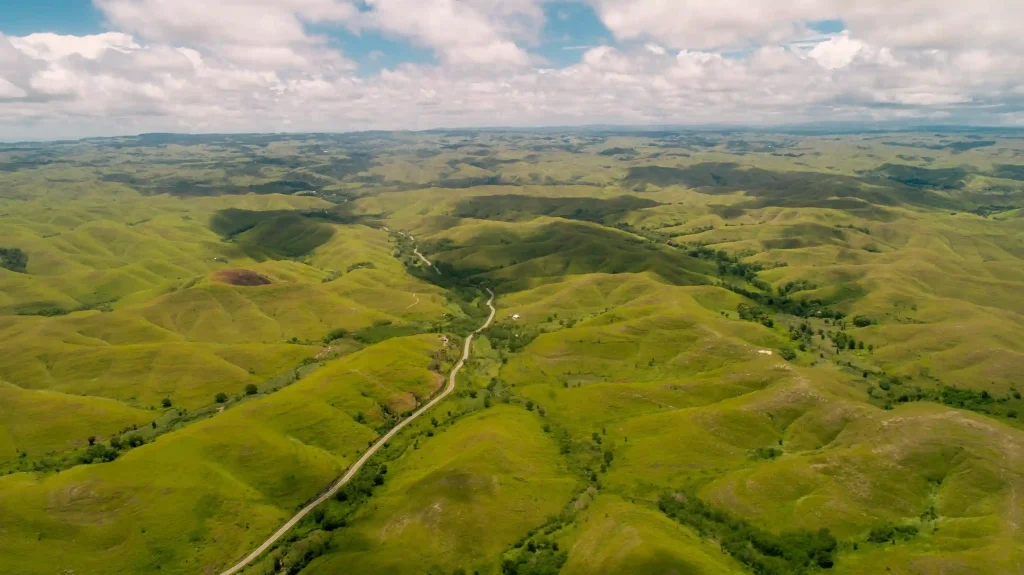
Crossing into East Sumba feels like entering a different country. The lush, undulating hills of the west give way to vast, golden savannahs dotted with lontar palms and wandering herds of wild horses. This is the Sumba of anthropological journals, a place where time is measured not in hours but in generations. The journey begins in Waingapu, the island’s largest town and commercial hub. Just on its outskirts, the village of Prailiu offers an immediate immersion into the world of ikat, Sumba’s celebrated textile art. Here, you can witness the entire, painstaking process, from spinning the cotton and concocting natural dyes to the intricate tying and weaving that can take a woman more than a year to complete for a single masterpiece. Deeper in the countryside, villages like Rende and Pau are living museums, structured around clan houses with soaring, 20-meter-high thatched roofs and courtyards dominated by enormous stone-slab tombs. These are not ancient relics; they are active ceremonial sites, with some tombs weighing over 70 tons, dragged into place by hundreds of men in a final, monumental tribute to a noble elder. This is the heart of the Marapu belief system, a complex ancestral religion you can learn more about through Wikipedia’s detailed entry on Marapu animism. The natural beauty of the East is more subtle but no less potent, from the hidden, emerald pools of Waimarang waterfall to the surreal sunset spectacle at Walakiri Beach, where the mangrove trees contort into “dancing” silhouettes against the tide-rippled sand.
The Cultural Fabric: Marapu Animism and Ikat Weaving
While present across the island, the threads of Sumba’s cultural fabric are most vibrant and accessible in the East. Life is governed by Marapu, the ancient animist faith that dictates social structure, architecture, and a complex calendar of ritual obligations. My guide, a man named Cornelius from a noble family in the East, explained that the high-peaked roof of a traditional Sumbanese house (uma mbatangu) is not just a design choice; it is a sacred space for ancestral spirits to reside, a tangible link between the worlds of the living and the dead. This belief system underpins the island’s most famous artistic export: ikat. These textiles are far more than decorative cloths; they are currency, heirlooms, and narrative maps of a clan’s history and mythology. The motifs—horses for heroism, crocodiles for royalty, skull trees for warrior prowess—all carry deep significance. The creation process is a protected art form, with skills passed down through maternal lines. The dyes are derived from local resources: deep indigo blues from the strobilanthes cusia plant and rich rust-reds from the root of the morinda citrifolia, or mengkudu tree. A single, high-quality piece can represent a significant portion of a family’s wealth, often used as a key component in bride-price negotiations or as a shroud to accompany a noble into the afterlife. To truly appreciate the island, one must understand how these traditions shape every interaction and landscape. Our Definitive Sumba Island Tour Guide offers a more profound context for these living customs.
Crafting the Perfect Itinerary: Can You Have It All?
The question every prospective traveler asks is whether they must choose. The answer, thankfully, is no—provided you have the time. For a short, restorative escape of 3 to 5 days, focusing on a single region is practical. West Sumba is the obvious choice for a resort-centric, low-stress holiday where the primary goals are relaxation, fine dining, and coastal exploration. However, to claim you have truly had a comprehensive sumba travel experience, a cross-island journey of at least 7 to 10 days is non-negotiable. The ideal itinerary involves flying into one airport and out of the other. I recommend starting in the West, flying into Tambolaka (TMC). This allows you to decompress and acclimate in the comfort of a luxury resort for a few days before embarking on the more rugged, overland expedition to the East. This west-to-east trajectory builds a narrative, moving from modern luxury to ancient tradition. A critical component for such a trip is a reliable private vehicle and an expert local guide. The roads are improving, but navigating to remote villages and understanding the complex etiquette required to enter them is impossible without local expertise. A high-quality private car with a driver and guide can cost upwards of 1,500,000 IDR ($100 USD) per day, a necessary investment for a seamless journey. A complete sumba island tour will, of course, arrange all these critical logistics on your behalf, ensuring your focus remains on the experience itself.
Quick FAQ for the Sumba Traveler
When is the best time to visit Sumba?
The dry season, from April to October, is ideal, offering sunny skies and average temperatures around 27-30°C, perfect for beach and overland exploration. The wet season (November to March) brings lusher, green landscapes and is when the Pasola festival takes place, offering a unique, if logistically challenging, cultural spectacle.
Is Sumba safe for travelers?
Yes, Sumba is considered very safe. The local communities are generally welcoming, especially when approached with respect. The primary challenges are logistical rather than security-based. As noted by Indonesia’s official tourism portal, the island is a celebrated destination for adventurous and discerning travelers. Using a reputable tour operator mitigates nearly all potential issues.
What is the currency and are there ATMs?
The currency is the Indonesian Rupiah (IDR). While ATMs are present in the main towns of Waingapu and Tambolaka, they are unreliable and nonexistent in rural areas. It is imperative to arrive with a substantial amount of cash, particularly for purchasing exquisite ikat textiles directly from weavers in their villages, where credit cards are not an option.
How do I book a comprehensive trip?
Coordinating a multi-day, cross-island itinerary with reliable transport, knowledgeable guides, and appropriate accommodations can be a formidable task for an independent traveler. The most efficient and rewarding approach is to Book a Sumba Island Tour with a specialist operator. They possess the local relationships and logistical prowess to craft a seamless and deeply authentic journey.
Ultimately, the choice between East and West Sumba is a false one. The West offers a sublime immersion into nature’s coastal power and refined luxury, while the East provides a rare window into one of the world’s last remaining megalithic cultures. The ultimate Sumba travel experience is not a choice between them, but a curated passage through both. It is a journey that contrasts the thrill of surfing a perfect wave with the quiet reverence of standing before a king’s tomb. The ancient spirits of Marapu and the world’s most exclusive waves await. Let us at Sumba Island Tour craft your bespoke journey into the heart of Indonesia’s forgotten island. Explore our itineraries and begin your adventure by visiting our sumba island tour homepage.
Keep reading
More from the journal.