Sumba Journal
The Ultimate West Sumba Island Travel Plan and Route Guide
10 min read
- It prioritizes key cultural sites like the megalithic tombs of Ratenggaro and traditional villages such as Prai Ijing.
- The route includes natural wonders like the tidal Weekuri Lagoon and the surf-swept Pero Beach.
- Logistics rely on a pre-arranged 4×4 vehicle and local guide, providing access to exclusive eco-luxury resorts.
The air in West Sumba carries the scent of dry savanna grass and the faint, mineral tang of the Indian Ocean. From a shaded clearing, you hear the rhythmic clack-clack-clack of a wooden ikat loom, a sound that has echoed through these valleys for centuries. This is not an island you simply visit; it is an island you experience, a living anthropological museum where time is measured not in hours, but in the lineage of ancestors. A proper sumba island travel plan is less a map of roads and more a key to unlocking a culture carved into 20-ton megalithic tombs and woven into the world’s most intricate textiles. Here, every path leads to a story, and we are here to guide you through it.
Charting Your Course: Arrival and Logistics in West Sumba
Your journey into the ancient heart of Sumba begins at Tambolaka Airport (TMC), a modest but efficient entry point on the island’s northwestern coast. Daily flights, typically lasting around 90 minutes, connect Tambolaka with Bali’s Ngurah Rai International Airport (DPS) via carriers like Wings Air and Citilink. From the moment you step onto the tarmac, the island’s raw, untamed character is palpable. Unlike Bali, there are no taxi queues or ride-sharing apps here. Success is predicated on preparation. My long-time contact on the ground, a masterful guide named Yulius, always advises, “The roads in Sumba have their own language. You need a trusted translator, both for the people and the terrain.”
Engaging a reputable operator with a seasoned driver and a capable 4×4 vehicle is non-negotiable for the discerning traveler. While the main artery road connecting Tambolaka to the regional capital of Waikabubak is paved, the true essence of West Sumba lies down the rugged, unsealed tracks leading to traditional villages and secluded shores. These journeys are part of the experience; a 50-kilometer drive can easily take two hours, a testament to the challenging topography. For a broader understanding of how this region fits into the island’s complete picture, our The Definitive Sumba Island Tour Guide provides essential context. Digital connectivity is a luxury, not a given. Expect intermittent service, primarily from Telkomsel, which fades almost completely once you leave the main towns. This forced digital detox is, for many, an integral part of Sumba’s allure.
The Cultural Heartland: Waikabubak and the Megalithic Villages
Waikabubak, the administrative capital of West Sumba, serves as a crucial launchpad for exploring the region’s cultural core. While the town itself is a functional hub, its true value lies in its proximity to the kampung adat—the traditional villages that are the custodians of Marapu, the island’s ancestral animist religion. A short drive from the town center, villages like Prai Ijing and Tarung appear as if suspended in time. Here, the iconic Sumbanese houses stand in proud rows, their soaring, thatched roofs—some reaching heights of over 25 meters—symbolizing the sacred connection between the human realm, the spirit world, and the heavens. These are not mere dwellings; they are cosmic diagrams built from bamboo and grass.
The most arresting features of these villages are the massive megalithic tombs that occupy the central courtyards. These stone slabs, some weighing over 30 tons, are not ancient relics but active ceremonial sites, a testament to the enduring power of Marapu beliefs. As noted by scholars of the religion, elaborate funeral ceremonies, which can involve the sacrifice of dozens of water buffalo (each valued at thousands of dollars), are the most significant life-cycle events, reinforcing social status and appeasing the ancestors. The cultural significance of these sites is so profound that many are being considered for the UNESCO World Heritage Tentative List. When visiting, cultural etiquette is paramount. A small gift of sirih pinang (betel nut) and a modest donation (around 100,000 IDR) presented to the village headman is a sign of respect that opens doors to genuine interaction.
The Southwestern Coast: A Route of Lagoons and Legends
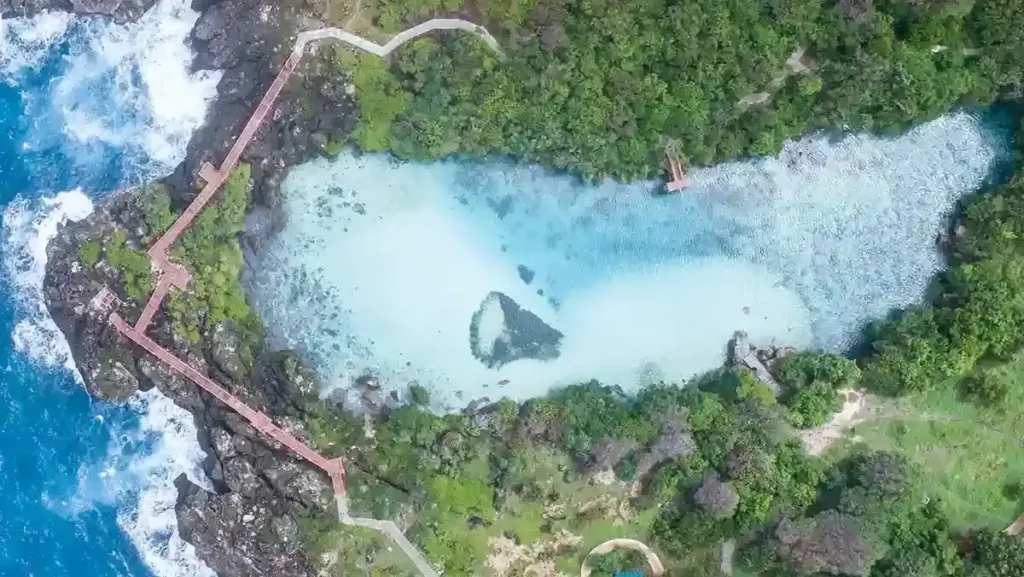
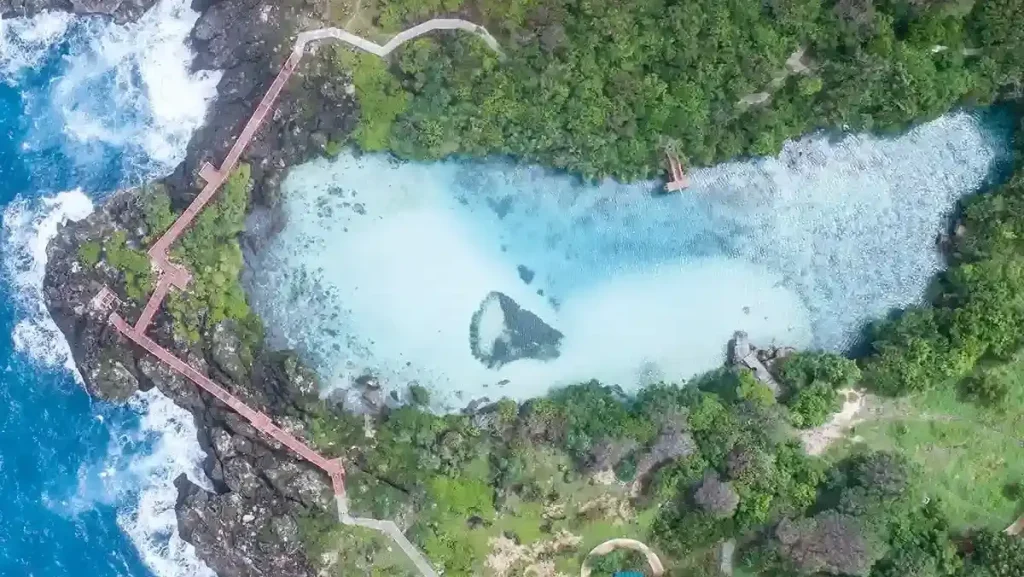
A meticulously planned day trip along the southwestern coast reveals West Sumba’s dramatic natural beauty, a perfect counterpoint to the inland cultural immersion. This route, best navigated over a full day, showcases a series of extraordinary landscapes. The first key stop is the Weekuri Lagoon, a mesmerizing tidal pool of saltwater separated from the roaring ocean by a thin karstic ridge. Its water, a spectrum of impossible blues and greens, shifts in depth from 30 centimeters to over 5 meters with the tide, creating a natural, crystal-clear swimming basin. The raw power of the Indian Ocean is just meters away, crashing against the rocks in a display of nature’s force.
From Weekuri, a short 15-minute drive leads to Ratenggaro, arguably the most visually iconic village in all of Sumba. Here, a cluster of traditional high-roofed homes stands on a low bluff directly overlooking a white-sand beach, flanked by hundreds of ancient megalithic tombs. The name “Ratenggaro” translates to “Graves of the Garo People,” a direct reference to a tribal war from centuries past. It is here that the island’s spiritual and natural worlds collide most powerfully. You can watch local boys expertly ride their unique Sumbanese sandlewood ponies bareback along the surf. This is also a prime location to observe and purchase authentic ikat textiles. A single, complex piece, colored with natural dyes, can take a weaver more than a year to complete, a process that significantly influences its value, as detailed in our Sumba Island Tour Pricing & Cost Guide.
The Art of Slow Travel: Where to Stay in West Sumba
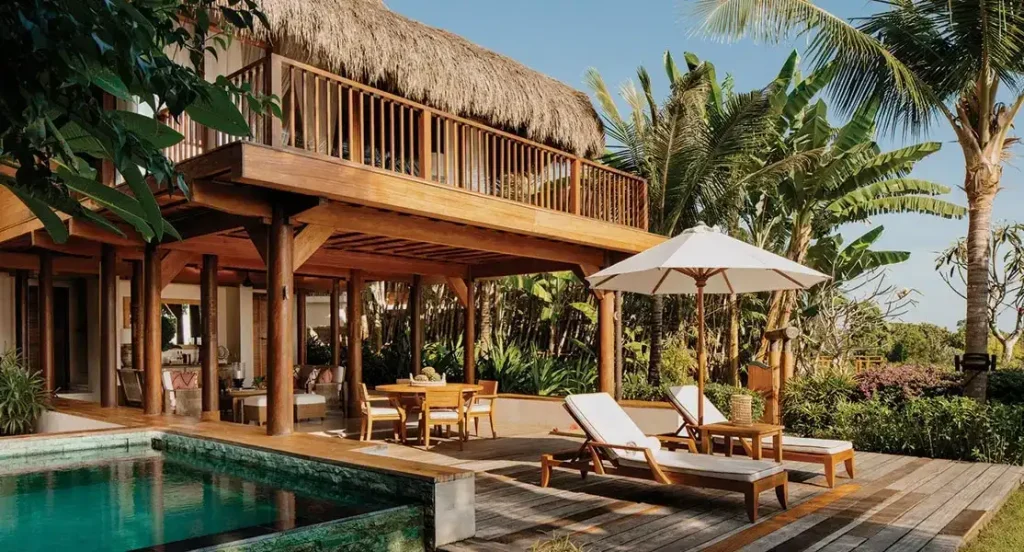
The accommodation in West Sumba has evolved to meet the highest standards of global luxury travel, offering sanctuaries of comfort that complement the island’s rugged soul. The undisputed pioneer in this space is NIHI Sumba. More than a resort, it is a destination in itself, having been voted the world’s best hotel on multiple occasions. Its reputation is built on pillars of “rugged luxury,” from its world-famous private surf break, “Occy’s Left,” to its deep community involvement through the Sumba Foundation. A stay here, with villas starting well over $1,800 per night during peak season, is an all-encompassing experience that includes everything from spa safaris to equestrian activities on the beach. Booking a villa at NIHI should be done 9 to 12 months in advance, particularly for the prime dry season months of June through September.
Providing a compelling alternative, Lelewatu Resort Sumba offers a different, yet equally luxurious, perspective. Perched atop a cliff with panoramic ocean views, Lelewatu’s 27 private pool villas are a masterclass in Sumbanese-inspired modern design. The focus here is on tranquility, wellness, and exquisite dining. For travelers seeking luxury with a philanthropic purpose, Maringi Sumba presents an exceptional choice. Operated in conjunction with the Sumba Hospitality Foundation, every stay directly funds the education and vocational training of local Sumbanese youth. This adds a profound layer of meaning to your visit, transforming a vacation into a sustainable investment in the island’s future. These properties are the cornerstones of a true luxury sumba island tour, ensuring that moments of adventure are balanced with unparalleled comfort.
Beyond the Itinerary: Pasola and Unscripted Moments
While a well-structured sumba island travel plan is essential, the island’s most profound experiences are often unscripted. The prime example is the Pasola festival, a ritual battle that is one of Indonesia’s most spectacular and visceral cultural events. Held annually in February and March, Pasola involves two teams of colorfully adorned horsemen charging at each other with blunted wooden spears. According to the official Indonesian tourism board, this is not a sport but a sacred fertility ritual, where any spilled blood is believed to fertilize the land and ensure a bountiful harvest. The exact dates are not set by a calendar but are determined by the Rato (Marapu priests) following the arrival of the full moon and the appearance of elusive nyale sea worms. Witnessing it requires extreme flexibility and the expertise of a local fixer who is deeply connected to the community.
Beyond this grand spectacle, magic lies in the small moments that a flexible itinerary allows. It could be an impromptu stop at the Waikabubak market at dawn, a sensory overload of local produce, livestock, and the sharp aroma of cloves. It might be pausing by a river to watch villagers bathe their prized water buffalo, their massive horns glinting in the sun. Or perhaps it’s the unexpected honor of being invited into a family compound for a cup of strong, sweet Sumbanese coffee. These are the moments that transcend tourism and become genuine cultural exchange, the very heart of what makes Sumba an unforgettable destination.
Quick FAQ for the West Sumba Traveler
What is the best time to visit West Sumba?
The dry season, from May to October, is ideal, offering sunny days, less humidity, and average temperatures around 27°C, which is perfect for exploration. However, to witness the legendary Pasola festival, you must plan your travel for the months of February or March, and be prepared for some rain.
How many days are needed for a West Sumba travel plan?
To do West Sumba justice, a minimum of four full days and three nights is recommended. This allows you to cover the main cultural villages, the southwestern coastline, and build in time for relaxation. A five-day itinerary provides a more relaxed pace and allows for deeper immersion or a visit to a local ikat weaving cooperative.
Is West Sumba safe for luxury travelers?
Absolutely, provided the journey is properly managed. Safety and comfort are contingent on using a highly reputable operator. When you book a Sumba Island Tour, you are securing not just a trip but a seamless logistical operation with expert guides, vetted drivers, and reliable vehicles that mitigate any potential challenges of the rugged environment.
What currency is used, and is cash necessary?
The official currency is the Indonesian Rupiah (IDR). While the top luxury resorts accept major credit cards, cash is absolutely essential for all other transactions. This includes village entry donations, purchasing handicrafts directly from artisans, and tipping your guide and driver. It is highly advisable to bring a substantial amount of cash from Bali, as ATMs in West Sumba are scarce and not always reliable.
The landscapes of West Sumba are vast, its culture profound, and its people shaped by a deep connection to their ancestral lands. To navigate this intricate world is to engage in a dialogue with a living history. This is a journey where expert guidance is not a mere convenience but the key to unlocking its most authentic and protected secrets. To truly experience the soul of the island, a bespoke itinerary is a necessity. Begin planning your definitive sumba island tour today and prepare to step into a world preserved by time.
Keep reading
More from the journal.