Sumba Journal
Is It Safe to Travel to Sumba for a Luxury Holiday?
10 min read
- Comprehensive security at high-end resorts.
- Expert local guides who navigate cultural and logistical complexities.
- Low instances of crime targeting tourists.
- Controlled, private transport and curated excursions.
The air hangs thick with the scent of dry grass and salt from the Indian Ocean. A procession of more than 50 horses, their riders clad in intricate, hand-woven ikat, gallops across a vast savanna, kicking up a cloud of golden dust in the late afternoon sun. This isn’t a scene from a forgotten epic; it’s a Tuesday in Sumba. This island, just a 55-minute flight from Bali, feels a world away, a place of raw, elemental power. It is this very rawness that prompts the question we hear so often from our readers: Is a place this untamed truly safe for a luxury holiday?
The short answer is an emphatic yes. The longer answer requires a deeper understanding of this remarkable island, distinguishing between its powerful cultural expressions and any genuine risk to the modern traveler. As editors who have spent considerable time on the ground, we can attest that with the right planning and knowledge, Sumba is not only safe but offers one of the most profound travel experiences available today.
Demystifying Sumba’s Reputation: Beyond the “Wild West”
Sumba’s reputation often precedes it. Whispers of ancient tribal conflicts and the fierce, ritualistic Pasola festival—a horseback battle with blunted spears that occasionally draws blood—paint a picture of a rugged, untamed frontier. While these elements are part of Sumba’s authentic cultural fabric, they are largely misunderstood when viewed through a tourist safety lens. The Pasola, for instance, is a sacred annual ceremony held in February and March, deeply rooted in the Marapu belief system, meant to appease the spirits and forecast the year’s harvest. It is a spectacle to witness, not a random act of violence involving visitors. “The Pasola is for us, a sacred tradition,” explains Daniel Dowa, a Sumba Hospitality Foundation graduate and guide we’ve worked with for years. “Tourists are welcome guests, observers to our culture, and are always kept at a safe and respectful distance.”
The island’s history, as documented on its Wikipedia page, is indeed complex, with a past of warring clans and kingdoms. However, this history has settled into a peaceful present, where hospitality is a cornerstone of village life. The real “wildness” of Sumba lies in its landscapes: the 11,005 square kilometers of rolling hills, the megalithic tombs that have stood for centuries, and the pristine, empty beaches. The key to navigating this safely is not to avoid the culture but to engage with it respectfully through a knowledgeable local guide, an essential component of any well-organized sumba island tour.
Navigating Health and Wellness on a Remote Island
When traveling to a destination as remote as Sumba, practical health considerations are paramount. The primary concern for many is malaria. Yes, Sumba is in a malarial zone, and taking precautions is a non-negotiable part of trip preparation. We advise consulting your doctor at least 4-6 weeks before departure about anti-malarial medication. On the island, diligent use of a high-DEET insect repellent, especially at dusk and dawn, and wearing long sleeves and trousers in the evenings are effective measures. The luxury resorts we recommend, such as Nihi Sumba and Alamayah, conduct regular fogging of their grounds and provide high-quality mosquito nets and repellents in every room, significantly reducing the risk.
Medical infrastructure on the island is basic. There are local clinics, or puskesmas, but for any serious medical issue, an evacuation to a major hospital in Bali or even Singapore would be necessary. This is why comprehensive travel insurance with medical evacuation coverage is absolutely essential; a medevac flight can easily exceed $50,000 USD. Drink only bottled or properly filtered water, which is standard at all high-end establishments. By taking these sensible precautions, health risks can be effectively managed, allowing you to focus on the island’s restorative energy. For a full checklist of what to pack and how to prepare, our Definitive Sumba Island Tour Guide offers a comprehensive overview.
The Role of Luxury Resorts in Ensuring Guest Security
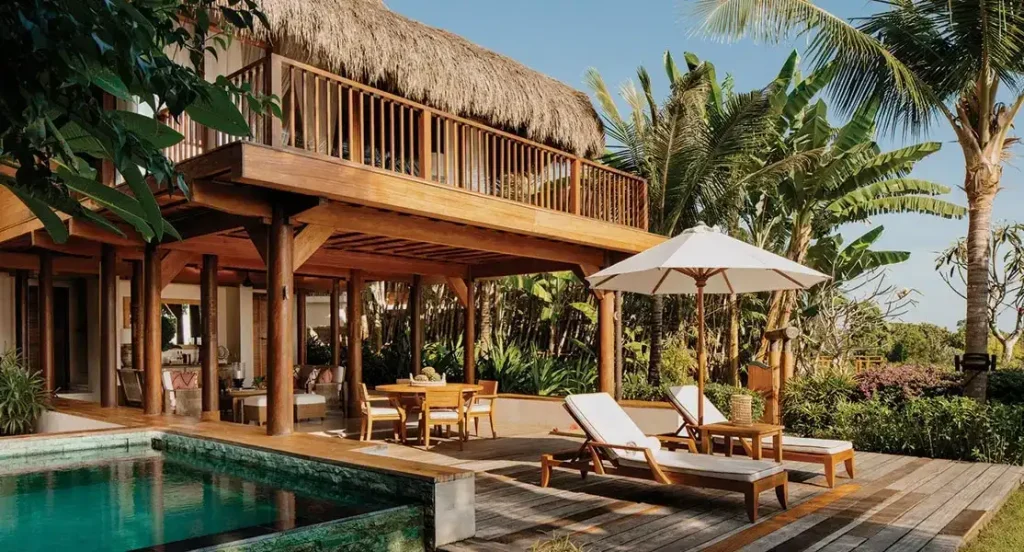
For the luxury traveler, the choice of accommodation is the single most important factor in guaranteeing a safe and seamless experience. Sumba’s premier resorts are not just places to stay; they are self-contained sanctuaries that manage every aspect of guest security. From the moment you land at Tambolaka (TMC) or Waingapu (WGP) airport, you are in their care. Private, air-conditioned 4×4 vehicles with experienced drivers navigate the often-unpredictable roads, a journey that can take 90 minutes or more to reach the secluded southwestern coast where many top properties are located.
These resorts are typically situated on vast private estates, often with gated access and 24/7 security patrols, ensuring complete privacy and safety. “Our philosophy is to create a ‘bubble’ of effortless luxury and security,” a contact at one of the island’s top resorts told us. “Guests can immerse themselves in Sumba’s wild beauty, knowing that every detail, from water purification to excursion safety, is managed to the highest international standards.” All activities, whether it’s surfing the famed “Occy’s Left,” visiting a traditional village, or trekking to a waterfall, are led by the resort’s own vetted, highly-trained guides. These individuals are not just tour leaders; they are cultural ambassadors and your primary safety asset, fluent in local dialects and customs. This curated approach effectively eliminates the variables and potential risks of independent travel.
Crime and Personal Safety: A Realistic Assessment
One of the most refreshing aspects of Sumba is its remarkably low crime rate, particularly concerning tourists. Unlike more developed destinations, you will not find a culture of scams or persistent touts. The island’s population of roughly 780,000 is spread out, and community ties, governed by ancient adat (customary law), are incredibly strong. This social structure provides a powerful deterrent to petty crime. While it is always wise to exercise common sense—store valuables in your room’s safe and don’t leave expensive equipment unattended—the feeling of personal safety here is palpable.
During our visits to local markets in Waikabubak or a remote village in the Kodi region, we have never felt anything but welcome. The Sumbanese people are generally shy but curious and friendly. The primary safety concern is not crime, but rather navigating the natural environment and cultural landscape, which is why a trusted operator is so vital. The investment in a high-quality tour package is an investment in this peace of mind. When you evaluate the cost of a Sumba trip, it’s important to recognize that a significant portion of that price is allocated to the logistics, expertise, and infrastructure that guarantee your security from arrival to departure, making the entire journey worry-free.
Cultural Sensitivity: The Ultimate Safety Tool
True safety in a place like Sumba extends beyond physical security; it is deeply intertwined with cultural respect. The Marapu belief system, a form of ancestral worship, permeates every aspect of life here and is a complex, fascinating tradition that deserves reverence. Arriving in a village unannounced or behaving in a culturally unaware manner is the quickest way to create an uncomfortable, if not unsafe, situation. This is where a professional guide becomes indispensable. They are your cultural interpreter, ensuring your presence is a welcome one.
A few key protocols can make all the difference. Always ask for permission before taking photographs of people, especially elders or during ceremonial events. When visiting a traditional village, or kampung, with its iconic high-peaked houses, it is customary to present a small gift, such as betel nuts (your guide will facilitate this), to the village head, or Rato. Dress modestly when away from your resort; covering your shoulders and knees is a simple sign of respect. As noted by Indonesia’s official tourism board, politeness and respect for local customs are key to positive interactions throughout the archipelago. By approaching Sumba with humility and a genuine desire to learn, you are not just being a responsible tourist; you are actively ensuring your own safe and warm reception.
Quick FAQ: Your Sumba Safety Questions Answered
Is Sumba safe for solo female travelers?
Absolutely. When traveling as part of a package organized by a reputable operator or staying at a high-end resort, solo female travelers are exceptionally well looked after. The controlled environment, private guides, and respectful local culture make it a very comfortable destination. Standard precautions for solo travel apply, but Sumba does not present unique gender-specific risks.
What about natural disasters like earthquakes?
Indonesia sits on the Pacific Ring of Fire, and seismic activity is a reality. However, the risk is no greater in Sumba than in Bali or Lombok. Premier resorts are constructed to modern earthquake-resistant standards, and staff are well-trained in emergency protocols. It’s a manageable, country-wide risk rather than a Sumba-specific danger.
Are the roads safe to drive on?
Road conditions vary dramatically from paved main arteries to rugged, unpaved tracks leading to remote villages and beaches. We strongly advise against renting a car and self-driving. The combination of challenging terrain, unpredictable conditions, and local driving customs makes it unsafe for the uninitiated. Your tour operator or resort will provide a 4×4 vehicle and a skilled local driver, which is the only safe and sensible way to explore the island.
Can I use my credit card everywhere?
No. Credit cards are accepted at major luxury resorts for your final bill, but outside of these properties, Sumba is a cash-based economy. You will need Indonesian Rupiah (IDR) for any purchases at local markets, small shops, or for tipping. It’s best to withdraw cash in a major hub like Bali before you fly to Sumba, as ATMs on the island can be unreliable. For more financial planning tips, you can review our guide on how to book a Sumba tour.
The allure of Sumba lies in its magnificent, untamed spirit. It’s an island that hasn’t been diluted for mass tourism, offering a rare window into a world governed by ancient traditions and the rhythms of nature. The answer to whether it is safe to travel to Sumba is not just a yes, but a confirmation that its perceived wildness is precisely what makes the journey so rewarding. By partnering with experts who understand the island’s nuances, you are not taming Sumba, but rather being given the key to unlock its wonders safely and respectfully. A thoughtfully planned sumba island tour transforms potential concerns into a seamless adventure, leaving you free to be fully present in one of the last truly magical places on Earth.
Keep reading
More from the journal.