Pero Beach fishing village sunset, Kodi Sumba

Mandorak Beach & Pero: Kodi Coast Travel Guide

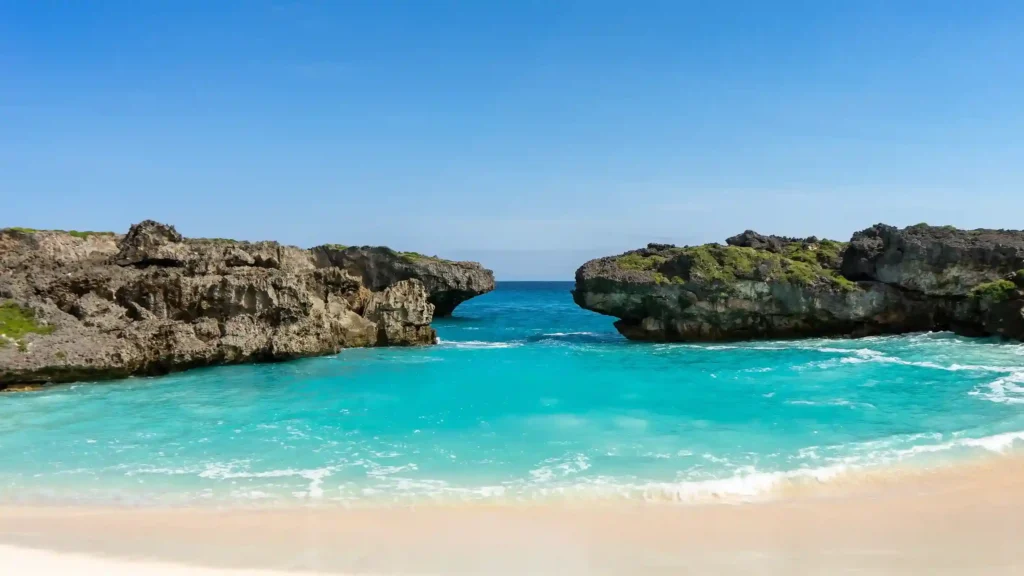
Mandorak Beach is a pocket of white sand on the Kodi coast of Southwest Sumba, framed by twin limestone cliffs that face each other across a narrow turquoise channel. It sits five minutes by car from Weekuri Lagoon and about ninety minutes from Tambolaka Airport, which makes it one of the easiest wild beaches on Sumba to actually reach. Combine it with Ratenggaro village and a sunset at Pero fishing village and you have arguably the most photogenic half-day on the island. The best window is May to October, when the west coast runs dry, the water in the channel is at its clearest, and the reef off Pero produces its cleanest surf.

This guide covers how to get there, what the light and swell do through the day, how the surf at Pero behaves month by month, and the practical details — fees, phone signal, food, village etiquette — that guests ask our Sumba advisors about most often when planning for 2027.

Where Is Mandorak Beach — and How Do You Get There?

Mandorak lies in Kodi Utara, the far northwestern corner of Southwest Sumba regency. From Tambolaka your driver follows the sealed Kodi road for about an hour, then turns onto a rough coral track for the final stretch; the whole drive takes roughly ninety minutes. There is no public transport on this coast, so a private car with a local driver-guide — from around USD 60–90 per day as of August 2026, subject to season — is the standard arrangement, and that daily rate covers the entire southwest circuit rather than a single beach.

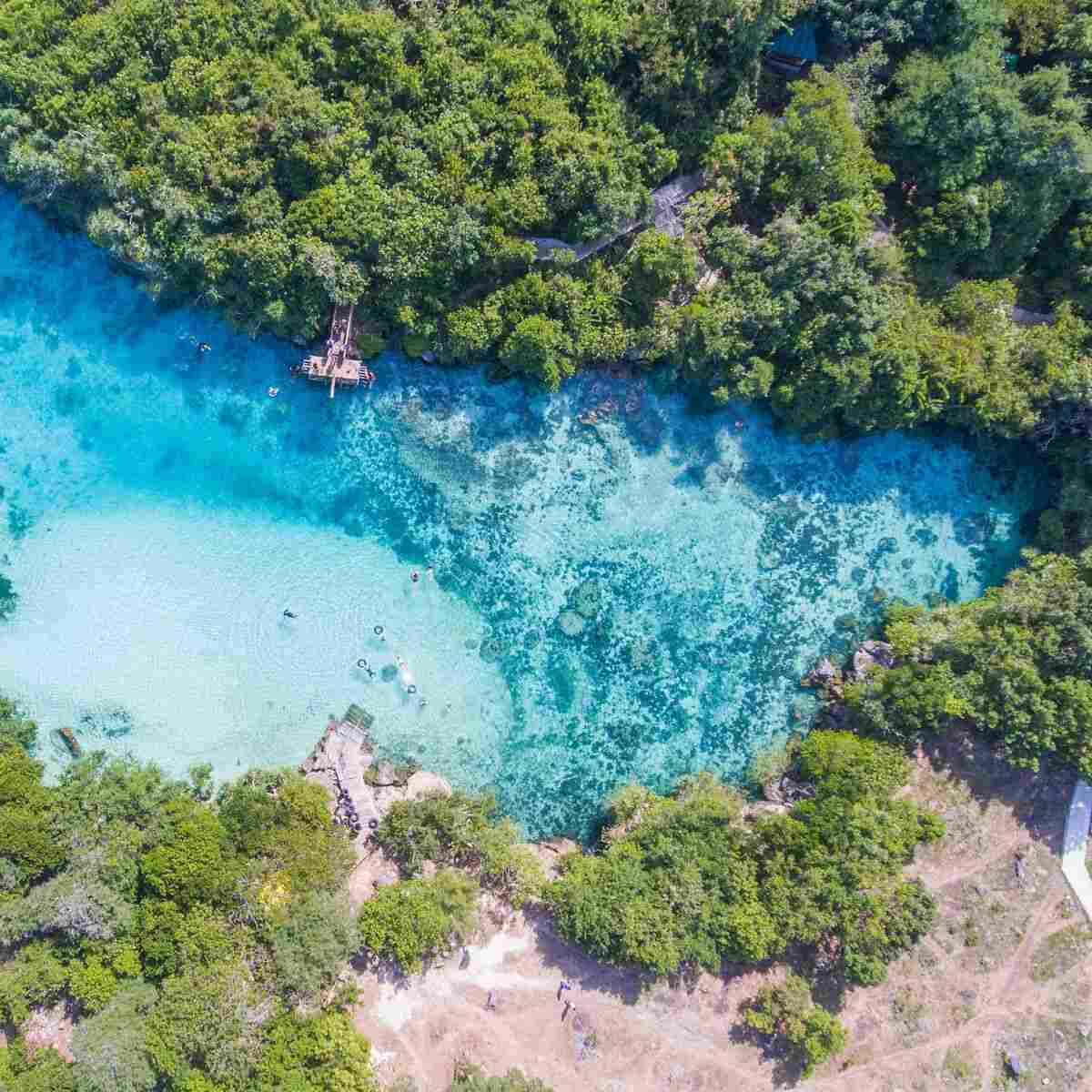
The geography works strongly in your favour here. Weekuri Lagoon (spelled Waikuri on some signs) is five minutes away, Ratenggaro and its tower-roofed houses about twenty-five, Pero around twenty, and the Bwanna cliff arch under an hour further south. Few coastlines in Indonesia pack this much into such a tight loop.

What Makes Mandorak Different From Other Sumba Beaches?

Scale and drama. The cove is barely fifty metres wide, and the two cliffs rise on either side of it like gateposts, so close together that the Indian Ocean enters in slow, glassy pulses rather than breaking waves. On a calm morning the channel glows an improbable blue-green, and a small rock islet just offshore gives the frame a natural focal point. Photographers should walk up the southern cliff shoulder: from there you look straight down the channel with the cove below you, one of the genuinely best views in West Sumba alongside Lendongara hill, the rim of Weekuri and the top of the Bwanna arch.

Swim with respect. The gap between the cliffs funnels current on a falling tide, and there are no lifeguards anywhere on this coast. Mid-morning on a small-swell day is the calmest time to get in; when the swell is up, stay on the sand and let the channel do the performing. Late afternoon brings its own reward — the sun drops toward the strait between the cliffs, and sunset at the Mandorak cliffs is quieter and wilder than the better-known one at Pero.

Pero: Sunset, Surf and a Working Village

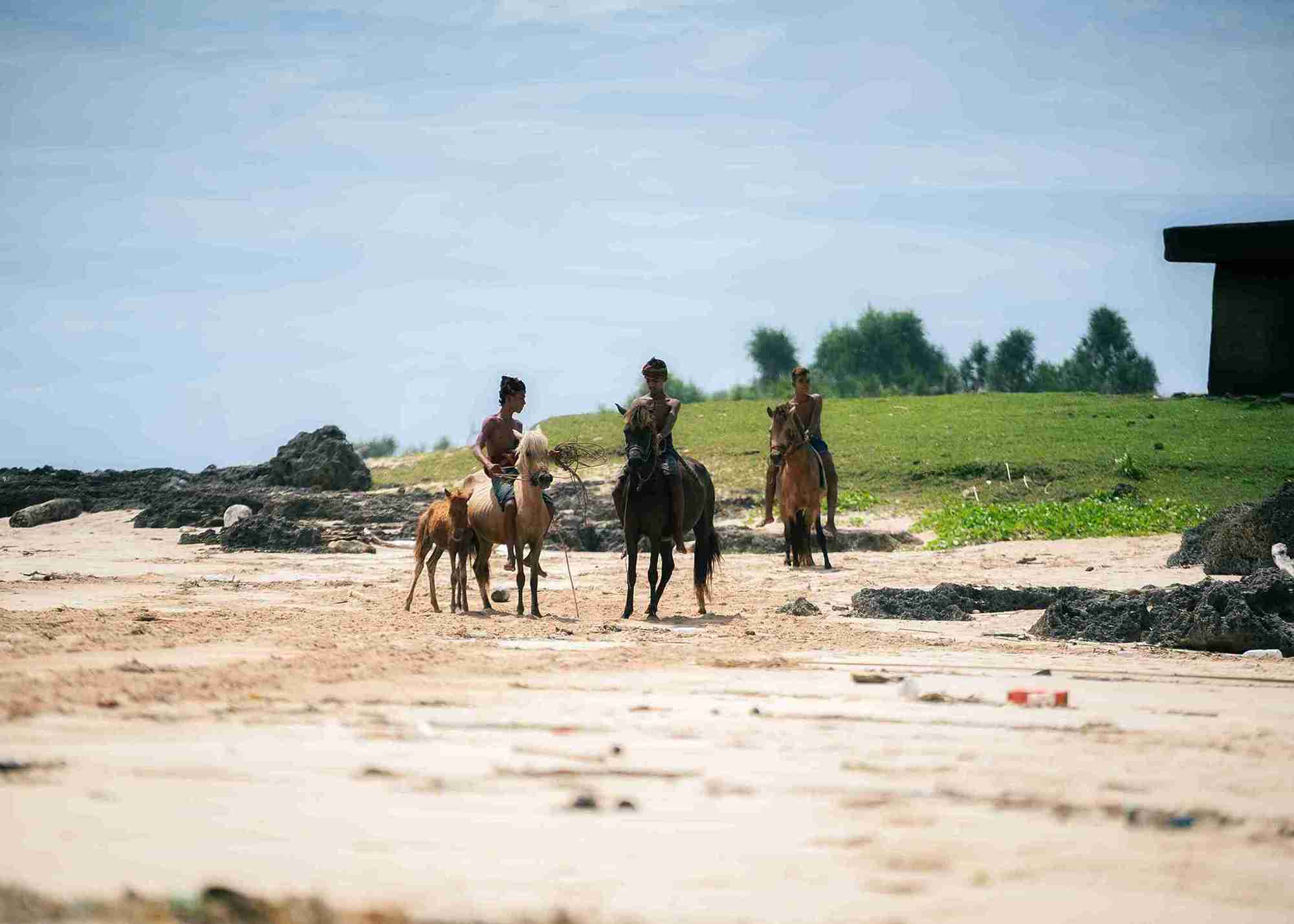
Pero — locals say Pero Batang — is a fishing village set at a river mouth twenty minutes south of Mandorak, and it is the Kodi coast at its most alive. Painted wooden outriggers line the sand, and around five in the afternoon the fleet comes home through the river bar while children swim beside the hulls. The beach faces squarely west, so sunset at Pero is broad and unobstructed, with the boats as silhouettes. Of all the endings we build into a southwest day, this is the one guests mention in their thank-you notes.

Pero Beach Surfing Conditions

Pero hides one of West Sumba’s most consistent waves: a left-hand reef break peeling off the river mouth. Pero beach surfing conditions are best from May to September, when southeast trade winds blow offshore through the morning and long-period swell wraps onto the reef. It is a wave for experienced surfers only — the reef is sharp and shallow at lower tides, and there is no rescue cover. Bring your own board; there is no reliable rental on the Kodi coast, and what little exists in Tambolaka is not worth planning around. Non-surfing guests can watch the whole show from the sand with a young coconut.

Wainyapu and Pasola Country

Directly across the river mouth from Pero sits Wainyapu, one of the largest megalithic villages on the island, its lanes threaded between hundreds of stone tombs. This is also Pasola country: Kodi hosts one of Sumba’s mounted spear festivals, usually in February, with dates confirmed by the lunar calendar and priests only weeks in advance — we track the local announcements each season. If riding season is what draws you, our Sumba Pasola Festival Tour is built around exactly this stretch of coast.

When Should You Go? Sumba Rainfall Patterns West vs East

Sumba’s rainfall patterns split west vs east more sharply than most guests expect. The west — Kodi, Waikabubak and the hills behind them — catches nearly double the rain of the east, which is why West Sumba stays greener and the east opens into golden savanna. For the Kodi coast, the best month to visit West Sumba is June: the tracks are dry, the channel at Mandorak is glassy, and the crowds of the July–August school holidays have not yet arrived. May through September is all reliable.

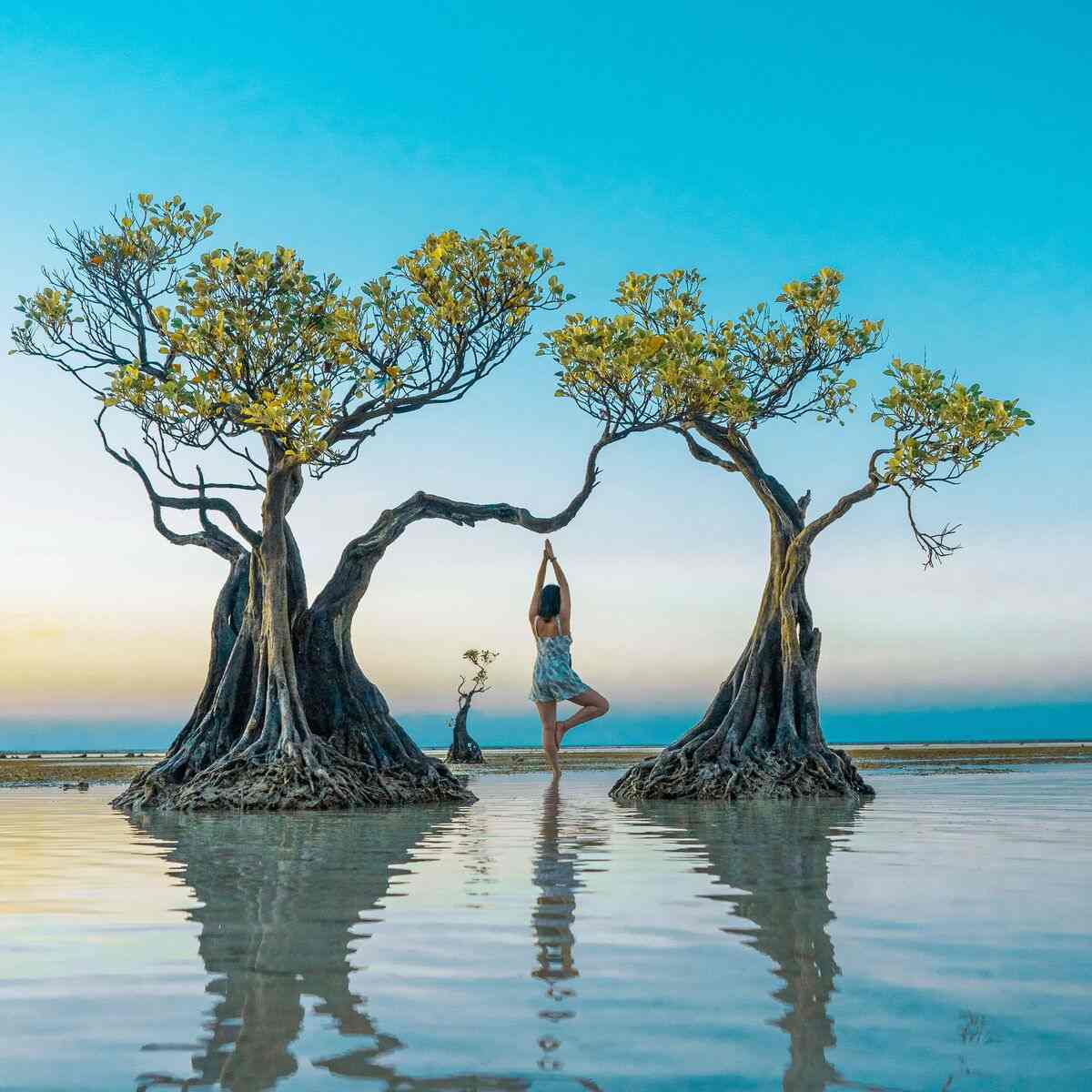
The best month to visit East Sumba depends on the colour you want — May and June for honey-gold hills at Wairinding, January to March for the brief electric green. Sumba in January travel conditions are honest wet season: afternoon downpours in Kodi, slick coral tracks, and a river at Pero too swollen to wade — yet the island is at its greenest and Pasola anticipation is building in the villages. If your route continues east, check the Walakiri mangrove tide conditions as well: the dancing trees need a low, falling tide at sunset to stand clear of the water for photographs, so we always confirm the tide table before locking in your Walakiri evening.

Practical Notes Our Guests Ask About

  • Entry fees. Mandorak, Weekuri and Pero each collect a small community retribution at the gate, cash only. Your driver-guide handles these so you never fumble for notes.
  • Phone signal. Mobile coverage in West Sumba is Telkomsel territory: steady 4G in Tambolaka, a bar or none at the Mandorak cliffs. Mobile coverage in East Sumba follows the same pattern — solid in Waingapu, long silent stretches across the savanna — so download offline maps before you leave town.
  • Food. Kodi warungs are simple and good: grilled fish, rice, sambal. If you cross the island, vegetarian friendly places in Waingapu are easier to find than the town’s size suggests — tofu-and-tempe warungs, nasi campur stalls that plate without meat, and hotel kitchens happy to cook meat-free on request.
  • Where to sleep. Most guests base in Tambolaka for the Kodi coast; a handful of hilltop lodges in Central Sumba near Waikabubak make a scenic overnight when you are driving coast to coast.
  • Etiquette. Ratenggaro and Wainyapu are living Marapu communities, not open-air museums. Your private guide asks permission before you enter, carries betel nut for the elders, and will tell you when a tomb or ritual house should not be photographed. Our Sumba Traditional Villages Tour is built around that protocol.

How Do Mandorak and Pero Fit a Longer Route?

The classic southwest day runs Weekuri in the late morning, Mandorak in the midday light, Ratenggaro mid-afternoon, then Pero for sunset — the exact rhythm of our Southwest Sumba Tour. Most guests fold it into a four-day island itinerary, from USD 390–700 per person as of August 2026 depending on group size — the same route we operate with Indonesia Juara Trip as the Sumba 4D3N tour, with daily flights from Bali reaching Tambolaka in about an hour and fifteen minutes.

One planning note for 2027: the East Nusa Tenggara tourism strategy now positions Sumba as its flagship beyond-Bali destination, and Prai Ijing’s ASEAN tourism award has put the island in front of entirely new audiences. The Kodi coast still counts its daily visitors in dozens, not thousands — which is precisely why the coming season is the right time to see it.

Plan Your Kodi Coast Days

Tell us your dates and how you like to travel, and we will shape the southwest loop around the light, the tide and your pace. Speak to our Sumba travel advisor on WhatsApp at +62 811-994-1919 or email sales@indonesiajuara.asia. Operated with high-end local Sumba expertise — we show you the real Sumba. Part of Juara Holding Group — since 2015.

Similar Posts