Sumba Traditional Villages Tour: Ratenggaro to Rende

This private Sumba traditional village tour crosses the whole island, from the towering roofs of Ratenggaro on the Kodi coast to the royal tombs of Rende in the east, from USD 390–700 per person on the 4D3N route (as of August 2026, subject to season and group size). You travel with a local driver-guide raised among these communities — someone who knows which elder to greet first, when to offer betel nut, and how to turn a walk between clan houses into an hour of living history. Most international operators sell Sumba’s villages from Bali or further away, behind quote-only forms. We are operated by high-end local Sumba expertise, we publish our prices, and we show you the real Sumba.

Why Visit Sumba’s Traditional Villages with a Local Guide?

Sumba is one of the last places on earth where megalithic culture is still lived rather than excavated. The history of megalithic culture in Sumba stretches back centuries and has never stopped: families still quarry, carve, and drag multi-ton stone tombs into their villages, and the ancestral Marapu faith still governs how a house is built, when a harvest is blessed, and how a guest is received. Every village on this route is a working community, not an open-air museum — people cook, weave, and hold ceremonies among graves that stand a few steps from their front doors.

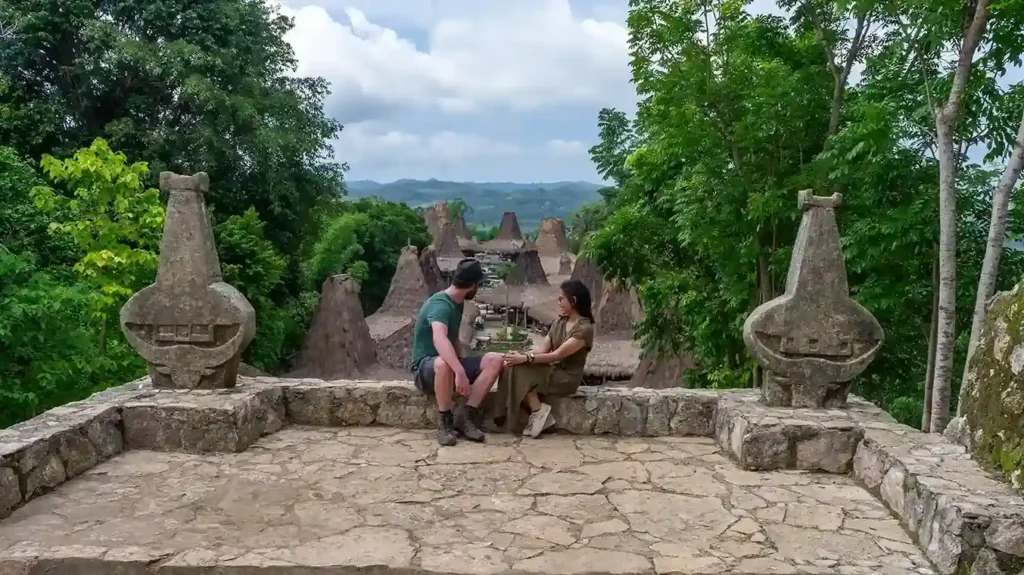
That is precisely why a local guide matters. Arriving unannounced at a Marapu village without introductions is, at best, awkward. Your private guide handles the protocol: greeting the kepala kampung, presenting sirih pinang (betel nut) as the customary token of respect, translating between Indonesian, the local language, and English, and reading the moments when cameras should stay down. In practice this journey doubles as a Sumba megalithic tombs tour — Anakalang and Rende hold some of the largest carved tombs in Indonesia — but the difference between reading about a tomb and hearing its clan’s story from a host who grew up beside it is the entire reason to come.

Which Villages Does This Tour Cover?

The route runs west to east so you fly into Tambolaka (TMC) and out of Waingapu (WGP), both connected to Bali by daily flights of about 1h15m, with no backtracking. The core villages:

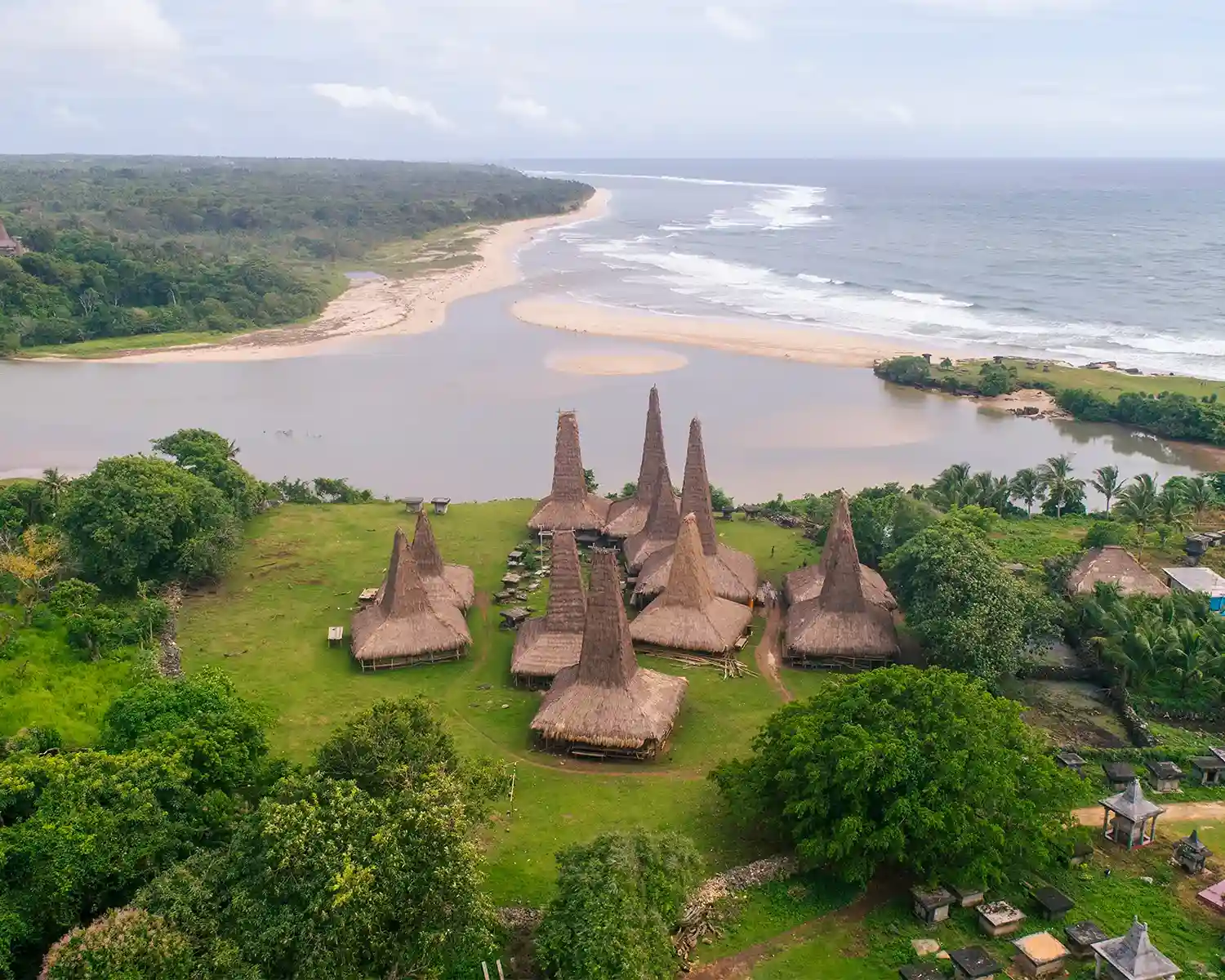
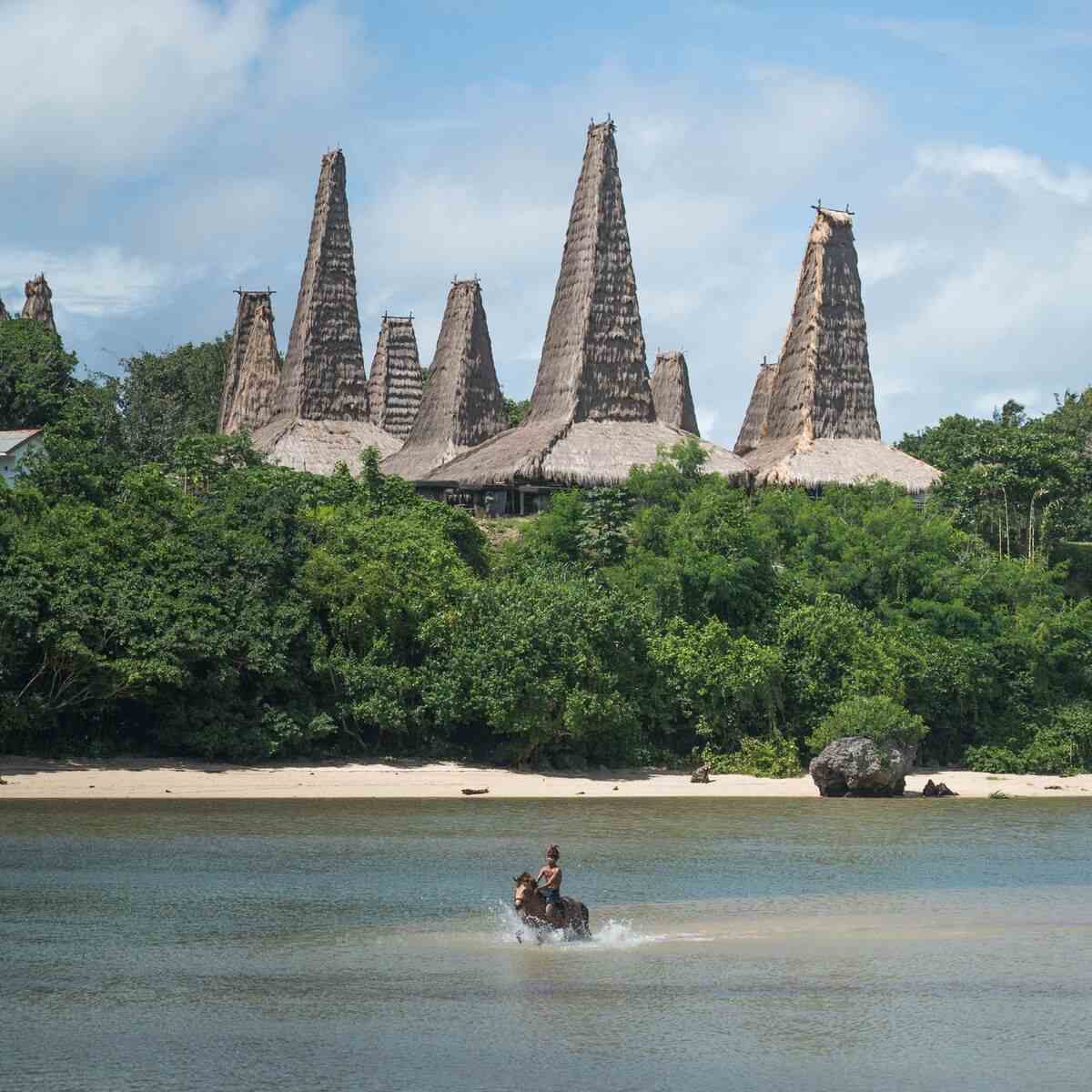
  • Ratenggaro — the icon of Kodi, where thatched roofs rise to around 15 metres beside a river mouth and a line of megalithic tombs faces the ocean.
  • Wainyapu — Ratenggaro’s quieter neighbour across the estuary, with dozens of tombs and far fewer visitors.
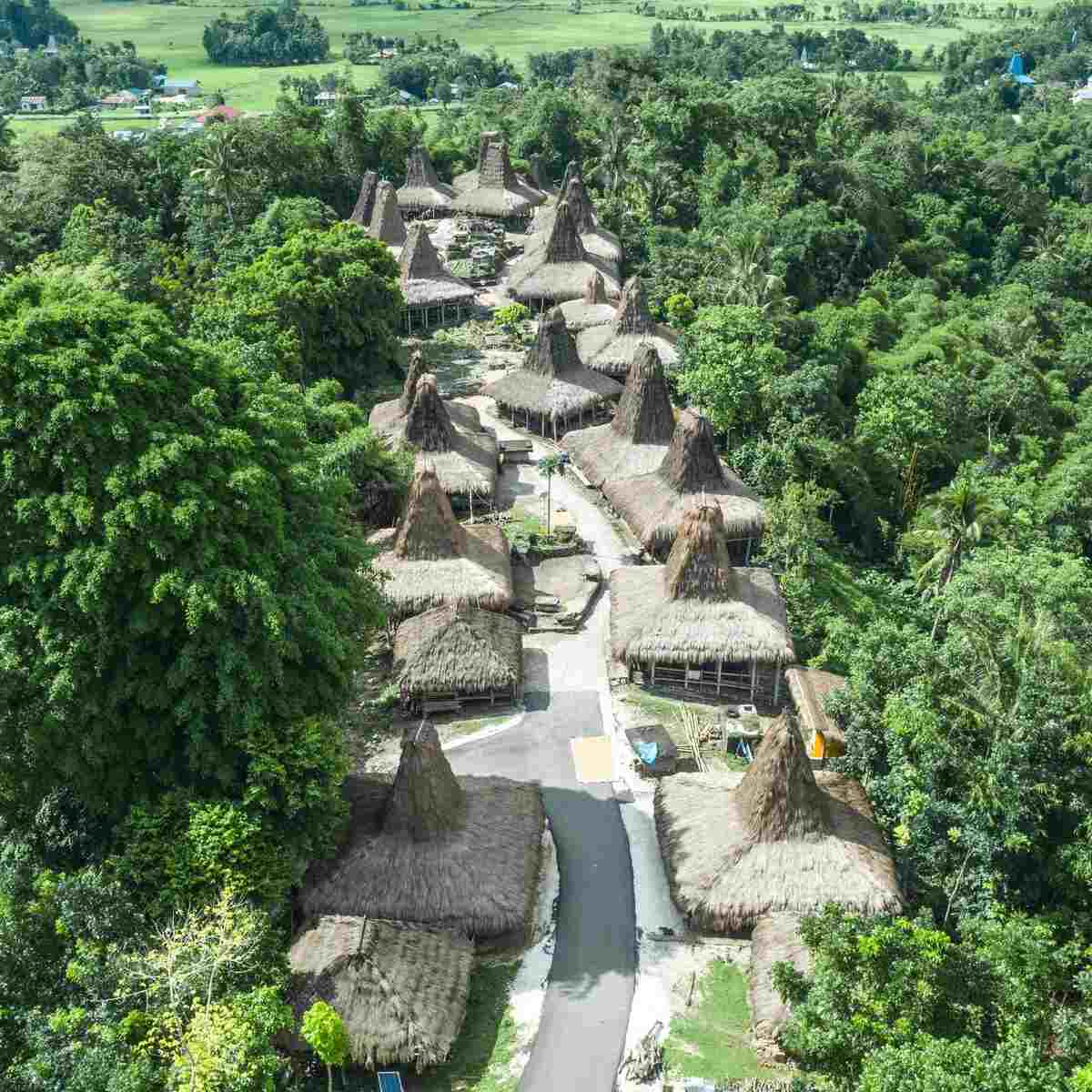
  • Prai Ijing — the hillside showpiece near Waikabubak, recognised at the 2026 ASEAN Tourism Awards and still home to weaving families.
  • Praigoli — a Wanokaka village guarding one of West Sumba’s most venerated ancient tombs.
  • Anakalang — Central Sumba’s megalith complex, where the grandest carved gravestones were raised by hundreds of hands.
  • Rende — an East Sumba royal village of massive table-tombs and some of the island’s finest ikat.
  • Prailiu — a weaving kampung on the edge of Waingapu, ideal for a final hour among the dye pots.

Guests with a deeper archaeological interest can add the remote Wunga village megalithic site in Haharu, held in oral tradition to be the first settlement of the Sumbanese ancestors — ask your advisor to build the extra half-day into Day 4.

Day-by-Day Itinerary

Day 1: Tambolaka Arrival — Ratenggaro & Wainyapu

Your guide meets you at Tambolaka airport and drives roughly 90 minutes south into Kodi country. In Ratenggaro you are introduced to your hosts, offer betel nut, and walk the tomb line above the beach as the afternoon light softens the tall roofs. A short hop across the river mouth brings you to Wainyapu, where the rhythm is slower and conversations stretch longer. Sunset from the Kodi coast, then check-in at your homestay or lodge.

Day 2: Prai Ijing & Praigoli — West Sumba’s Hill Villages

After breakfast you drive east toward Waikabubak. Prai Ijing sits on a ridge above town, its houses stepped down the slope in tidy tiers; your guide will explain how the village balanced its ASEAN-award fame with daily Marapu life. In the afternoon, continue into the Wanokaka valley to Praigoli, whose ancient tomb is among the most sacred in West Sumba. If looms are working, you can sit with the weavers — unhurried, no purchase expected.

Day 3: Anakalang Megaliths & the Drive East

Central Sumba today. The Anakalang complex holds the island’s most monumental gravestones, including slabs that took hundreds of men to haul — your guide unpacks how stone-pulling still works, from buffalo sacrifices to the songs that keep hundreds of pullers in rhythm. The afternoon is the long, beautiful drive east through savanna hills to Waingapu, with photo stops as the landscape dries and opens.

Day 4: Rende, Prailiu & Waingapu Departure

About an hour southeast of Waingapu, Rende’s royal compound holds table-tombs carved with crocodiles, turtles, and heraldic horses, and its noble weaving tradition produces some of Sumba’s most collected ikat. Return via Prailiu on the town’s edge for a final weaving visit and honest, fixed-price shopping directly from the makers, then transfer to Waingapu airport for your flight out.

How Much Does a Sumba Traditional Villages Tour Cost?

Transparent pricing is our standing policy — every figure below is per person, published as of August 2026, and subject to season and group size:

OptionDurationFrom (USD, per pax)
Villages highlights (west only)3D2N~300–550
Full Ratenggaro-to-Rende route4D3N390–700
Private car + local driver-guide onlyper day~60–90

Smaller groups sit at the top of each range, larger private groups at the bottom. Local retribution at Sumba sites — the modest visitor donation each village records in its guest book — is handled by your guide and included in our rates, so you are never left guessing at the ledger. To compare this route against our 3-to-9-day island itineraries, see the full Sumba island tour packages overview.

What Is the Dress Code for Visiting Sumba Villages?

The dress code for visiting Sumba villages is simple: shoulders and knees covered, modest necklines, and shoes you can slip off easily if invited onto a house platform. A light sarong is both practical and quietly appreciated; wearing a locally bought ikat scarf is read as a compliment. Hats come off when you enter a family compound, and drone flights need explicit permission from the village head before takeoff.

A question guests often ask: can you swim in traditional attire areas? No — and it is worth being direct about this. Villages are ceremonial and residential spaces, not beach stops, and swimwear should never be visible there, even walking from the car. Save your swims for the lagoons and falls on our Sumba waterfall tour, and change before any village visit. Photography follows the same ask-first principle: your guide will request permission before portraits, and a few moments — rituals, certain tombs, mourning houses — stay off-camera entirely.

When Can You See Ceremonies and Dances?

There is no printed Sumba traditional ceremonies calendar — and any operator who sells you fixed dates is guessing. The reliable pattern: the dry months from roughly June to October carry most stone-pulling (tarik batu) and house-rebuilding ceremonies, harvest rites cluster earlier in the year, and funerals — the grandest events in Sumbanese life — happen whenever they happen. Pasola, the horseback spear festival, is confirmed by the lunar calendar around February–March each year; we track local announcements village by village and build departures around them — see our Pasola festival tour for how that works.

A traditional Sumba dance performance can be arranged with a day or two of notice in several villages on this route, with fees agreed openly and paid directly to the dancers and musicians. If your dates happen to intersect a genuine ceremony, your guide will ask the hosts whether guests are welcome — often they are, and those unscripted hours tend to become the story you tell for years.

Where Do You Stay — Homestay, Eco Lodge or Hotel?

You choose the register of comfort. A Sumba homestay in a traditional village — a clean mattress, a fan, a shared mandi, and dinner with the family — is the closest you can get to Marapu daily life, and Ratenggaro and the Waikabubak villages both offer honest options. Guests who want more privacy can use the small eco lodges near traditional villages on the Kodi coast and around Waikabubak, which add proper beds, garden bathrooms, and generator-backed power. Hotels in Waikabubak and Waingapu anchor the middle of the route, and the island’s headline resorts — Nihi Sumba typically from ~USD 1,000+ per night, with Lelewatu and Cap Karoso in the premium-boutique tier — can be joined to this itinerary as a closing indulgence.

What Should You Eat Along the Way?

Meals stay local and generous. Local dishes to try in Sumba include grilled reef fish straight off the Waingapu boats, free-range village chicken with garden greens, corn-and-cassava staples that predate rice on the island, and manggulu — East Sumba’s banana-and-peanut sweet, wrapped in dried leaf. Sumba coffee and tea culture is its own quiet ritual: hosts serve small glasses of strong, sweet coffee (or tea with palm sugar) to every guest, and accepting a glass, unhurried, is part of the visit’s grammar. Tell your advisor about dietary needs in advance; village kitchens are flexible when asked early.

How Do You Support Local Communities in Sumba?

The honest answer to how to support local communities in Sumba is: spend where the culture lives. Buy ikat directly from the weavers in Rende and Prailiu rather than from resellers — your guide will tell you what a fair price looks like so you neither overpay nor squeeze the maker. Let the village guest-book donation do its work; it funds roof thatch and school fees. Hire local hosts for dances and meals at openly agreed rates. Our own model follows the same logic: this tour is staffed by Sumbanese driver-guides and village hosts, so the money that buys your journey largely stays on the island that provides it.

What’s Included

  • Private air-conditioned car with English-speaking Sumbanese driver-guide, fuel, and parking
  • All village donations, host fees, and betel-nut offerings, prepared and handled for you
  • Accommodation per your chosen tier (homestay, lodge, or hotel) with daily breakfast
  • Airport transfers: Tambolaka arrival, Waingapu departure
  • Weaving-village introductions with no-obligation, fixed-price buying

Excluded: flights, lunches and dinners, personal purchases, and travel insurance. The same 4D3N framework is also bookable as our mirror product at Indonesia Juara Trip’s Sumba tour 4D3N.

Plan Your Villages Journey

Tell us your dates, your pace, and how deep into Marapu country you want to go — we will draft the route, name your hosts, and hold the price in writing. Speak to our Sumba travel advisor on WhatsApp at +62 811-994-1919 or email sales@indonesiajuara.asia. Operated with Indonesia Juara Trip — high-end local Sumba expertise, part of Juara Holding Group — since 2015.