Sumba Journal
Sumba Ikat Weaving: Villages, Prices & Buying Guide
10 min read
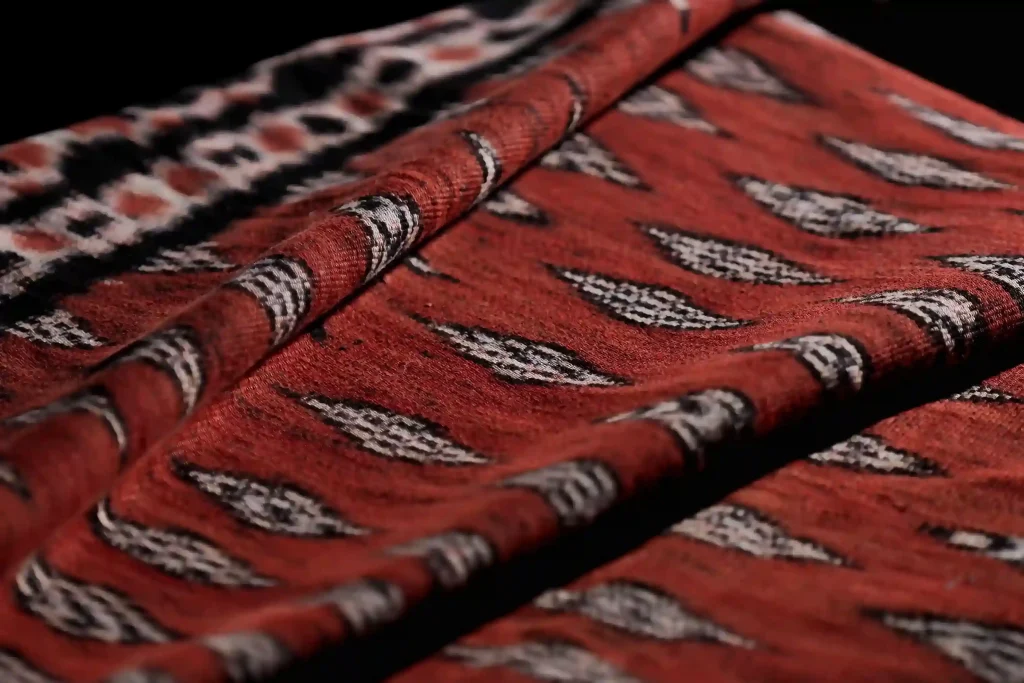
The best places to see Sumba ikat woven by hand are three villages in East Sumba: Prailiu, on the edge of Waingapu; Rende, a royal village where weavers work beside carved megalithic tombs; and Kaliuda, a little-known village in the far southeast that produces the deepest natural reds on the island. A fair price depends on the dye, the thread and the months of work in the cloth — a natural-dye hinggi should never cost the same as a chemically dyed souvenir scarf — and the most ethical purchase is the one made directly from the weaver, with her name attached to it. Here is where to go, what to pay, and how to buy well.
What Makes Sumba Ikat Different?
Ikat comes from the Indonesian word for “to tie.” In Sumba, the pattern is tied into the warp threads with palm-fibre bindings before the cloth ever touches a dye bath — the weaver holds the entire finished design in her head, in reverse, before a single thread is coloured. Traditional pieces use natural dyes: indigo for the blues, and kombu, a red drawn from the roots of the morinda tree, built up over many weeks of repeated baths.
The motifs are not decoration. Horses signal standing and wealth. Crocodiles and turtles belong to noble clans. The skull tree, or andung, remembers the island’s headhunting past, and the patola ratu pattern echoes Indian trade cloths that reached Sumba centuries ago. A large men’s mantle (hinggi) or a woman’s tube sarong (lau) can take four months to a year to complete, and within the Marapu belief system that still shapes life here, certain cloths are ritual objects — burial wrappings and heirlooms that were never meant for sale. Knowing that difference is where ethical buying begins.
Where Can You Watch Ikat Being Woven?
Prailiu is the easiest visit: ten minutes from central Waingapu, with weavers tying, dyeing and working backstrap looms most mornings. Rende, further southeast, pairs its famous royal tombs with looms in the shade of clan houses, and its weavers are known for large narrative motifs. Both sit naturally inside our East Sumba tour, which threads them between Wairinding hill and the Walakiri sunset.
Kaliuda, roughly three hours’ drive from Waingapu near the island’s southeastern tip, is the connoisseur’s stop — a village that still works almost entirely in natural dye and sells much of its output straight to collectors. If you are searching for little known villages in Sumba where tourism is still a trickle, this is the one we send guests to first.
West and Central Sumba weave too, in a quieter register — plainer, indigo-heavy cloths that suit the region’s megalithic austerity. Guests on our Central Sumba tour can pair the Anakalang megalith complex with weaving hamlets along the same road.
How Much Should You Pay for Sumba Ikat?
We deliberately do not print fixed cloth prices, because no two pieces are alike. What we can give you is the ladder every fair price sits on:
| Tier | How to recognise it | Time to make |
|---|---|---|
| Souvenir scarf, chemical dye | Bright, uniform colour; factory thread; perfectly even edges | Days |
| Mid-range hinggi or lau, mixed dyes | Larger motifs, some hand-spun thread, colour with slight depth | Weeks |
| Collector-grade natural-dye hinggi | Earthy smell of the dye bath, deep kombu rust and indigo, tiny irregularities that prove the hand | Four months to a year or more |
The rule of thumb our guides teach: months of work cannot cost the price of a T-shirt, and if it does, someone other than the weaver set the price. Ask how long the piece took and who wove it — the answer tells you more than any tag. A modest counteroffer is normal and accepted; grinding down a woman over a cloth that took a season of her life is poor form. Bring rupiah in cash: card payment is rare outside resorts, and the reliable ATMs cluster in Waingapu and Tambolaka.
How Do You Buy Ikat Ethically?
Buy as close to the loom as you can. When you purchase directly from a weaver or a village cooperative, the money lands where the work happened — and weaving is one of the clearest women-led tourism initiatives in Sumba, with most cooperatives organised and run by the weavers themselves. Paying the natural-dye premium is what keeps the next generation learning kombu recipes rather than chemical shortcuts.
Two boundaries matter. First, leave heirloom and ritual cloths alone: if a piece is brought down from the house loft with visible reluctance, thank the family and decline. Second, be honest about what you are buying — a chemically dyed cloth is a legitimate purchase at a legitimate price, just not at a natural-dye price.
If you want to give more than money, volunteer opportunities in Sumba tourism do exist, but the good ones run through long-established local foundations and favour real skills — health, water, teaching — over casual drop-in help; our advisor can point you to the right doors. And if you fall for the island hard enough to start asking about buying property, know that land ownership rules for foreigners in Sumba follow national Indonesian law and do not allow freehold title. Long leases exist, but that is a lawyer’s conversation, not a handshake on a beach.
Village Etiquette, Drones & Photography
A weaving village is a living Marapu community, not an open-air market. Your private guide will greet the household first — often with sirih pinang, the betel-nut offering that opens conversation in Sumba — and you will usually sign a guest book and leave a small donation, which functions as the village’s entry retribution. Dress modestly, ask before photographing elders or the interiors of clan houses, and let your guide read the room; some days a household is preparing a ceremony and the polite visit is a short one.
Drone rules at traditional villages deserve their own sentence: Indonesia has no blanket ban, but a village is ritual ground, so permission comes from your host — not from an app. Never fly during ceremonies or low over tombs and rooftops. Ask first, every time; our guides will translate and tell you honestly when the answer is no.
Practical Notes: Getting There & Getting By
Daily flights connect Bali with Waingapu (WGP) in about 1 hour 15 minutes, landing you thirty minutes from Prailiu. A private car with an English-speaking driver-guide runs from about USD 60-90 per day, and a full 3D2N private tour built around weaving, Walakiri and Wairinding starts from roughly USD 300-550 per person — as of August 2026, subject to season and group size.
A few things guests ask us every week. The SIM card registration rules Indonesia enforces require your passport at an official counter, so buy your Telkomsel card in Bali or on arrival. Emergency numbers in Sumba start with 112, the national line, with hospitals in Waingapu and Tambolaka; our CS WhatsApp is monitored throughout your trip as well. There are no ride-hailing apps here, and local taxi phone numbers in Sumba pass around by word of mouth — your hotel or our team will arrange trusted drivers for you. On Sumba tourism tax considerations: as of August 2026 there is no island-wide tourist levy of the kind Bali introduced; villages ask small entry donations instead, and that money stays local.
Sumba as Retreat from Mass Tourism
Nobody publishes precise visitor numbers to Sumba per year, and every Sumba tourism statistics overview we have seen relies on partial counts — but flight seats and hotel rooms tell the honest story: arrivals here are a small fraction of one percent of Bali’s traffic. That is exactly why Sumba works as a retreat from mass tourism, and why a weaver in Kaliuda still has time to explain her motifs to you one by one.
Ikat Questions, Answered
Where is the best place to buy authentic Sumba ikat?
Directly from weavers in Prailiu, Rende or Kaliuda in East Sumba. Prailiu is the most accessible from Waingapu; Kaliuda produces the finest natural-dye work on the island.
How can I tell natural dye from chemical dye?
Trust your nose and eyes: natural dye carries an earthy scent from the bath, kombu red reads as deep rust rather than bright scarlet, and hand work leaves small irregularities a factory never would.
Is it acceptable to bargain for ikat in Sumba?
Yes, gently. One or two respectful counteroffers are part of the exchange; aggressive haggling over months of handwork is not, and it sours the visit.
Are there women led tourism initiatives in Sumba?
Yes — weaving is the island’s clearest example. Most village cooperatives in Prailiu, Rende and Kaliuda are organised and run by the women who weave, so buying at the loom puts income directly into their hands and funds the next generation of natural-dye training.
Ready to meet the weavers yourself? Most guests fold Prailiu and Rende into a longer island route such as the 4-day Sumba overland tour, then add Kaliuda when the cloth gets under their skin. Speak to our Sumba travel advisor on WhatsApp at +62 811-994-1919 or email sales@indonesiajuara.asia and we will build the route, the introductions and the etiquette briefing around you. Operated with Indonesia Juara Trip — high-end local Sumba expertise, part of Juara Holding Group — since 2015. We show you the real Sumba.
Keep reading
More from the journal.