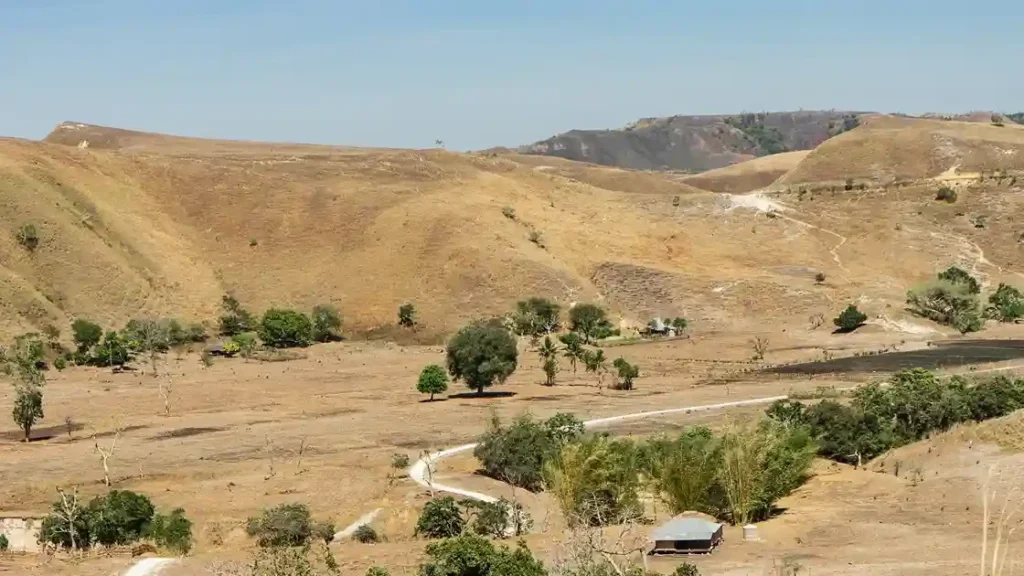
Puru Kambera Savanna & Wild Horses Guide
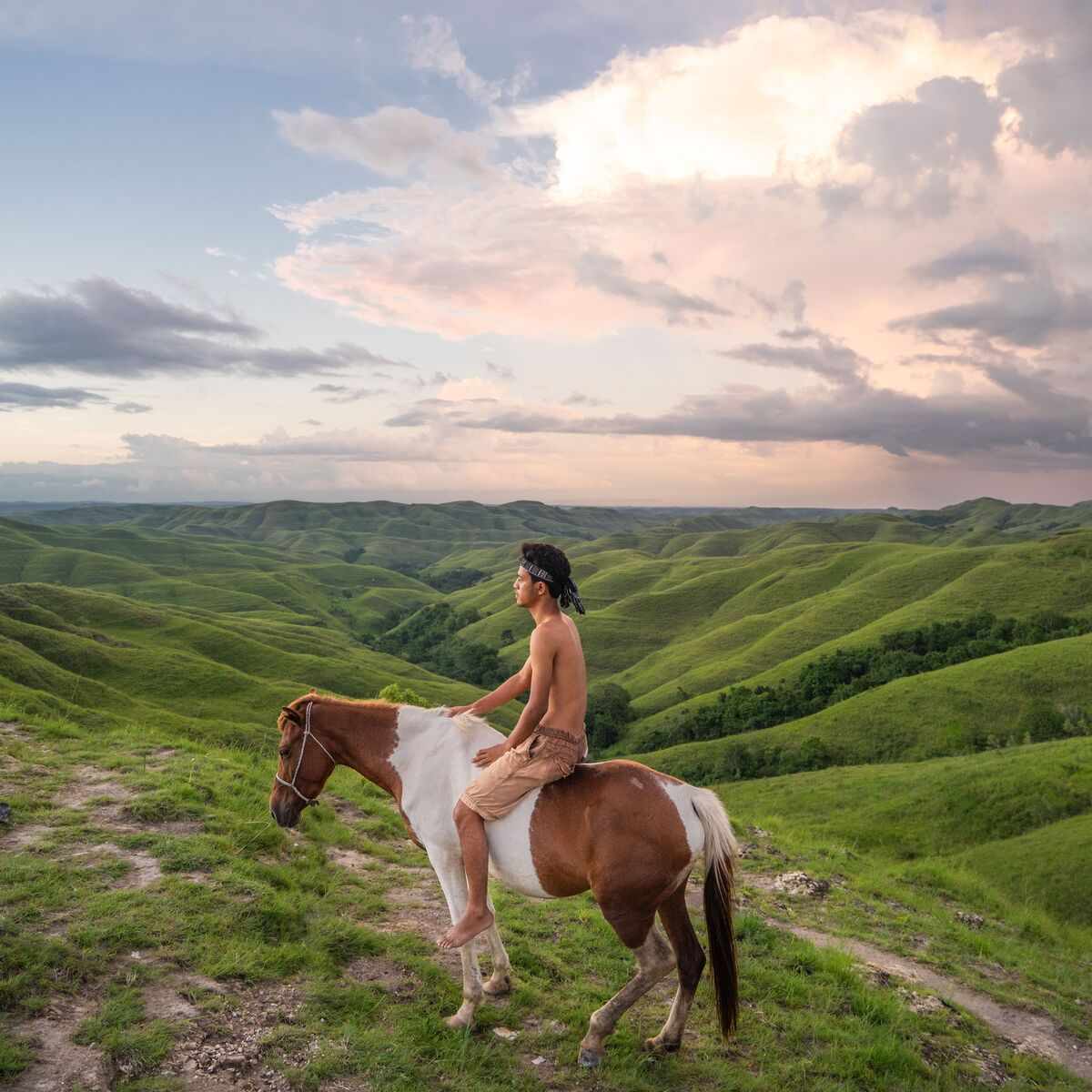
Puru Kambera is a coastal savanna about 26 kilometres northeast of Waingapu in East Sumba — roughly a 45-minute drive — where herds of sandalwood horses graze free between open grassland and a casuarina-lined shore. There is no gate, no ticket window, and no fence between you and the horses: you arrive, ideally within two hours of sunrise or sunset, and let the scene come to you. Most Sumba adventure tour 2026 itineraries give it twenty minutes as a photo stop between Waingapu and Mondu. This guide makes the case for slowing down, and walks you through the timing, etiquette, and safety details that turn a drive-by into one of the quietest, most memorable hours of your Sumba trip.
What Exactly Is Puru Kambera?
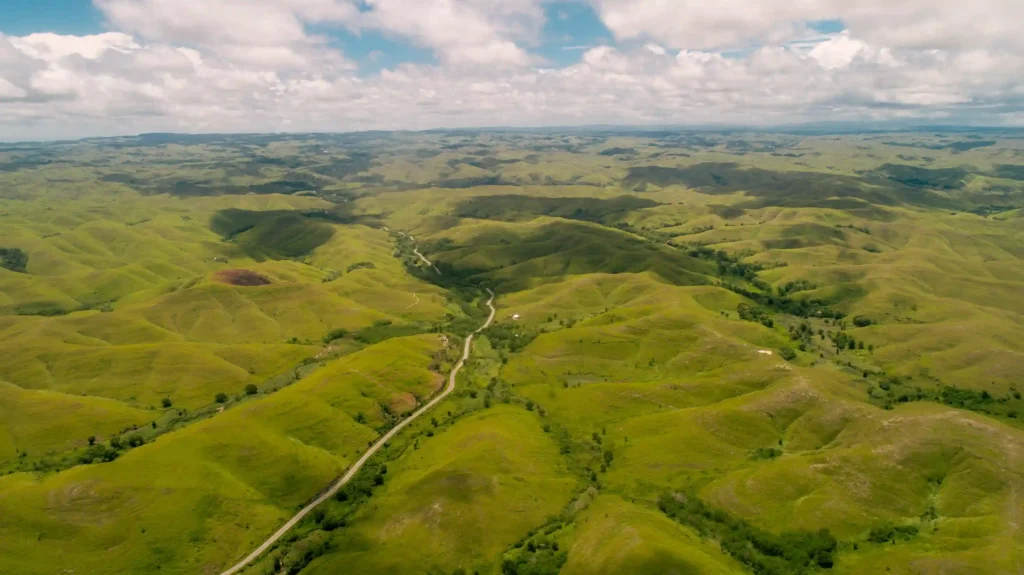
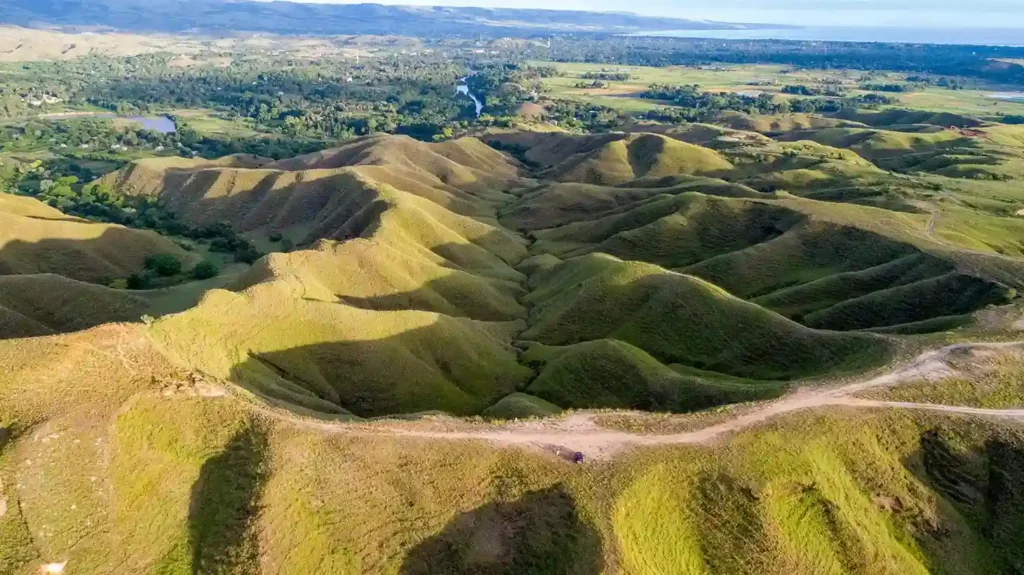
Puru Kambera is a stretch of rolling savanna along the northern coast of East Sumba, sitting in the dry rain shadow that gives this side of the island its East-African look. The horses you meet here are sandalwood ponies, the small, famously tough breed Sumba has raised and traded for centuries. They are wild in behaviour rather than in law: most belong loosely to families in the surrounding villages, released to roam the open range and gathered only for ceremonies or the occasional sale. In practice that means the herds move where they please — down to the beach at low light, under the casuarina trees at midday — and you should treat them exactly as you would wild animals. The shoreline itself is a long, quiet arc of pale sand that very few visitors ever walk, and in the late dry season the grass turns a colour photographers plan entire trips around.
How Do You Get to Puru Kambera from Waingapu?
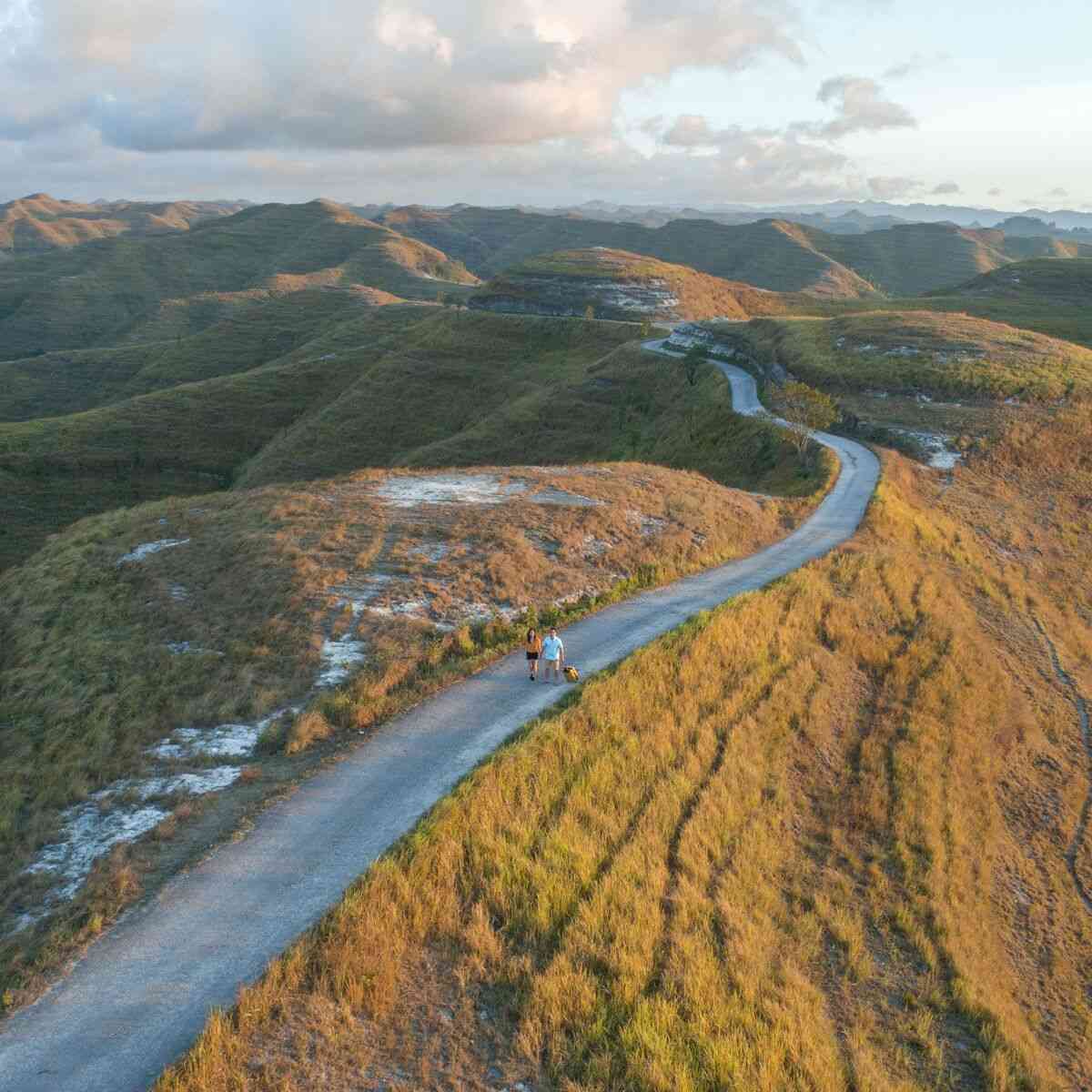
Drive northeast out of Waingapu on the coastal road toward Mondu; the savanna opens up around the 40-minute mark and continues for several kilometres, so ask your driver to keep going until you find a rise with horses below rather than stopping at the first pull-off. The road is paved for most of the run and genuinely scenic, tracing headlands above the Sumba Strait. A private car with a local English-speaking driver-guide runs from about USD 60–90 per day (as of August 2026, subject to season), and most guests fold Puru Kambera into a full East Sumba day loop rather than visiting on its own. A note on road safety in rural Sumba: livestock has the practical right of way, so horses, buffalo, and goats appear on the tarmac without warning — one reason we schedule savanna visits in daylight and leave night driving to no one. Confident riders do the trip by scooter, but the coastal wind and patches of loose gravel make a car the calmer choice.
When Is the Best Time to See the Savanna and the Horses?
June through October is the classic window, when the grass cures to gold and the herds stand out against it; January through April the same hills turn a deep green that most visitors never see photographed. The horses are most active in the first and last two hours of daylight, retreating to the casuarina shade through the middle of the day, so plan for sunrise or late afternoon. Sunrise is the quieter of the two and gives you the beach almost to yourself. If you choose the afternoon, you can watch the light fall on the savanna and still reach Walakiri Beach, about 40 minutes back toward Waingapu, in time for its dancing-trees sunset — the single most efficient golden-hour pairing in East Sumba. Bear in mind that the wind builds on this coast as the day goes on.
How Close Can You Get to the Horses — and Can You Fly a Drone?
Give the herds 15 to 20 metres, more when foals are present, and let curiosity close the gap on their terms; a few will often drift toward a calm, seated visitor. Never feed them, and never ask anyone to herd them toward your camera — the stallions guard their groups and a startled herd at full gallop is dangerous to everyone nearby. A 200mm-or-longer lens does the work distance should be doing. As for aerials, drone safety in windy Sumba conditions is a genuine constraint here: the onshore breeze that cools the savanna every afternoon will fight a small drone hard. Fly in the morning, keep a generous battery reserve for the return leg, launch and land well away from the horses, and ask your private guide to confirm you are clear of the village edge first.
Is Puru Kambera Safe to Visit?
Yes — this is a low-risk, easily managed excursion, and the questions guests ask most often have short answers. On snakes and insects in Sumba, safety is mostly a matter of footwear and repellent: wear closed shoes in the long grass, cover up at dawn and dusk, and discuss malaria precautions for eastern Indonesia with a travel doctor before you fly. Drinking water safety in Sumba is simple — stick to sealed or refilled bottles, and carry more than you think you need, because there are no shops on the savanna. Guests also ask about the safety of solo female travel in Sumba, and the honest report from our guests is reassuring: with a named local driver-guide, solo women describe respectful curiosity rather than hassle, here as across the island. If you pair the savanna with a canyon trek the same day, hiking safety in Sumba canyons comes down to proper shoes, a local guide, a morning start, and respect for rain upstream — Tanggedu rewards all four. We recommend travel insurance for Sumba trips that covers clinic care and medical evacuation, since anything serious means a flight to Bali. On money, the safety of using cards in Sumba is fine at the better Waingapu hotels, but the savanna is cash country: carry small notes for village donations and roadside coconuts, drawn from the BRI or BNI ATMs in town. And if you are weighing sea crossings, ferry safety in East Nusa Tenggara varies by vessel and weather — which is why we route guests onto the daily flights instead, about 1 hour 15 minutes from Bali to Waingapu.
What Should You Pack for the Savanna?
Thinking about what to pack for a Sumba overland tour, the savanna asks for: a proper sun hat and reef-safe sunscreen, two litres of water per person, closed walking shoes, a buff or scarf for road dust, a windproof layer for late afternoon, insect repellent, a long lens and a polariser, and a power bank — there are no outlets and mobile signal is patchy along this coast. In the wet season add a dry bag for your camera. Everything else stays in the car with your driver.
Which Kambera Phrases Will Make Your Visit Warmer?
East Sumba’s own language is Kambera — the savanna carries its name — and learning even a word or two changes how you are received. The most useful of the basic Kambera phrases for travelers is the region-wide greeting “tabe,” offered with a slight nod; follow it with “njara,” the Kambera word for horse, while gesturing at the herds, and you will usually earn a delighted grin from your driver. Indonesian “terima kasih” covers thanks everywhere. If a stop in Mondu turns into an invitation onto a veranda, betel nut may be offered in welcome; accepting with the right hand, or declining with a smile and a word of thanks, are both graceful answers. Your private guide will happily coach pronunciation on the drive out.
How Do You Fold Puru Kambera into a Longer Route?
The classic day runs sunrise at Puru Kambera, a slow hour with the horses, then back through Waingapu for Waimarang or Tanggedu, closing with the Walakiri sunset. Our East Sumba tour builds exactly this loop around Wairinding, Tanarara, and the royal tombs at Rende, while the Central Sumba tour extends westward to the Anakalang megaliths and the Lapopu and Matayangu waterfalls. For most guests the savanna lands on day three of a 4D3N island crossing — from USD 390–700 per person as of August 2026, varying with group size and season — the same route as the Indonesia Juara Trip 4D3N Sumba tour we operate on the ground.
Plan Your Morning with the Herds
Speak to our Sumba travel advisor about the right season, the right hour, and the right loop for your dates — WhatsApp +62 811-994-1919 or email sales@indonesiajuara.asia. Sumba Island Tour is operated with Indonesia Juara Trip: high-end local Sumba expertise, part of Juara Holding Group — since 2015.