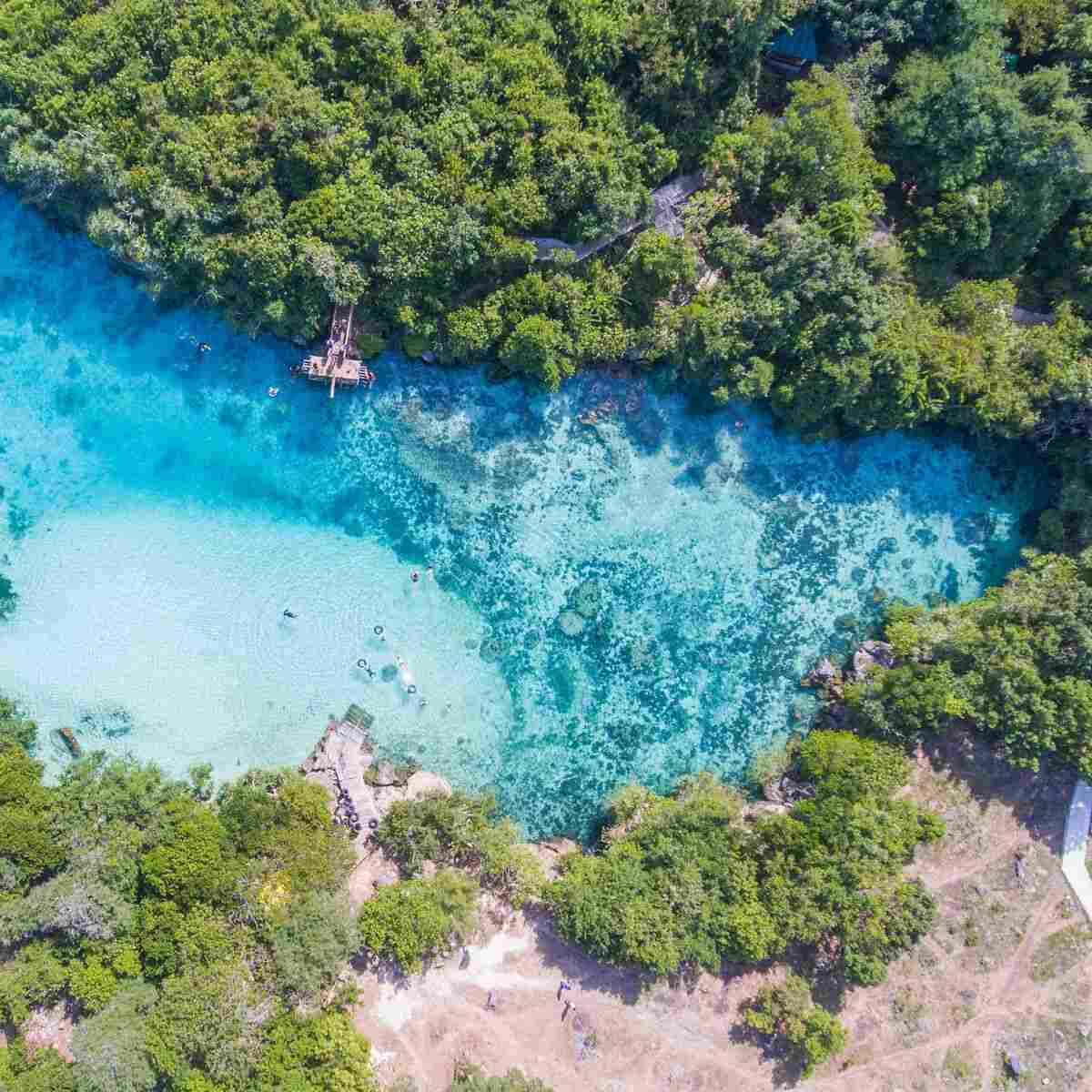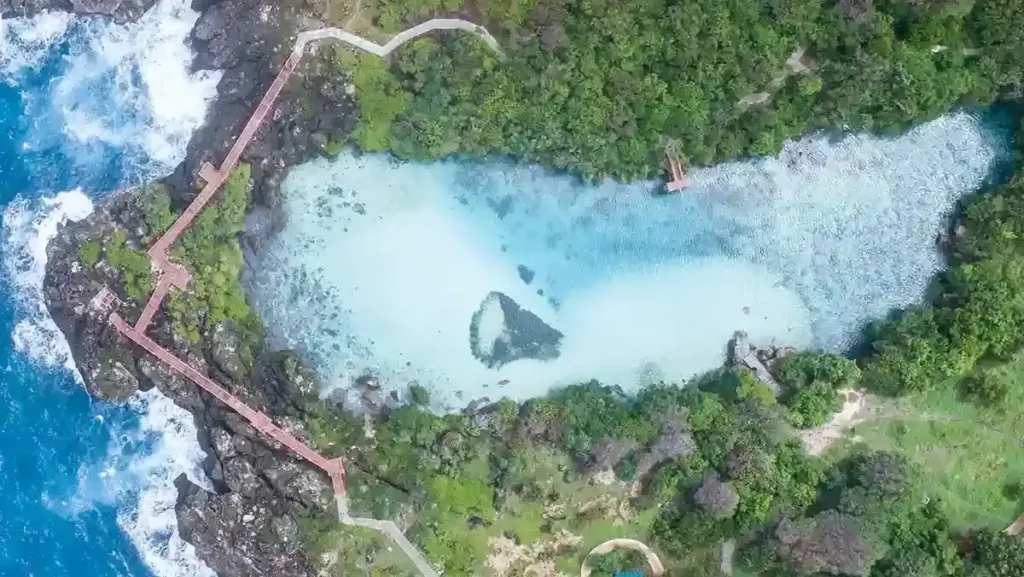
Weekuri Lagoon, Southwest Sumba — natural seawater lagoon

Weekuri Lagoon Guide 2027: Tides, Fees & Best Time

Weekuri Lagoon — written Waikuri on some maps and road signs — is a natural seawater lagoon on the Kodi coast of southwest Sumba, about 90 minutes by car from Tambolaka airport. Ocean swell filters through gaps in the limestone rim, so the pool rises, falls and shifts colour with the tide: fullest and deepest turquoise around mid-to-high tide, shallow and glass-calm at low water. Entry is a small retribution collected at the gate by the local community, paid in cash, and the quietest window is before 10:00 in the morning. Most of our guests visit on day two of a private overland circuit, pairing the lagoon with Mandorak Beach and Ratenggaro village on the same short stretch of coast. Here is everything that matters for a 2027 visit: tide timing, fees, safety for children, where to stay, and the route our local driver-guides have refined over years of early-morning runs.

What Exactly Is Weekuri Lagoon?

Weekuri is not a river pool or a freshwater spring: it is the Indian Ocean, twice filtered. Waves break against a low limestone shelf on the seaward side, and seawater pushes through channels and porous rock into a sheltered basin roughly the size of two football pitches. Because the water renews itself with every tide, it stays remarkably clear — from the wooden deck you can usually watch small fish cross the sandy bottom. A short path climbs the outer rim to a clifftop where the open ocean explodes against the rock below, a loud counterpoint to the stillness inside. The rule your guide will repeat: swim in the lagoon, admire the ocean from above.

How Do the Tides Change the Lagoon?

Tide is the single biggest variable in how Weekuri looks and swims, which is why your private guide checks the tide table the evening before and orders your day around it.

  • High tide: the basin fills chest-deep to overhead in the centre, the inflow near the seaward channels gets pushy, and the colour is at its most saturated. Best for confident swimmers and for photographs from the rim.
  • Mid tide: the balance most guests love — enough depth to swim properly, a gentle current, strong colour.
  • Low tide: knee-to-waist deep, almost no movement, and the surface turns to glass. This is the window we choose for families with small children and for long-exposure photography.

Clarity holds up year-round because the lagoon is sea-fed rather than rain-fed, though a large wet-season swell can stir sand off the bottom for a day or two.

What Are the Entry and Parking Fees in 2027?

Weekuri sits on community land, and the gate fee is a local retribution collected by villagers — a small cash amount per person, with modest parking fees at Sumba attractions like this one charged separately for cars and motorbikes. Bring small rupiah notes if you travel independently; there are no card machines and no ATM nearby. On our tours you never handle any of it: entrance fees, parking and village donations are folded into the package, and your driver-guide settles each gate while you walk in. As a reference, our 4-day Sumba island tour that includes Weekuri runs from USD 390-700 per person as of August 2026, varying with group size and subject to season — with every local fee already inside that number.

When Is the Best Time to Visit in 2027?

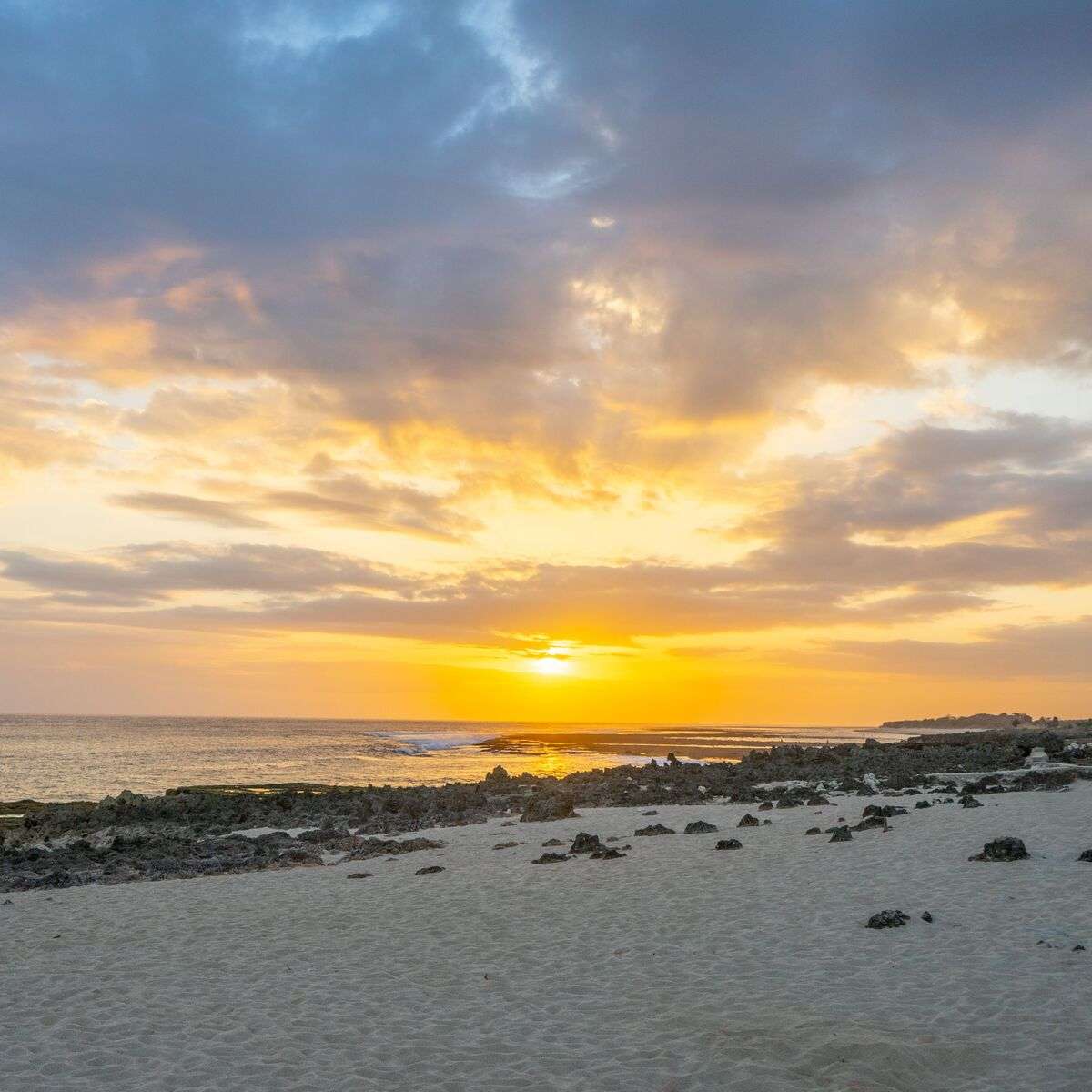
Season first. May through October is the dry season: reliable sun, the strongest turquoise, and easy road conditions across Kodi. November to March turns the hills green and brings afternoon rain, but mornings usually stay workable — and you will often have the deck to yourself. Then think about the clock. Weekday mornings before 10:00 are quietest; domestic day-trippers and weekend crowds concentrate between 10:00 and 15:00, especially around public holidays. Midday sun directly overhead lights the water at its most electric, so photographers face a pleasant trade-off: empty decks in the soft early light, or peak colour with more company. Our standard answer is both — swim early, photograph the lagoon again from the rim on your way out, then give the golden hours to Ratenggaro and Pero down the coast.

Is Weekuri Lagoon Safe for Kids?

Yes, with two conditions: time your swim for low-to-mid tide, and keep children well away from the seaward channels, where the inflow can tug at little legs even on a moderate tide. The wooden deck and entry steps make getting in easy, but the limestone around the rim is sharp — reef shoes earn their space in your bag. We carry properly sized life jackets for kids at Weekuri Lagoon on every family departure, and your guide will stand waist-deep alongside nervous swimmers rather than watch from the shade. Treat the clifftop viewpoint as a hand-holding zone, not a running zone.

How Do You Combine Weekuri with Mandorak and Ratenggaro?

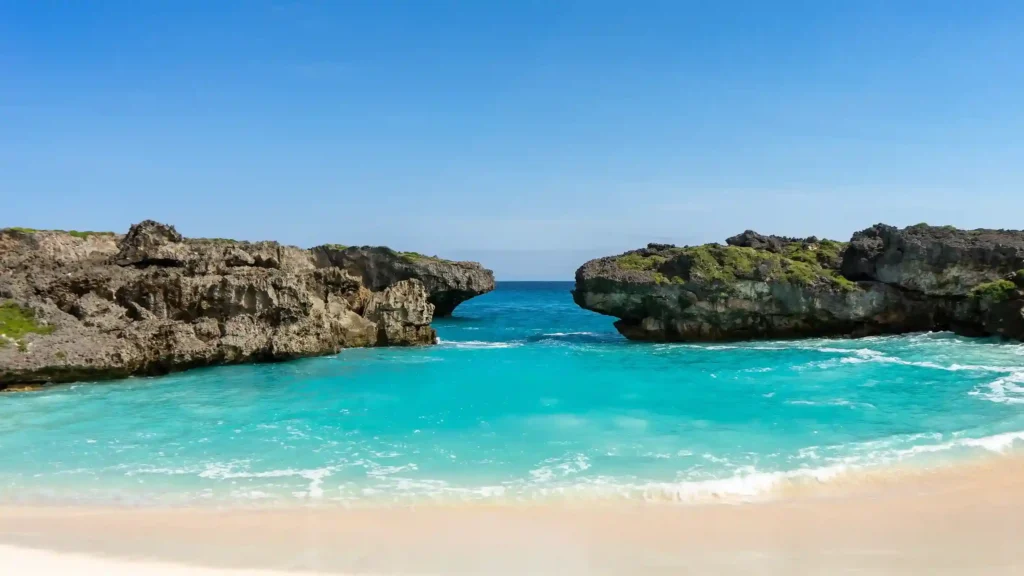
The classic Kodi day is a compact triangle. Start at Weekuri in the morning quiet, then drive roughly ten minutes to Mandorak Beach, a pocket of white sand squeezed between twin limestone cliffs, for a second, wilder swim. After lunch, continue to Ratenggaro, where thatched roofs tower to around fifteen metres above megalithic tombs facing the surf — the most photographed village skyline in Sumba. Finish at Pero, a fishing village whose western horizon does sunset properly.

Two choices at Ratenggaro deserve care. Local boys offer horse rides along the beach; if you ride, choose ethical horse riding in Sumba — we work with handlers who rest their animals between rides, use proper tack and never run horses through the midday heat. And if a textile catches your eye, buy it in the village rather than at the airport: supporting women weavers in Sumba puts your money directly into the hands that spent weeks on the cloth, and the piece will be better, too.

Where Should You Stay Near Weekuri?

The Kodi coast now has a genuine premium-boutique anchor in Cap Karoso, above Pero village, with Lelewatu and Nihi Sumba further east along the southwest coast. A Cap Karoso overland extension is the pairing our guests request most: finish a 6-day overland circuit, then add two slow nights of pool, farm-to-table dining and nothing on the calendar. For couples, Cap Karoso honeymoon ideas come easily — an early lagoon swim before the crowds, a private beach dinner, a vineyard-style tasting from the resort’s own farm. The property also hosts small corporate events in Sumba resorts format: leadership retreats and creative off-sites that trade ballrooms for ocean cliffs. What we like most is the model behind it — real cooperation between resorts and villages, from Kodi-grown produce in the kitchen to local hiring and village visits run on the community’s terms. Travelling simpler? Tambolaka town has clean, friendly guesthouses about ninety minutes away.

Visiting Respectfully on the Kodi Coast

Kodi is a heartland of Marapu, Sumba’s ancestral faith, practised alongside Christianity — often within a single family. That everyday religious tolerance in Sumba is one of the island’s quiet marvels, and it deserves the same courtesy in return. Most cultural misunderstandings in Sumba happen when visitors treat living villages as film sets: walking into homes uninvited, photographing tombs and elders without asking, or skipping the greeting entirely. The fix is simple. Greet first, ask before every portrait, accept coffee or betel nut when it is offered, and let a guide who grew up here make the introductions. Guests who slow down for ten minutes of conversation routinely call Ratenggaro the highlight of their trip — not the photograph, the welcome.

How Do You Book — and Can You Pay by Card?

Three ways to build Weekuri into a 2027 trip. Travellers already on the island can take a private southwest day trip with car and driver-guide from about USD 60-90 per day (August 2026 indicative). Most guests choose the 4D3N circuit from USD 390-700 per person, mirroring our 4D3N Sumba tour with Indonesia Juara Trip, or the fuller 6D5N from USD 570-1,020 per person (as of August 2026, subject to season). Payment via credit card for Sumba tours is accepted through a secure payment link, alongside bank transfer, so nobody needs to carry trip-sized cash across the island. We also design overland extensions from cruise calls when small expedition ships visit Sumba, timed carefully to gangway hours. Getting here is the easy part: daily flights connect Bali to Tambolaka in about 1 hour 15 minutes.

Speak to Our Sumba Travel Advisor

Tell us your dates, who is travelling, and how you feel about early mornings — and a Sumba-born advisor will send back a tide-aware plan for Weekuri, Mandorak and Ratenggaro within a day. Message us on WhatsApp at +62 811-994-1919 or email sales@indonesiajuara.asia. Operated with Indonesia Juara Trip — high-end local Sumba expertise. We show you the real Sumba. Part of Juara Holding Group — since 2015.

Similar Posts