6-Day Sumba Island Tour Package 6D5N Complete

A 6-day Sumba island tour (6D5N) costs from USD 570 to 1,020 per person as of August 2026, subject to season and group size — and it is the shortest route that crosses the entire island, flying into Tambolaka and out of Waingapu, without a single rushed sunset. Guests see everything our 4-day Sumba tour covers, then add the waterfalls of Manupeu Tanah Daru National Park, the wild-horse savanna of Puru Kambera, and the quiet north-coast sand at Mondu that shorter trips have to skip.

Ask our advisors which duration they book most often for honeymooners and photographers, and the answer is this one. Six days gives you two golden hours in the west and three in the east, a buffer when rain rearranges a waterfall visit, and unhurried time in villages where hurrying is noticed. Every departure of this Sumba overland 6D5N package is private: your own car, your own English-speaking local driver-guide, your own pace. Operated with Indonesia Juara Trip — high-end local Sumba expertise. We show you the real Sumba.

Why Is 6D5N the Sweet Spot Between the 4-Day and 8-Day Routes?

Driving Tambolaka to Waingapu takes the better part of a day on winding rural roads, so every Sumba itinerary is really a question of how much you are willing to compress. Four days means one clean pass with hard choices. Eight days opens side valleys and rest mornings. Six days is the balance point: one west-to-east line with zero backtracking, every signature stop included, and a spare evening for the places that deserve two attempts. Photographers get Wairinding and Walakiri on separate nights instead of choosing between them. Honeymooners get a deliberately empty afternoon on Day 5 — the rarest luxury on any overland route.

The route below follows the same west-to-east logic as our 4-day itinerary, expanded with Lapopu, Matayangu, Weekacura, Waikelo Sawah, Puru Kambera and Mondu. If you have less time, start with the 3-day Sumba tour; if you can stretch further, the 8-day full-island itinerary adds the southern Kodi beaches and the megaliths of Anakalang.

6-Day Sumba Island Tour Itinerary, Day by Day

Day 1: Tambolaka Arrival — Waikelo Sawah, Ratenggaro & Pero Sunset

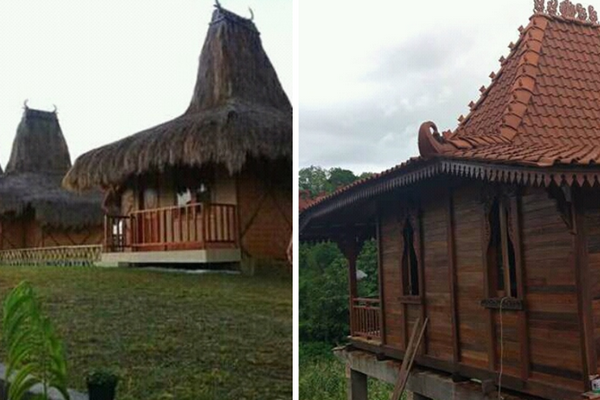
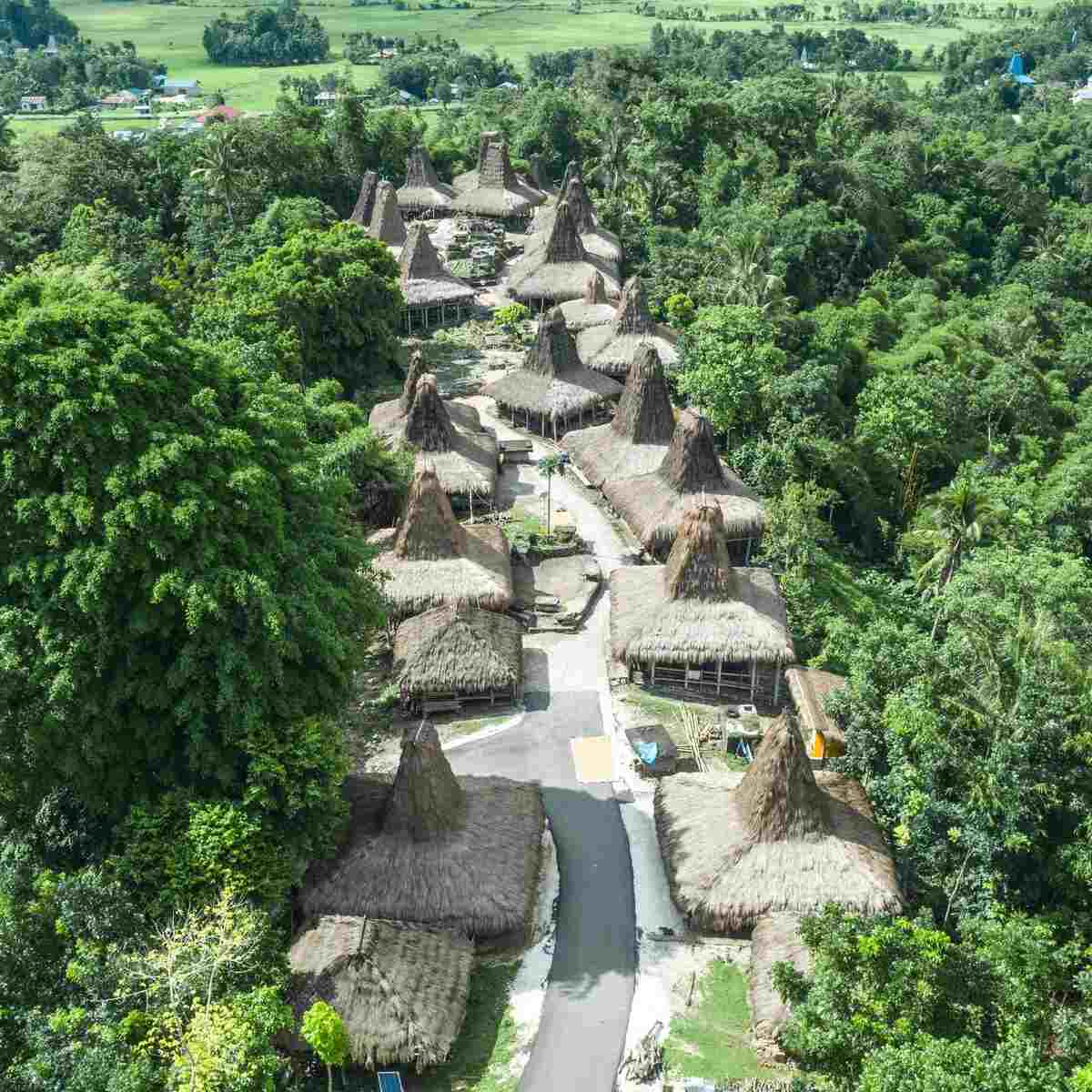
Your private guide meets the morning flight from Bali (about 1 hour 15 minutes) at Tambolaka. The first stop is gentle by design: Waikelo Sawah, a spring-fed weir where water pours from a cave mouth into terraced rice fields. It is also where your guide walks you through village etiquette — how to accept or politely decline the offered betel nut, when to ask before photographing, why a small donation matters in communities that keep the Marapu faith. By mid-afternoon you reach Ratenggaro on the Kodi coast, its peaked roofs among the tallest in Sumba, megalithic tombs set right against the ocean. Sunset is at Pero, a working fishing village where outriggers come home through the surf. Overnight near Tambolaka.

Day 2: Weekuri Lagoon, Mandorak Beach & Weekacura Waterfall

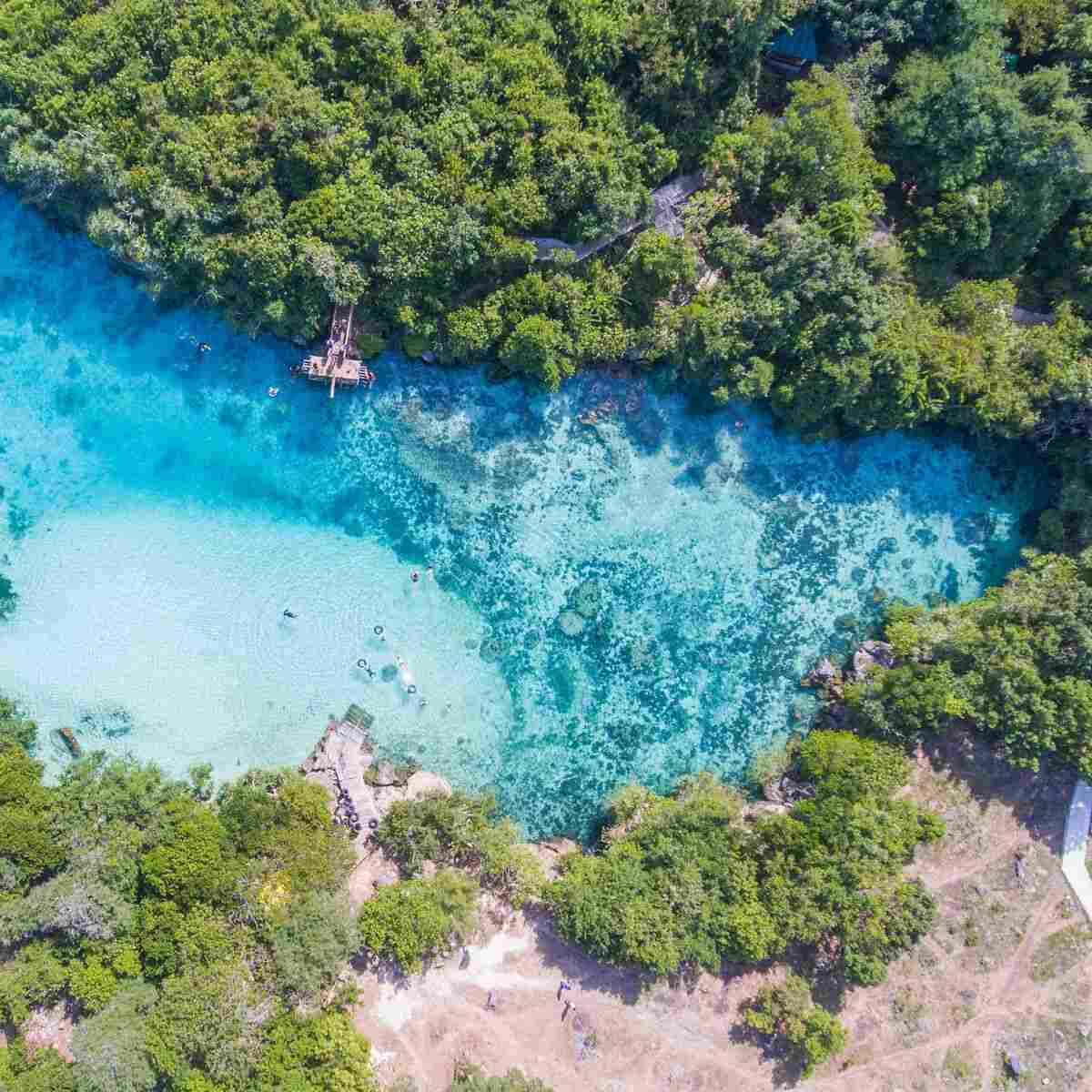
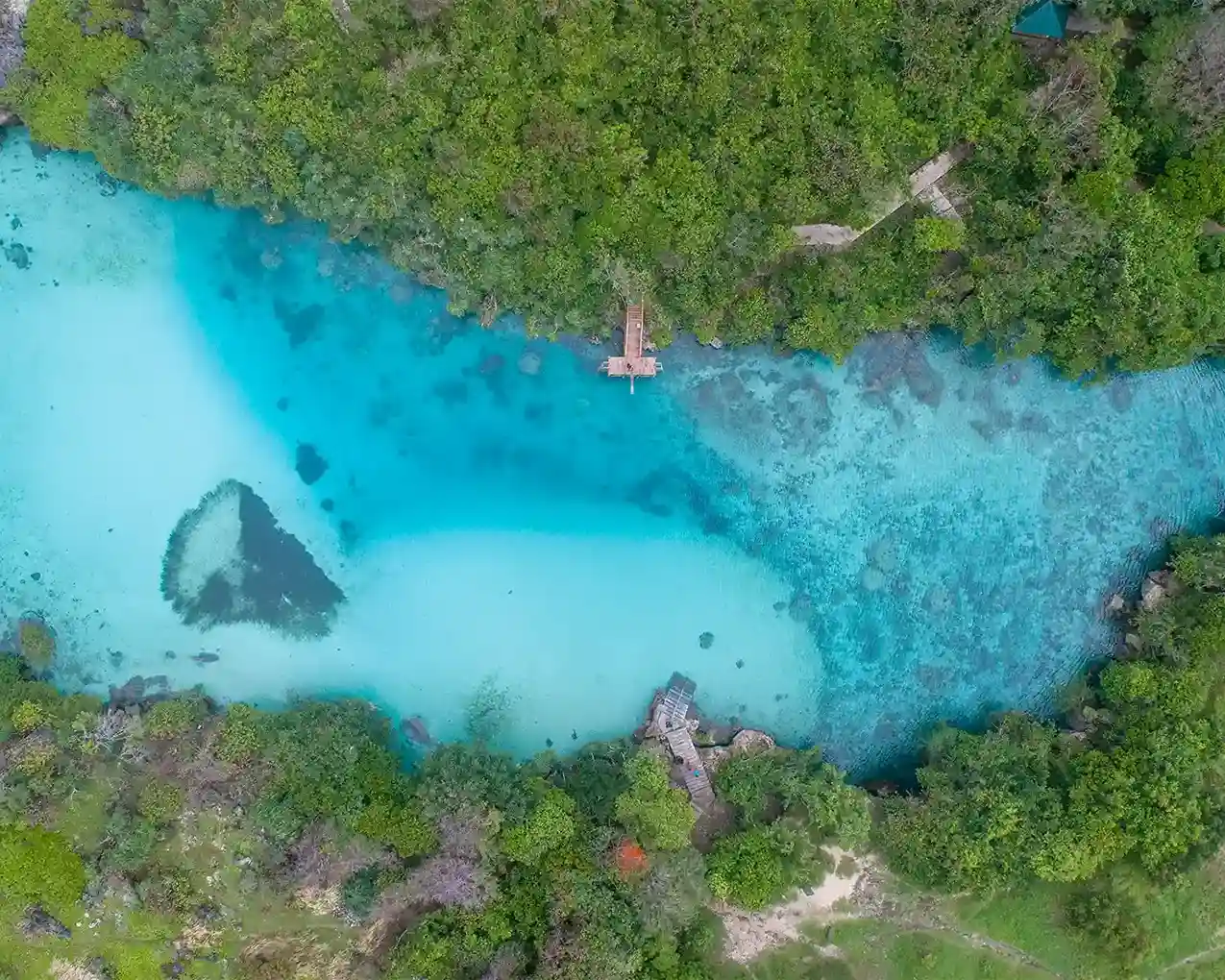
Morning belongs to Weekuri (Waikuri) Lagoon, the seawater pool separated from the open ocean by a ribbon of rock. Your guide times the visit around the tide, when the turquoise is at its clearest and the tour buses have not yet arrived. Mandorak Beach follows — a pocket of white sand held between twin limestone cliffs — then you turn inland to Weekacura, a small waterfall with a swimmable pool that most itineraries omit entirely. The day ends in Waikabubak, the hill town at the centre of West Sumba. Overnight Waikabubak.

Day 3: Prai Ijing, Lapopu & Matayangu Falls, Wairinding Sunset

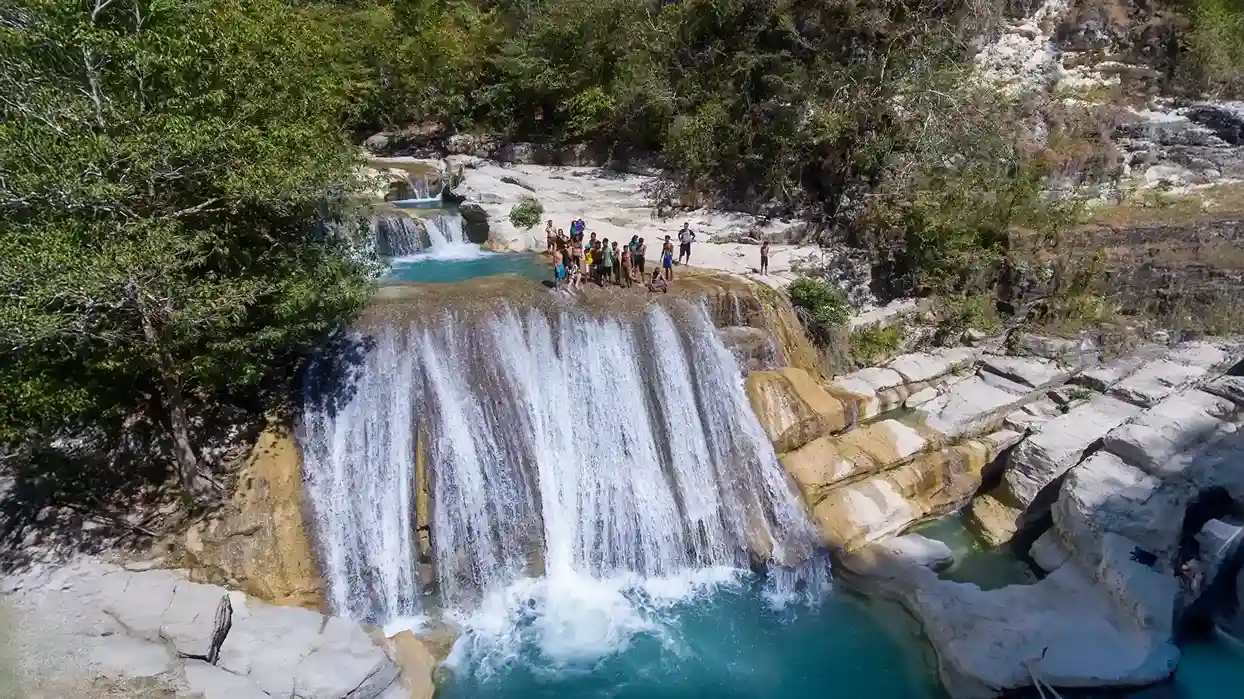
Prai Ijing — the ridge-top village above Waikabubak — is best walked early, with a local host, before day-trip groups arrive. From there the Wanokaka valley leads to Lapopu, a broad tiered cascade inside Manupeu Tanah Daru National Park, and, water levels permitting, the walk to Matayangu, where a river emerges straight from a cliff cave. Your guide will call the conditions honestly; in high water we trade the trek for longer at Lapopu. The afternoon is the longest drive of the trip — roughly four hours east — timed so you climb Wairinding’s grass ridgelines exactly at golden hour. Overnight Waingapu.

Day 4: Tanarara Hills, Waimarang or Tanggedu & Walakiri Dancing Trees

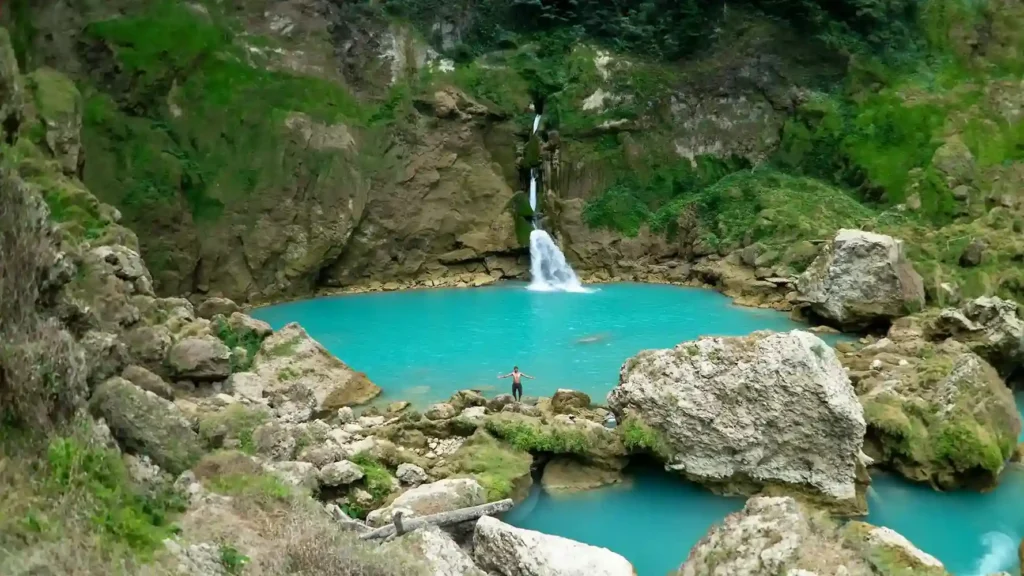
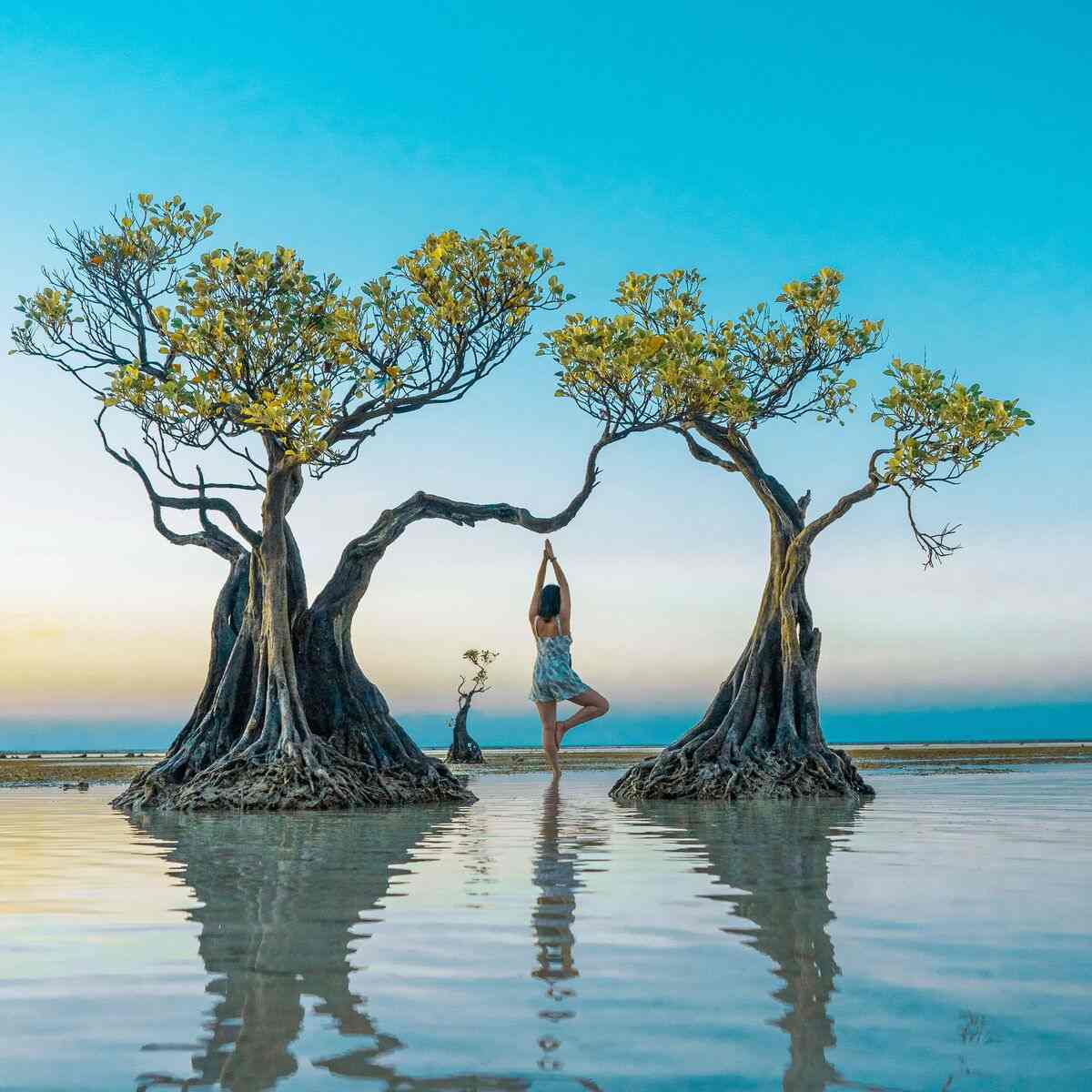
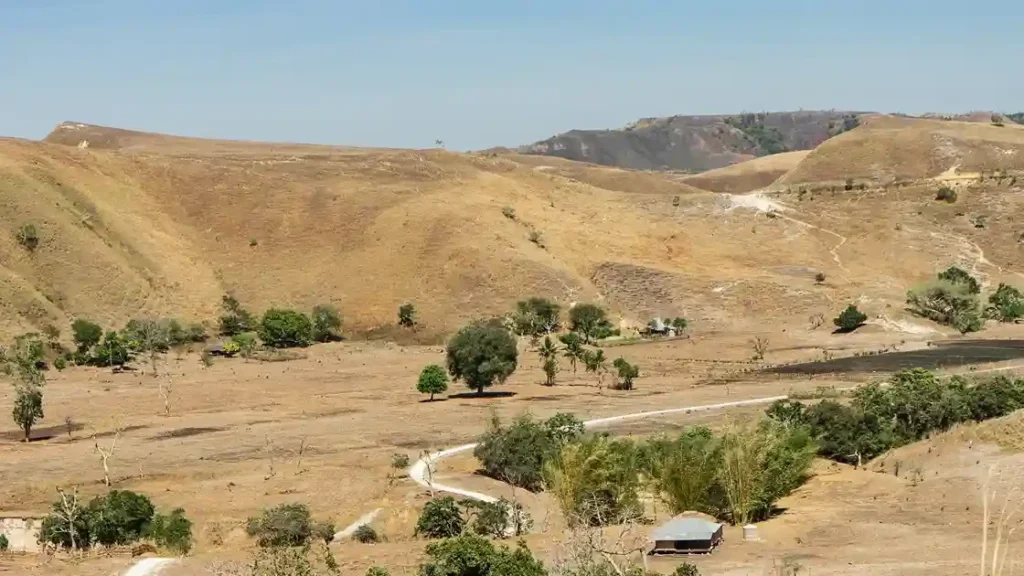
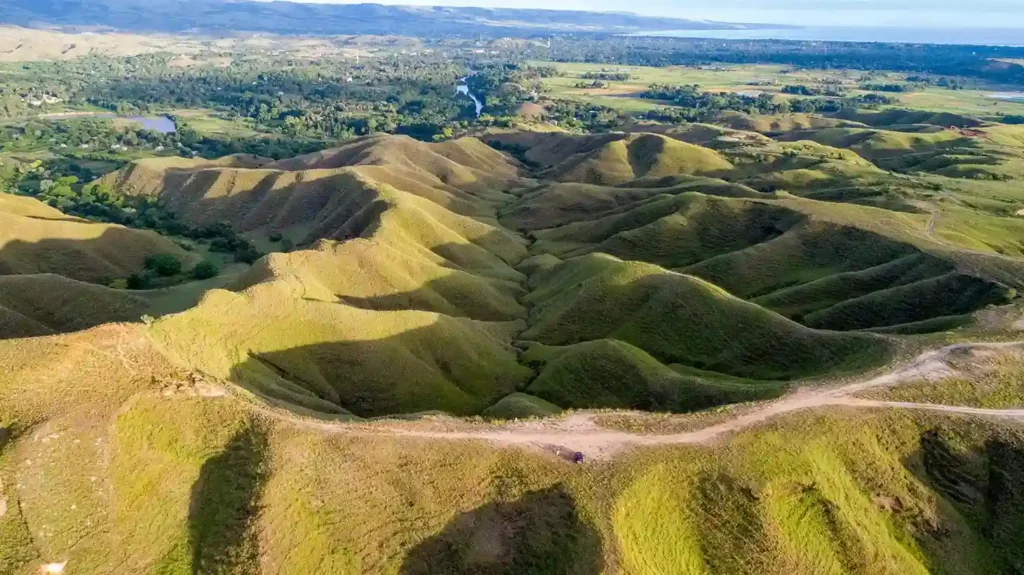
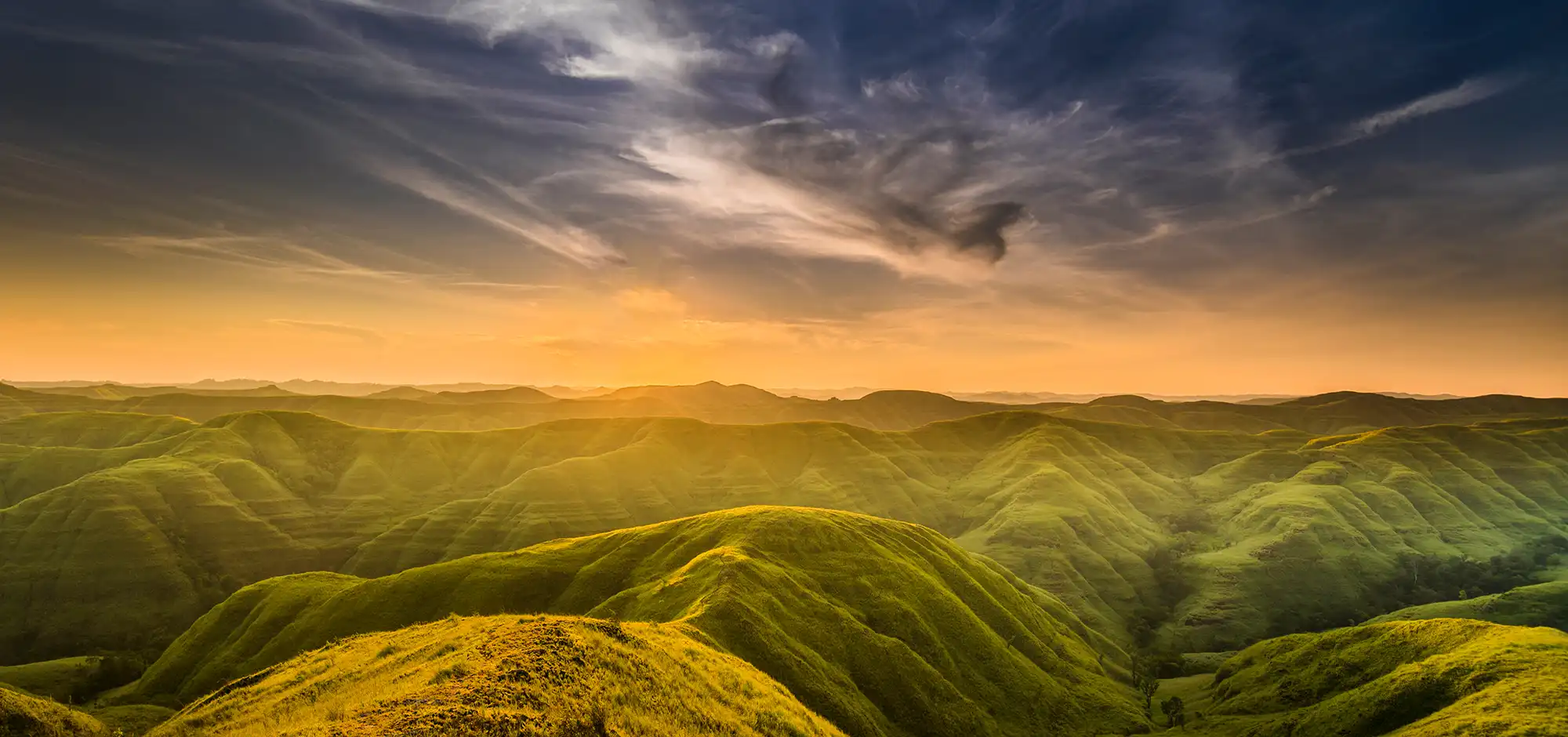
East Sumba’s morning light belongs to Tanarara, where folded savanna hills run to the horizon in bands of green or gold depending on the month. Then a choice of waterfall: Waimarang, a jade plunge pool ringed by ledges the confident jump from, or Tanggedu, the layered gorge locals call the Grand Canyon of Sumba. Late afternoon brings low tide at Walakiri Beach, where dwarf mangroves stand alone in the shallows — the dancing trees — for the island’s most photographed sunset. Your guide knows where to stand before the light turns, not after. Overnight Waingapu.

Day 5: Puru Kambera Savanna, Wild Horses & Mondu Beach

An easy day, on purpose. Puru Kambera’s coastal savanna is at its best in the morning, when sandalwood ponies graze between lontar palms a few steps from the road. You continue up the north coast to Mondu for a quiet swim and a picnic lunch on sand you will very likely have to yourselves. The afternoon stays unscheduled: a weaving stop in Prailiu to watch ikat being tied and dyed, a second attempt at any sunset the weather stole earlier in the week, or nothing at all. Overnight Waingapu.

Day 6: Tanau Hill Sunrise, Persaudaraan Hill & Waingapu Departure

A pre-dawn start earns you sunrise from Tanau Hill, then the wide panorama from Persaudaraan Hill over Waingapu’s bay and rice flats. Breakfast follows, and your guide transfers you to Waingapu airport for the flight back to Bali. You leave from the opposite end of the island you entered — no repeated roads, no wasted hours.

How Much Does a 6-Day Sumba Tour Cost in 2026?

From USD 570 to 1,020 per person as of August 2026, subject to season. The spread reflects group size: a private party of two sits toward the top of the range, while families and small groups sharing one car bring the per-person rate down toward USD 570. Our pricing mirrors the published per-person model of Indonesia Juara Trip’s Sumba tour 4D3N, extended by two days — displayed openly, while most international operators still hide Sumba rates behind a quote form. Tour code SIT-6D5N. Difficulty: easy to moderate, with short walks and one optional waterfall trek.

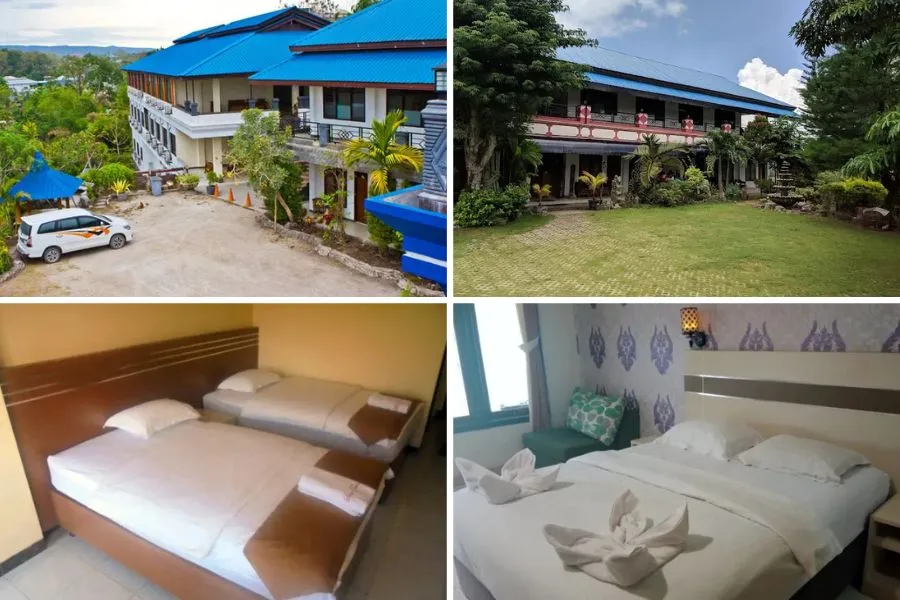
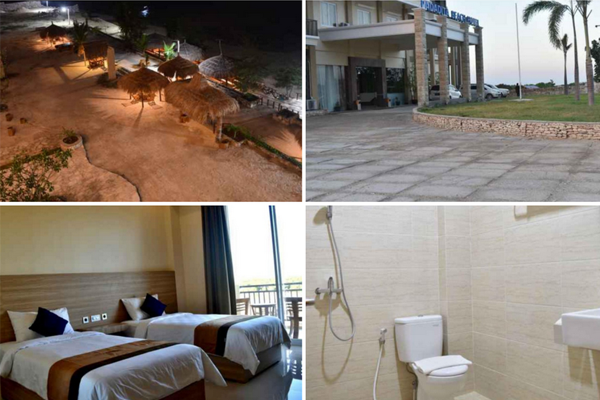
  • Included: private air-conditioned car with fuel, English-speaking local driver-guide, five nights’ accommodation, daily breakfast, entrance fees and customary village donations, mineral water throughout.
  • Not included: flights, lunches and dinners (warung meals in Waingapu and Waikabubak are inexpensive), travel insurance, and gratuities.

For context across the ladder: a 3D2N trip runs roughly USD 300 to 550 per person, the 4D3N from USD 390 to 700, and independent travellers can hire a private car with driver-guide from about USD 60 to 90 per day. Self-organising saves a little money; what it cannot buy is the local timing — tides at Weekuri, low water at Walakiri, the hour Wairinding turns gold — that this route is built around.

Which Airport to Choose in Sumba?

For this itinerary, both. The route is built on Sumba open jaw flights: arrive at Tambolaka in the west, depart from Waingapu in the east, so no driving day is spent returning to where you started. Open-jaw ticketing costs no more than a return on these routes, because each leg is priced as a separate one-way. When searching, use the correct Sumba airport codes — TMC for Tambolaka and WGP for Waingapu. Queries for Sumba airport codes TMC WAG are common, but WAG is a misreading: Waingapu’s real IATA code is WGP, and typing WAG into a booking engine returns nothing useful. Both airports connect to Bali daily on turboprop services of about 1 hour 15 minutes. Luggage allowance on Sumba flights is tighter than on jet routes and varies by carrier and fare class, so confirm your checked limit when booking — our advisors verify it for every guest as part of the itinerary. Labuan Bajo to Sumba flights operate only seasonally and usually route back through Bali, and Kupang to Sumba flights are a practical option if you are already elsewhere in East Nusa Tenggara. We track schedules and will tell you plainly which connection is realistic for your dates.

How Does Sumba Compare to Bali?

The Sumba climate compared to Bali is markedly drier: a savanna island with a long, reliable dry season from roughly May to October, lower humidity, and hills that shift from green to gold as the year turns. Any comparison Sumba vs Bali for beaches is almost unfair — Walakiri, Mandorak and Mondu regularly hold a handful of visitors where their Bali equivalents hold thousands, though you trade beach clubs and restaurant rows for fishing villages and picnic lunches. Indonesia’s tourism ministry has leaned into Sumba branding as beyond Bali destination in its official campaigns, and the skip Bali go Sumba trend is visible in who we host: travellers who have done Bali twice and want the older, quieter Indonesia. The savanna hills, the megalithic villages and the empty north-coast beaches are exactly what that promotion promises, and for once the marketing undersells the place. Our honest advice — come for the landscapes and the living Marapu culture, and treat simpler hotels outside the resorts as part of the trade.

Honeymoons, Weddings & Corporate Retreats on the 6-Day Frame

The 6D5N frame extends gracefully. Honeymooners often add two or three resort nights at the end: wedding packages in Sumba resorts are handled by the properties themselves — Nihi Sumba typically from around USD 1,000-plus per night, with Lelewatu and Cap Karoso in the premium-boutique tier — and we arrange the overland chapter before or after, including the transfer logistics between coasts. For companies, a Sumba corporate retreat package built on this route works well for groups who have outgrown the usual venues: a private vehicle fleet, a savanna dinner under a sky with no light pollution, and an ikat weaving session that doubles as the best team activity we know. Tell us the occasion; we will shape the frame around it.

Shorter or Longer? The Full Itinerary Ladder

Every duration from 3 to 9 days follows the same one-way logic with the same local team. Compare the 3-day and 4-day routes if your window is tight, step up to the 8-day full-island tour for the southern coast and central megaliths, or browse all Sumba island tour packages side by side to see which days each duration keeps.

Book Your 6-Day Sumba Island Tour

Dry-season dates and Pasola-adjacent weeks fill first, and we cap departures so each guide gives full attention to one party at a time. Speak to our Sumba travel advisor on WhatsApp at +62 811-994-1919 or email sales@indonesiajuara.asia with your dates and group size — you will get a straight answer on availability, a firm per-person price, and honest advice if a different duration suits you better. Sumba Island Tour, operated with Indonesia Juara Trip. Part of Juara Holding Group — since 2015.