Ratenggaro Village Guide: Tallest Roofs in Sumba
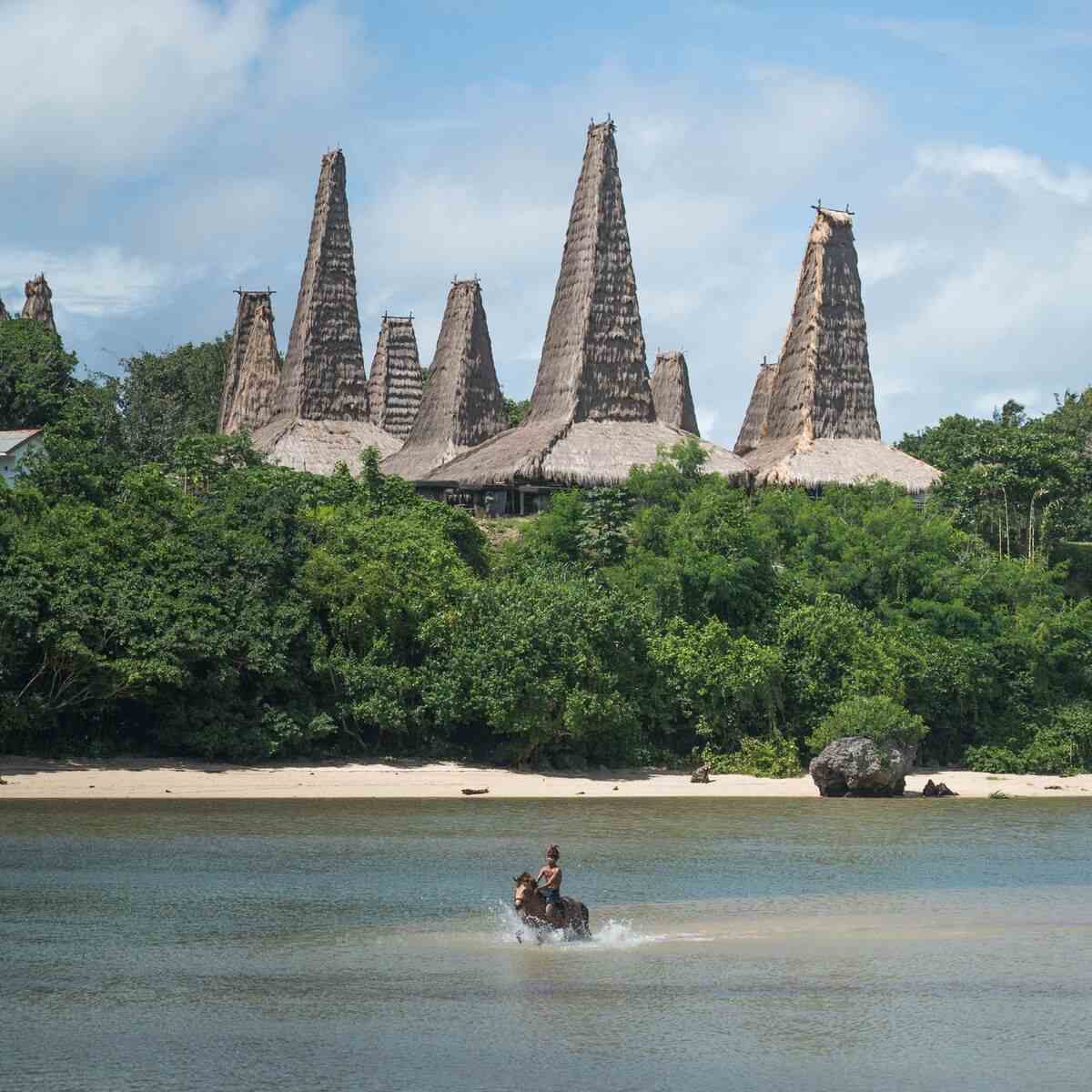
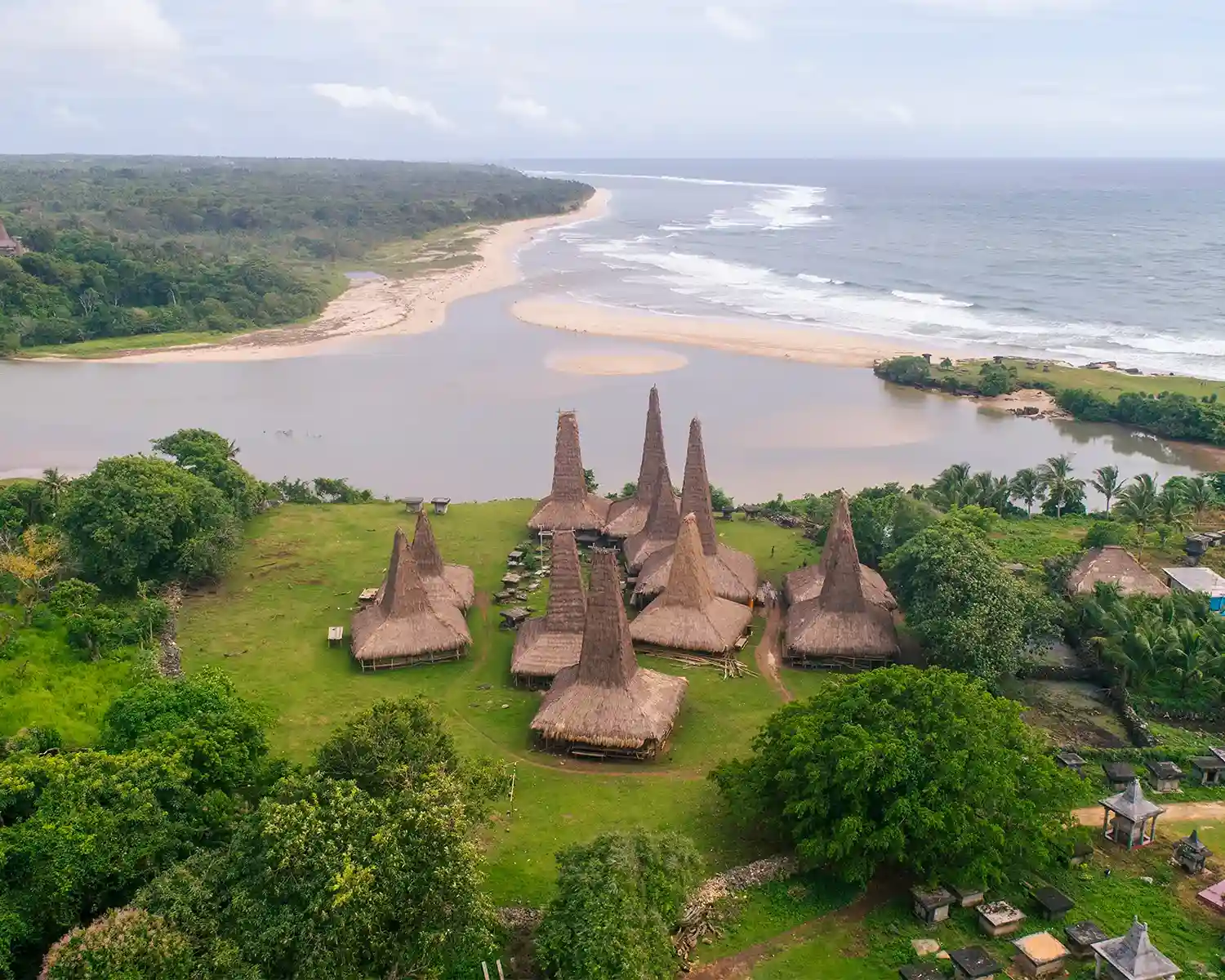
Ratenggaro is a living Marapu village at the mouth of the Waiha River in Kodi, Southwest Sumba, and it keeps the tallest traditional roofs on the island: peaked thatch towers rising to roughly 15 metres above a line of megalithic tombs on the shoreline grass. You can visit year-round on a day route from Tambolaka (about a 90-minute drive), sign the guest book with a modest cash donation, and walk the village with a local host. Late afternoon brings the best light, when the roofs cast long shadows toward the sea.
This guide comes from our Kodi driver-guides, who grew up with the adat protocol here and bring guests to Ratenggaro every week. It covers the etiquette that matters, where your money goes, whether an overnight is worth it, and how the village anchors our Southwest Sumba Tour.
What Makes Ratenggaro Different From Other Sumba Villages?
The name explains half of it. In the Kodi language, rate means grave and Garo names the clan whose ancestors rest here, so Ratenggaro is, literally, the grave of the Garo people. The village stands where the river meets the Indian Ocean, putting its carved stone tombs almost on the sand, with the sister village of Wainyapu visible across the estuary.
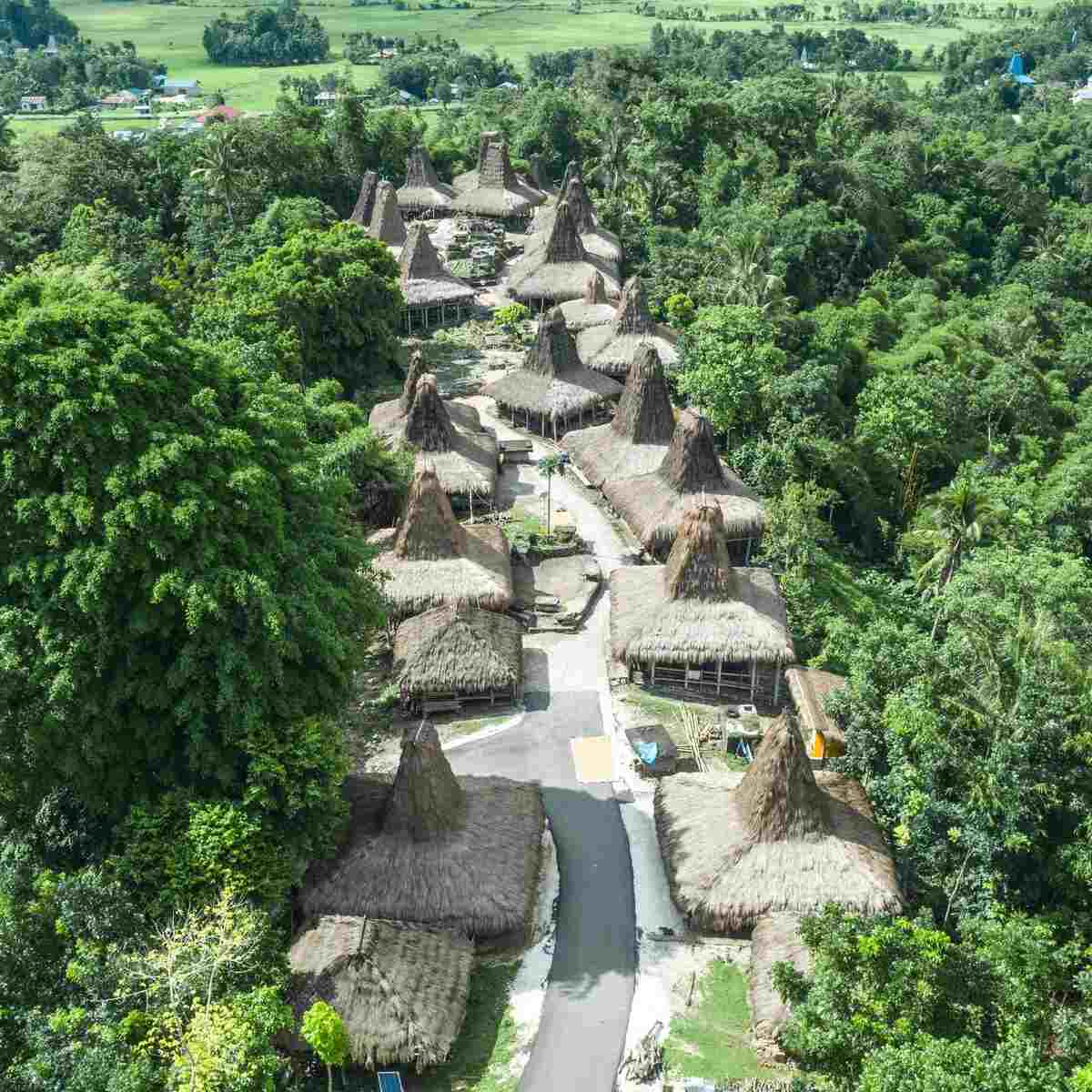
The other half is architecture. Each uma kelada, the tower-roofed clan house, is built in four levels: a livestock shelter at ground level, the family living floor around a central hearth, an attic for rice and heirloom ikat, and a sacred peak reserved for the marapu, the ancestral spirits at the heart of Sumbanese belief. The taller the roof, the higher the clan’s standing; Ratenggaro’s tallest reach about 15 metres, the highest on Sumba. After a fire in 2004, families rebuilt entirely in traditional form, alang-alang thatch and forest timber rather than zinc, which is why the village photographs much as it did generations ago.
Where Is Ratenggaro and How Do You Get There?
Ratenggaro sits in the Kodi Bangedo district of Southwest Sumba regency, about 90 minutes’ drive from Tambolaka airport on mostly sealed roads. There is no reliable public transport, so nearly all guests travel by private car and driver-guide, from around USD 60-90 per day as of August 2026 (indicative, subject to season). The classic day route pairs the village with Weekuri Lagoon, Mandorak Beach and a sunset at Pero, the loop our Southwest Sumba Tour follows with a Kodi-born guide at the wheel.
The Megalithic Tombs Beside the Sea
Between the houses and the beach lie dozens of carved stone graves, among the oldest in the Kodi region. These are not ruins: burials still take place, and the heaviest capstones were dragged here by hand in the stone-pulling tradition that survives across Sumba. Treat the area as you would any cemetery. Do not climb or sit on the tombs, ask before flying a drone, and let your guide check before close-up photographs of a grave; some belong to families who prefer distance. The reward is one of Indonesia’s most arresting scenes: tower roofs, carved stone and open ocean in a single frame.
How Should You Behave? Etiquette, Greetings and Donations
Arrive with a guide, not alone. Sign the guest book and leave a cash donation; your guide will advise the amount, which goes to a village fund for thatch repairs and ceremonies. Learning Sumba greetings goes a long way here: a warm “selamat sore” works everywhere in Indonesia, and your guide can teach you a Kodi phrase or two. If an elder offers sirih pinang (betel nut), receive it with your right hand; you may politely decline to chew, but the offer is hospitality and the receiving is respect. Ask before portraits, especially of elders and house interiors, and dress modestly, with shoulders covered.
Weaving is the village’s other livelihood, and a few fair trade ikat buying tips protect both sides: buy directly from the weaver, expect a natural-dye piece to cost several times more than a chemical-dye one because it takes weeks longer to make, and bargain gently or not at all; a fair purchase supports the village more durably than any donation. One thing to watch for 2027: there is an ongoing Sumba environmental fee discussion among district officials and tourism operators, but as of August 2026 nothing formal applies beyond the village donation. Carry small notes; we will update this guide if that changes.
Who Benefits From Your Visit? Community Tourism in Kodi
Ratenggaro is one of the better community based tourism projects in Sumba: parking, the guest book, weaving sales and hosting are villager-run, so most of what you spend stays in the kampung. Around it, CSR partnerships in Sumba tourism, from resort foundations to operators like ours who hire and train locally, fund clean water and school programmes across Kodi. None of this settles the harder question of balancing culture and tourism in Sumba: too many visitors and a living village becomes a stage set; too few and young people leave for Bali. Our answer is small groups, hosts we name and pay directly, and an honest briefing before you enter, so you arrive as a guest rather than an audience.
Can You Stay Overnight Near Ratenggaro?
Yes, and it changes the experience. A handful of family homestays operate in and around the village, with simple guesthouses toward Pero. Expect a mattress, a mosquito net and a shared mandi bathroom, and go in with clear eyes about noise levels in village homestays: roosters start before 4am, pigs and horses move at night, and a ceremony can mean drums until late. Bring earplugs. Power outages in Sumba are routine too, so pack a power bank and a headlamp.
The payoff comes after dark. The astro tourism potential in Sumba is genuine: there is almost no light pollution on the Kodi coast, and on a clear dry-season night around the new moon the Milky Way stands directly over the tomb line. Bring a tripod.
Do You Need Malaria Tablets for Sumba?
Sumba carries malaria risk, unlike Bali, with higher exposure in rural lowlands and in the November-March wet season. The tablets question is one for a travel clinic four to six weeks before you fly, not for a tour operator: many short dry-season visitors rely on repellent, nets and covered skin, while others take prophylaxis on medical advice. Whatever you decide, wear long sleeves at dusk, sleep under the net your homestay provides, and carry a DEET-based repellent from home; pharmacies here stock a limited range.
Two smaller practicalities: surfboard rental in Sumba is thin on the ground, so surfers eyeing Pero’s waves should bring a board or ask us to arrange one ahead; and withdraw cash in Tambolaka, as there are no ATMs near the village.
Where Ratenggaro Fits in a Longer Sumba Route
Most guests meet Ratenggaro on day one or two of an island-wide journey, then cross east for the savannah and beaches. The contrast is part of the pleasure: even crowd levels at Walakiri Beach, East Sumba’s best-known sunset, stay modest by Bali standards, and Ratenggaro is quieter still; a dozen visitors counts as a busy afternoon. On our 8-day full island tour you cover both coasts without rushing, while the 9-day grand expedition adds a flexible day for surf-watching or a weaving workshop. Shorter trips work too: our overland routes mirror the Indonesia Juara Trip 4D3N Sumba tour, from USD 390-700 per person as of August 2026, varying by group size and subject to season — priced openly, no quote form required. If Pasola interests you, plan around February-March 2027; exact dates are confirmed by the lunar calendar, and we track local announcements for our guests.
Frequently Asked Questions
How much does it cost to visit Ratenggaro Village?
Entry is by donation, recorded in the village guest book; your guide will advise the customary amount in rupiah. Transport is the main cost: a private car with an English-speaking driver-guide runs from around USD 60-90 per day as of August 2026 and covers Weekuri, Mandorak and Pero in the same day.
How long should you spend at Ratenggaro?
Plan 60-90 minutes for the houses, tombs and beach, longer if you sit with a weaver or your host family. Arrive from about 3:30pm for the softest light, then stay for sunset here or at Pero, ten minutes away.
Is Ratenggaro worth visiting compared with other Sumba villages?
Yes. It is the only village where 15-metre roofs, beachside megalithic tombs and an ocean horizon meet in one place. Pair it with hilltop Prai Ijing near Waikabubak and you will have seen the two poles of Sumbanese village architecture.
Ready to stand under the tallest roofs in Indonesia? Speak to our Sumba travel advisor on WhatsApp at +62 811-994-1919 or email sales@indonesiajuara.asia, and we will build Ratenggaro into a route that fits your dates, pace and budget. Sumba Island Tour is operated with Indonesia Juara Trip, high-end local Sumba expertise, part of Juara Holding Group — since 2015.