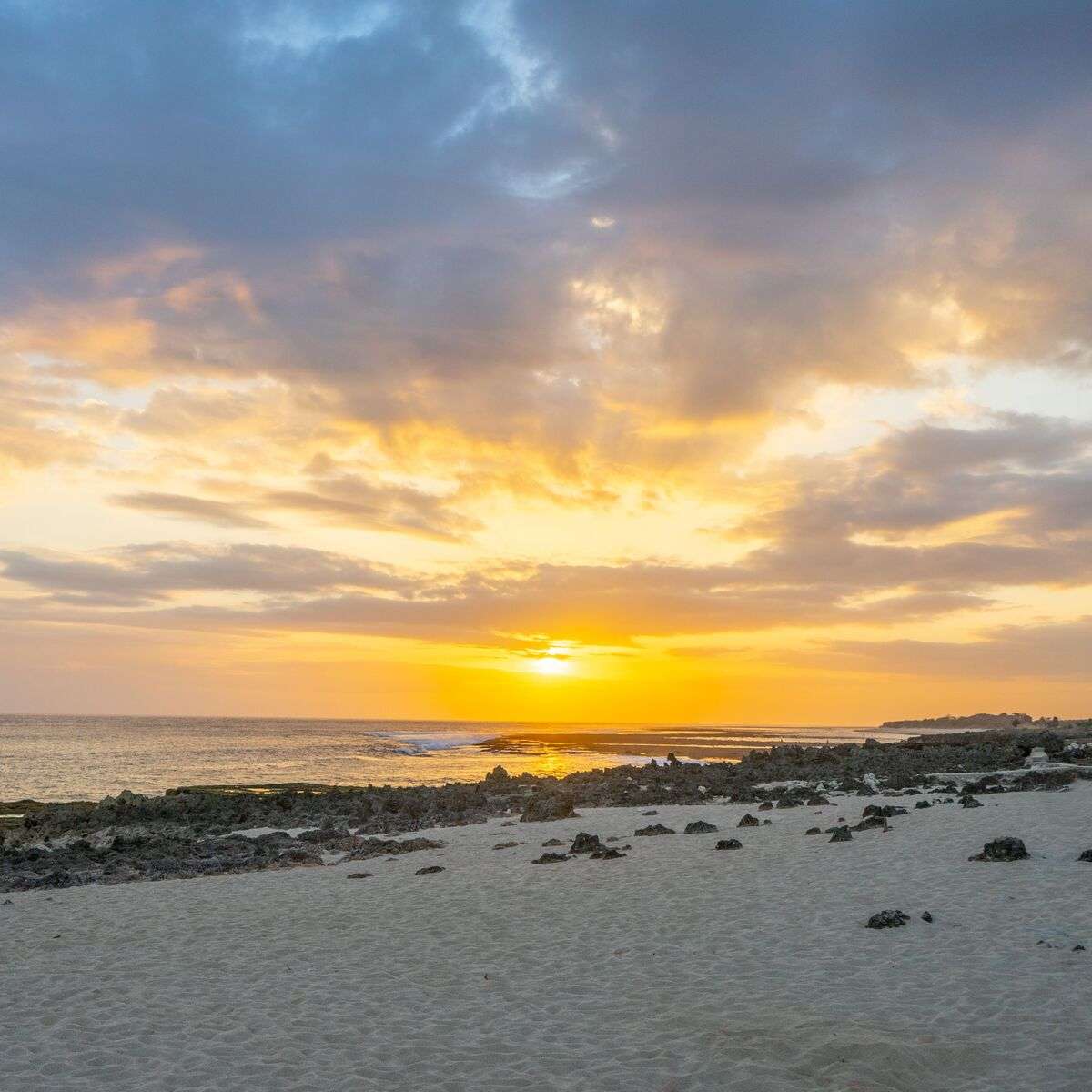
A private Sumba beach tour with our local team covers the island’s whole coastline in one route: the twin cliffs of Mandorak and the fishing harbour of Pero in the Kodi southwest, Marosi’s long sand in the west, then the dancing mangrove trees of Walakiri, the wild-horse shore of Puru Kambera and the white cliffs of Watuparunu in the east. Pricing is published, not hidden behind a quote form: from USD 300-550 per person for 3 days and 2 nights, or USD 390-700 per person for 4 days and 3 nights (as of August 2026, subject to season and group size). You travel with a Sumbanese driver-guide who times every beach for its best light, because arriving an hour early or late is the difference between a keeper photograph and a hot, shadeless car park.
Most operators slice these beaches into a dozen separate day trips, each priced by enquiry only. We run them as one west-to-east journey with the golden-hour matrix below, transparent USD rates, and guides who grew up swimming at these bays. Operated with Indonesia Juara Trip’s high-end local Sumba expertise: we show you the real Sumba.
Why Tour Both Coasts Instead of Staying on One?
Sumba is nearly twice the size of Bali with a fraction of the roads, and its two coasts feel like different islands. The west is limestone and swell: sea cliffs, natural arches, surf rolling into Kodi coves, ikat-weaving villages a few minutes inland. The east is savanna meeting the sea: tidal flats, casuarina groves, and grassland where horses graze almost to the waterline. Daily flights link Bali with both ends of the island, Denpasar to Tambolaka (TMC) and Denpasar to Waingapu (WGP), each around 1 hour 15 minutes, so the smart route flies into one airport and out of the other: no backtracking, and every evening on a different beach.
Which Beaches Does This Tour Cover?
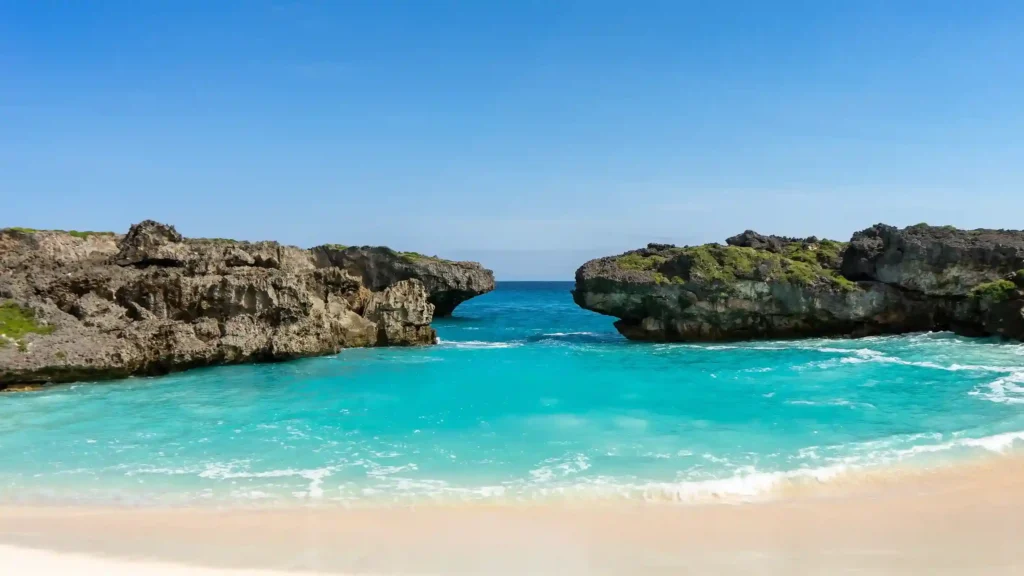
- Mandorak — a pocket cove squeezed between two limestone headlands on the Kodi coast, a few minutes from Weekuri Lagoon. The sunset at Mandorak cliffs, when the swell bursts against backlit rock, is one of west Sumba’s great free shows.
- Pero — a working fishing village where outrigger boats return through a reef channel at dusk. Surfers know its lefts; photographers know its golden light.
- Bwanna — a vast natural arch above a remote south-Kodi beach, reached by a short scramble. Bring water and proper sandals.
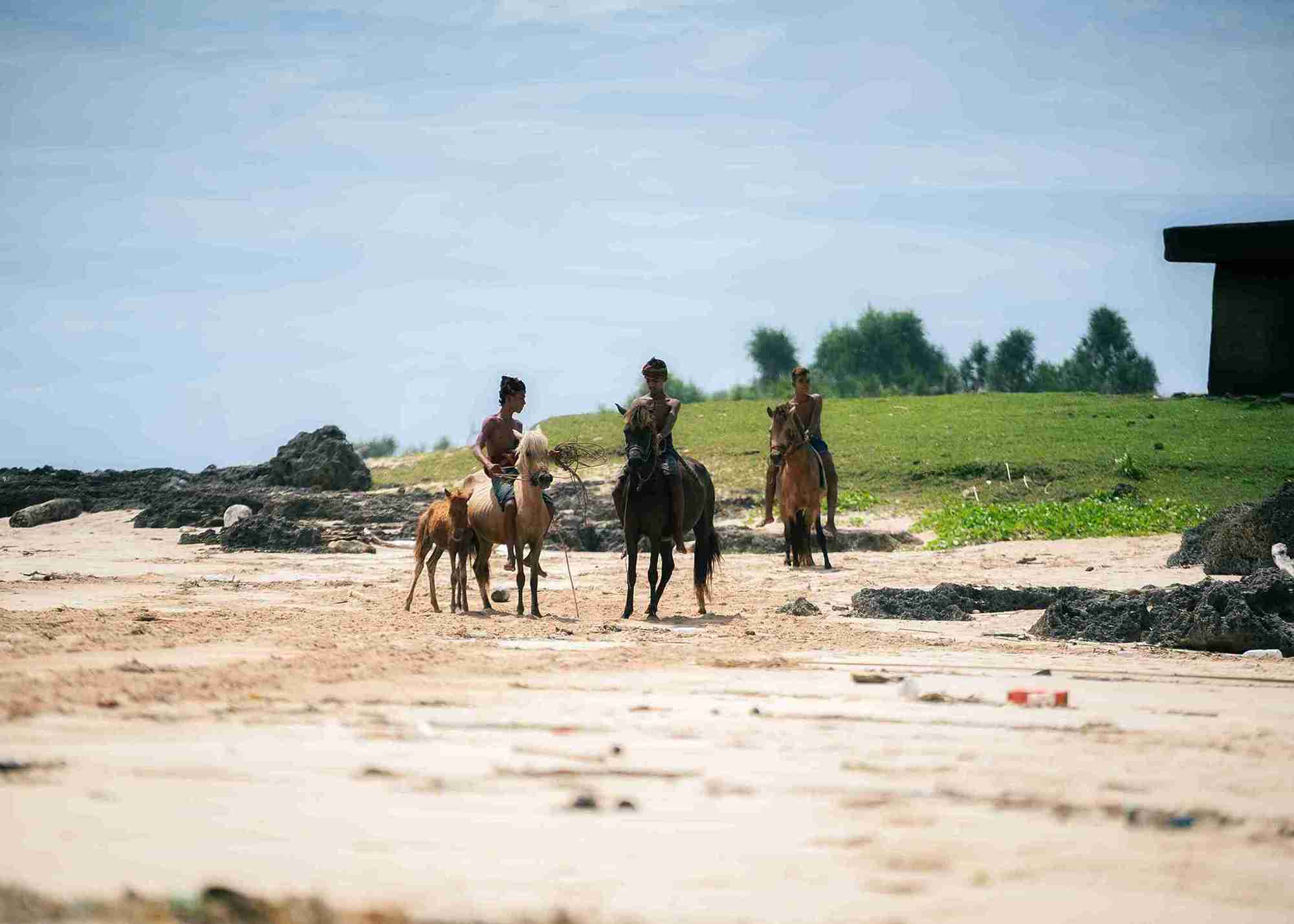
- Marosi — a wide, usually footprint-free sweep of sand in Lamboya, west Sumba. Sunset horse rides on Marosi Beach can be arranged with local horsemen and their sandalwood ponies; ask your guide a day ahead.
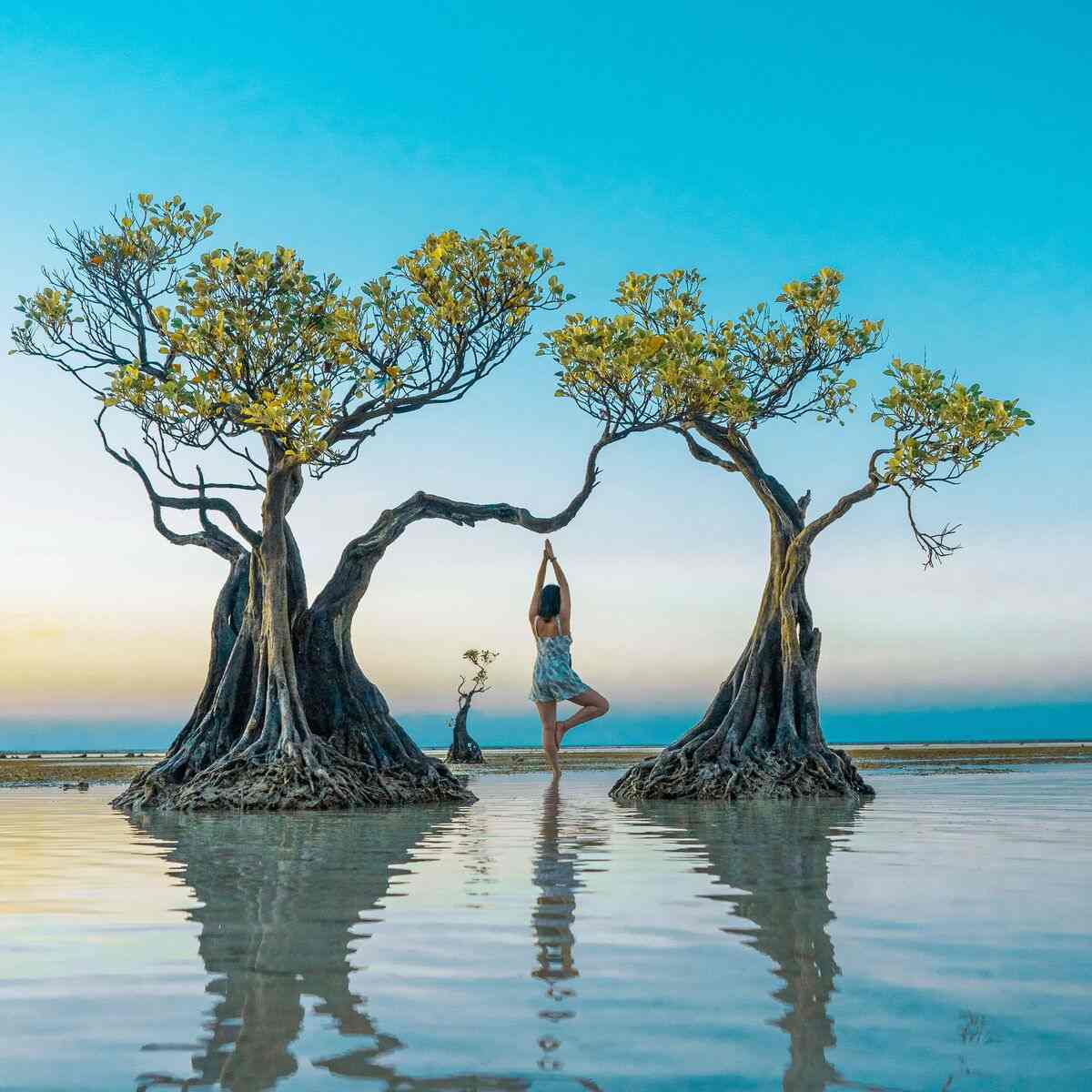
- Walakiri — east Sumba’s icon: dwarf mangroves, the famous “dancing trees”, silhouetted on a shallow sandbar at low tide, thirty minutes from Waingapu.
- Puru Kambera — a savanna shoreline northeast of Waingapu where semi-wild horses wander between casuarina trees and the shallows.
- Watu Bela — layered limestone formations on the east coast, a quiet stop between the savanna and the southeast cliffs.
- Watuparunu — white cliffs and a sculpted arch at Sumba’s southeastern tip, and the finest sunrise beach on the island.
When Is Each Beach at Its Best? The Golden-Hour Matrix
This close to the equator, sunrise falls between roughly 05:45 and 06:15 and sunset between 17:45 and 18:15 all year. What changes is the tide and the direction of light, and that is exactly what your private guide plans around.
| Beach | Region | Best time | Why then |
|---|---|---|---|
| Walakiri | East | Low tide, 90 minutes before sunset | The sandbar dries and the dancing trees stand in mirror-flat shallows |
| Marosi | West | Late afternoon to sunset | Soft side-light on the dunes; horses arrive around 16:30 |
| Mandorak | Southwest (Kodi) | Sunset | The cliff faces catch direct orange light; midday is harsh and shadeless |
| Pero | Southwest (Kodi) | Sunset | The fishing fleet threads the reef channel as the sun drops |
| Bwanna | South Kodi | Morning | The arch is front-lit and the cliff path is calmer before the wind rises |
| Watu Bela | East | Mid-morning | Low sun rakes across the limestone layers |
| Puru Kambera | Northeast | Sunrise to 09:00 | Horses graze near the road early, before heat pushes them inland |
| Watuparunu | Southeast | Sunrise | The white cliffs blush pink, and you will almost certainly have them to yourself |
Day-by-Day: The Coast-to-Coast Beach Itinerary
The classic version runs four days, flying into Tambolaka and out of Waingapu. Guests with less time take the western or eastern half as a 3D2N; guests with more time extend into waterfalls, savanna hills or a resort finish. Every departure is private, so the running order bends to your flights and that week’s tide table.
Day 1: Tambolaka Arrival — Weekuri, Mandorak & Pero Sunset
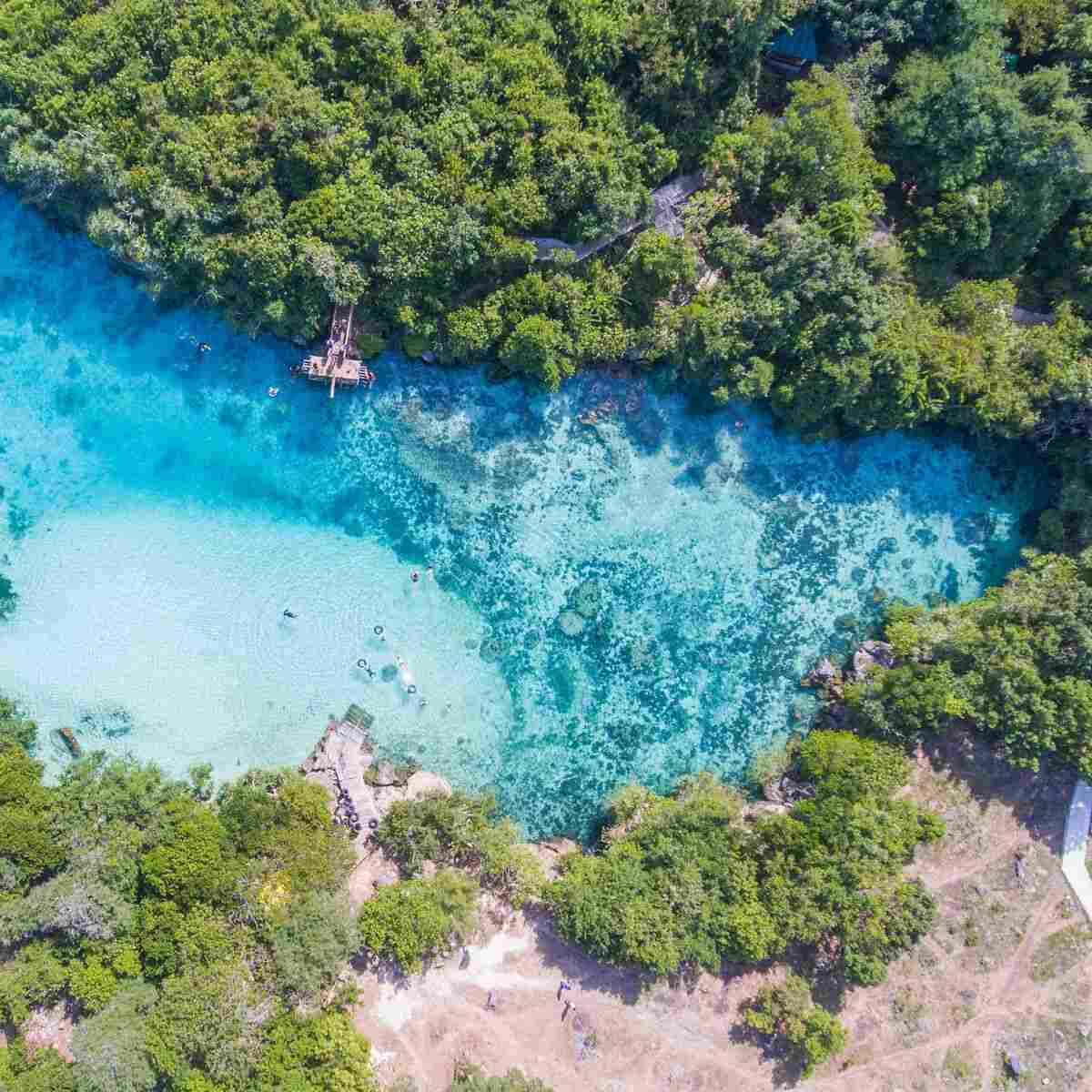
Your private guide meets the morning flight at Tambolaka and drives straight to the Kodi coast. Swim in Weekuri Lagoon while the light is high and the water at its clearest, then take the five-minute hop to Mandorak for late-afternoon color on the twin cliffs. Sunset belongs to Pero, watching outriggers come home through the channel. Overnight near Kodi or Tambolaka.
Day 2: Bwanna Arch, Marosi Beach & a Sunset Horse Ride
Start at Bwanna while the arch is front-lit and the clifftop breeze is gentle; the short walk down ends on a beach that sees only a handful of guests a week. Continue east along the south coast to Marosi for a slow afternoon of swimming and long walks. Around 16:30, if you booked ahead, local horsemen bring their sandalwood ponies down for a sunset ride along the tideline, one of the most photographed moments in west Sumba. Overnight in the Wanokaka-Lamboya area or inland.
Day 3: Overland to the East — Walakiri Dancing Trees at Sunset
A travel day with a reward at the end. The trans-island road to Waingapu takes four to five hours with stops for hilltop viewpoints and a proper warung lunch. Check in, rest, then head to Walakiri about ninety minutes before sunset, when the receding tide leaves the dancing trees on wet, reflective sand; on a poor-tide day the visit flips to the following dawn.
Day 4: Watuparunu Sunrise, Watu Bela & Puru Kambera — Waingapu Departure
A dark-and-early start for the drive to Sumba’s southeastern tip, where sunrise turns Watuparunu’s white cliffs soft pink. Return north via the limestone terraces of Watu Bela and the Puru Kambera savanna, where horses graze between casuarinas and the sea, then connect to your afternoon flight out of Waingapu.
How Much Does a Sumba Beach Tour Cost?
Our beach itineraries mirror Indonesia Juara Trip’s published per-person USD pricing, so you can budget before you enquire. All figures are as of August 2026, subject to season, and vary by group size.
| Format | From (per person) | Best for |
|---|---|---|
| 3D2N single-coast beach tour | ~USD 300-550 | Long weekends, one coast done properly |
| 4D3N coast-to-coast (this itinerary) | USD 390-700 | All eight beaches, one-way logistics |
| 6D5N beaches plus waterfalls and villages | USD 570-1,020 | Honeymooners and photographers |
| Private car with driver-guide only | ~USD 60-90 per day | Independent guests building their own days |
Rates cover your private air-conditioned car, an English-speaking Sumbanese driver-guide, fuel, and hotel pickup at either airport town; a full inclusions list sits on the mirror Sumba tour 4D3N product at Indonesia Juara Trip. To stretch the route inland, add the savanna hills and megalith villages on our 5-day Sumba island tour itinerary, pair the coast with Waimarang and Tanggedu on the Sumba waterfall tour, or finish with barefoot-luxury nights through our Sumba resort stay and tour combos at Nihi (published nightly rates typically from around USD 1,000, seasonal), Lelewatu or Cap Karoso.
Is Sumba Worth It Compared to Labuan Bajo?
Guests weighing the two ask us this weekly, and the honest answer is that they are different products. Labuan Bajo is a harbour town and a gateway: you sleep on boats, snorkel Komodo’s reefs, and see beaches mostly from the water. Sumba is a land journey where the beaches are the destination, shared with fishermen and horses rather than day-trip fleets. If empty sand, living culture and photography drive your trip, Sumba wins; if dragons and diving drive it, Labuan Bajo does. Many guests do both via Bali.
Cruise guests calling at Waingapu often ask about the time needed for a day tour from port. Plan on five to six hours for Walakiri plus the Puru Kambera savanna, or a fuller eight to nine hours to add the Wairinding hills, comfortably inside a standard shore-excursion window with a private car waiting at the gate.
Practical Notes from Your Sumba Travel Advisor
Money and payments. The best way to pay in Sumba is cash in Indonesian rupiah: ATMs cluster in Tambolaka and Waingapu, and cards work only at the top resorts. Tour balances are settled in advance through options our advisor confirms, so you carry cash only for souvenirs, warung meals and village donations.
Getting around. Public transport in Sumba means bemo minivans and market trucks on their own schedules; none serve the beaches reliably. A private car with a driver-guide (from ~USD 60-90 per day, August 2026 indicative) is the practical standard, which is why every itinerary above includes one.
Food on the coast. Halal food availability in Sumba is better than most guests expect: Muslim-owned rumah makan operate in Tambolaka, Waingapu and the harbour villages, and your guide can plan every meal stop accordingly. Remote beaches such as Bwanna and Watuparunu have no warungs at all, so we pack lunches and a cool box on those days.
Traveling with children. Parents weighing screen time vs nature play in Sumba will find the island settles the debate for them: mobile signal fades outside the towns, and children trade devices for tide pools, sandbars and horses within a day. Walakiri at low tide is shallow, warm and calm, ideal for small kids; at Mandorak and the south-coast surf beaches, treat currents with respect and swim only where your guide indicates.
Evenings and celebrations. True sunset bars in west Sumba are rare; beyond a couple of resort bars, your sundowner is a cool box on the sand set up by your guide, which most guests come to prefer. Traditional music performances in hotels are increasingly part of the evening too: several Waingapu and west-coast properties host songs accompanied by the jungga, Sumba’s small stringed lute. For birthday celebrations in Sumba, a proposal or an anniversary, tell our advisor when you book: a private beach dinner at Walakiri or Marosi with lanterns and a cake is a favorite arrangement.
Culture on the coast. Guests often ask about the meaning of Sumba’s traditional clothing after seeing villagers in full dress. The men’s hinggi mantle and women’s lau sarong are hand-dyed ikat whose horse, rooster and ancestor motifs signal clan, status and ritual role; you will see them worn naturally at markets near Pero and Rende, not staged for cameras. At its core, Sumba traditional clothing meaning is genealogical: cloth records who you are, which clan you belong to and which ceremonies you may attend, which is why a fine hinggi is treated as an heirloom rather than a souvenir. Social media has changed the coastline’s profile too: influencers promoting Sumba have made Walakiri’s silhouettes and Mandorak’s cliffs famous far beyond Indonesia, yet visitor numbers remain a small fraction of Bali’s. Come while the beaches still outnumber the tourists.
Plan Your Sumba Beach Tour
Tell us your dates and which beaches matter most, and we will build the route around that week’s tides and light. Speak to our Sumba travel advisor on WhatsApp at +62 811-994-1919 or email sales@indonesiajuara.asia for a same-day itinerary and confirmed per-person price. Sumba Island Tour is operated with Indonesia Juara Trip, part of Juara Holding Group — since 2015.