Tanggedu Waterfall Trek: Sumba Grand Canyon Guide
The Tanggedu waterfall trek takes 30 to 45 minutes each way on foot from Tanggedu village in Kanatang district, East Sumba, which sits about 1.5 to 2 hours’ drive north of Waingapu — the final stretch is rough enough that many guests cover it by ojek, the local motorbike taxi. The safest window is the dry season, May through October, when the river runs low and turquoise; in the rainy months the canyon can flash-flood with little warning, which is why a local guide here is a safety measure rather than a formality. Rate the walk itself moderate: a savanna ridge, a rocky descent, and a warm climb back out. This guide covers the route from Waingapu, the trek step by step, the seasons, guiding and village etiquette, and how to fold Tanggedu into a full East Sumba day.
Why Is Tanggedu Called the Grand Canyon of Sumba?
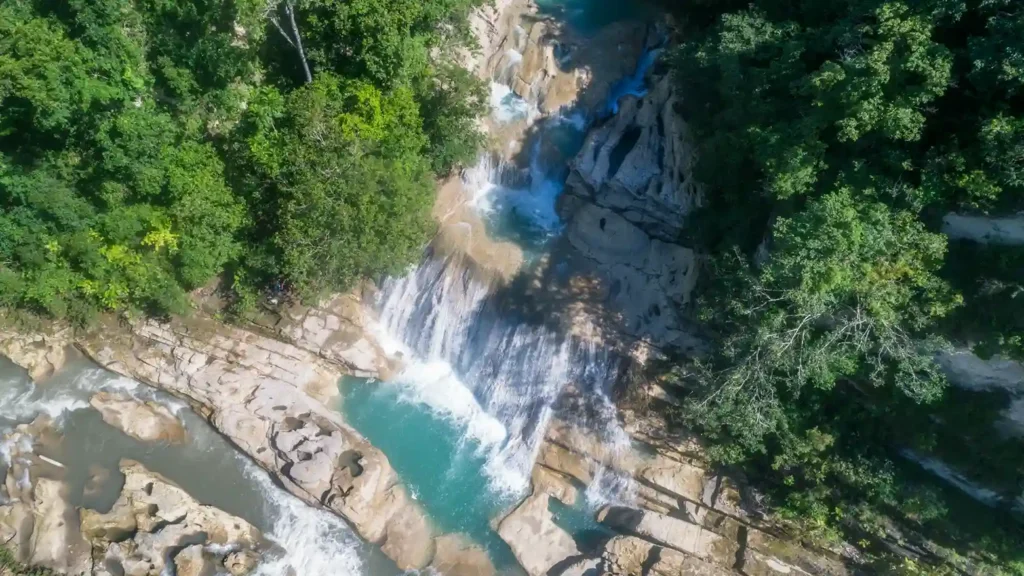
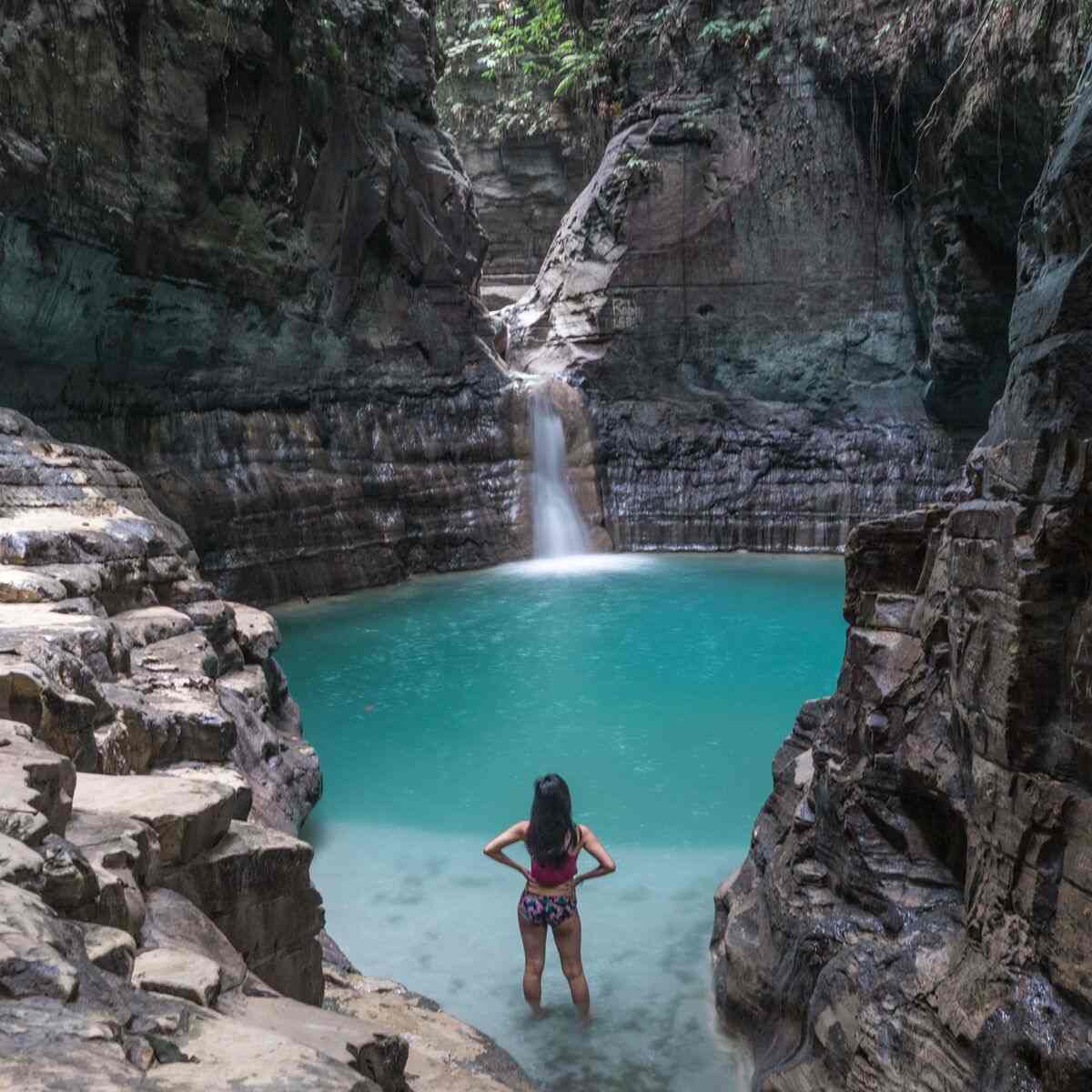
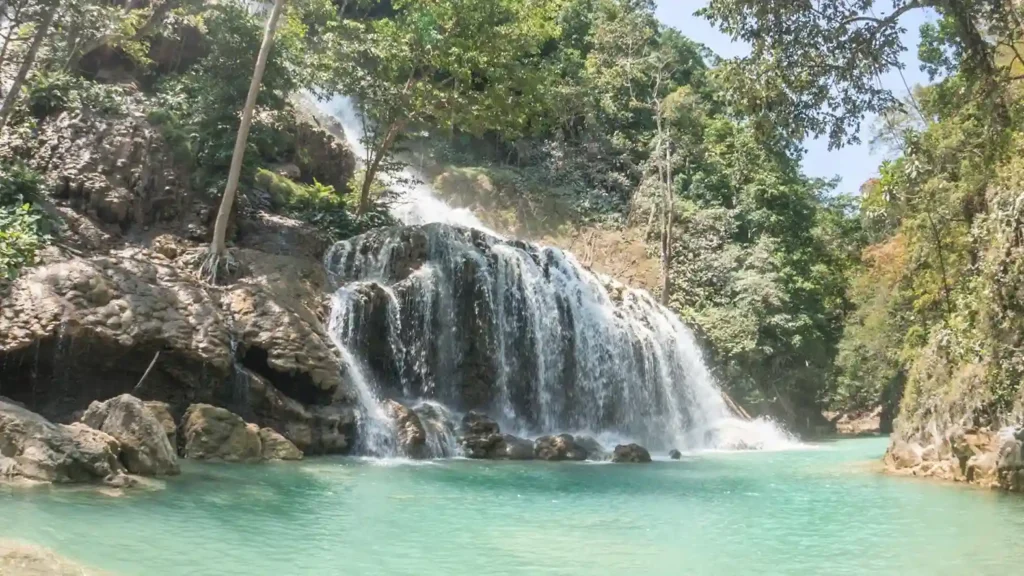
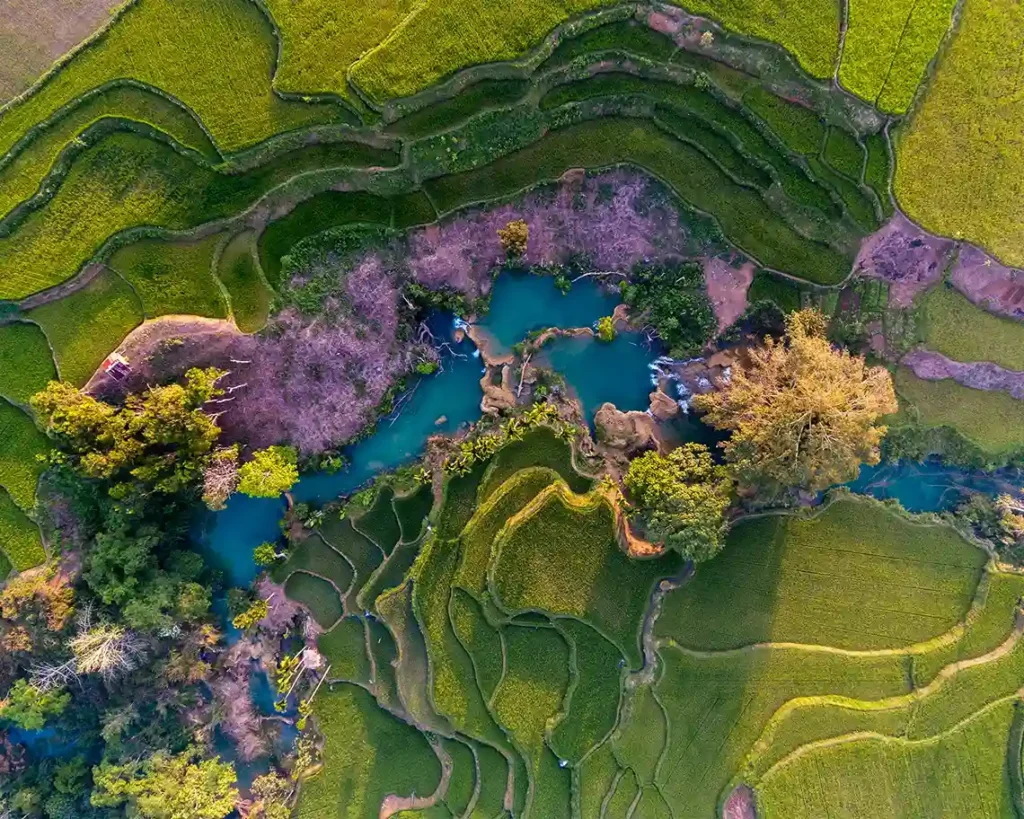
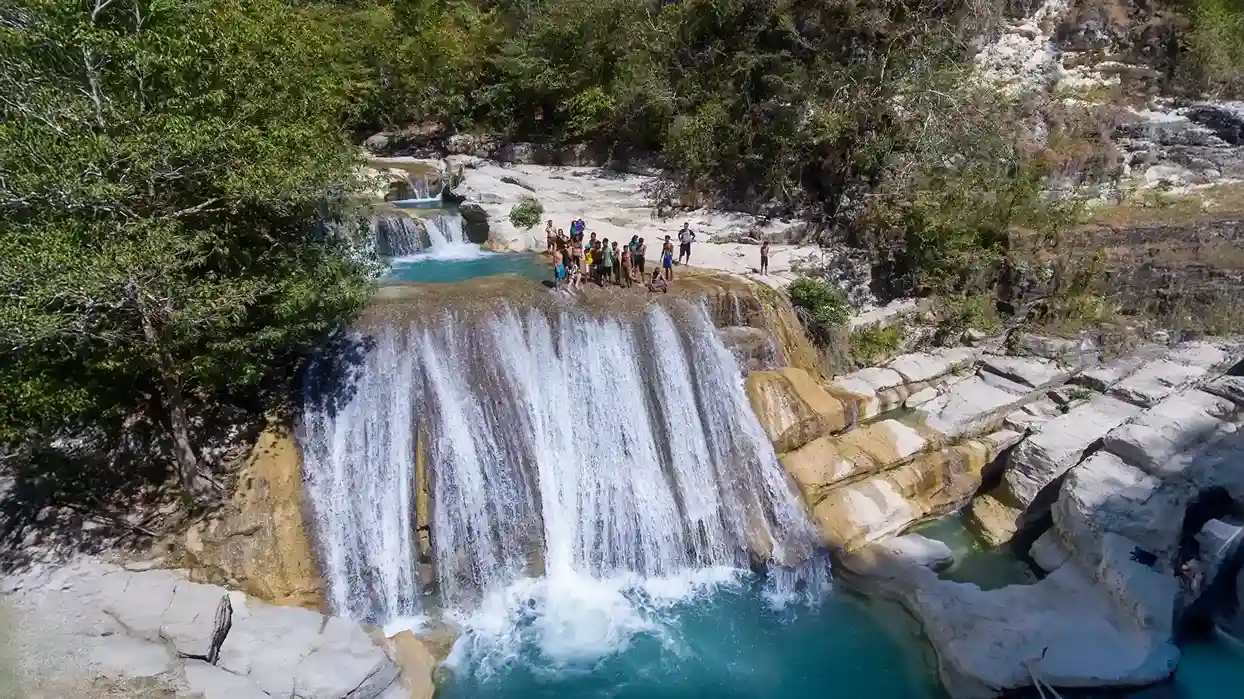
Most waterfalls announce themselves with height. Tanggedu does the opposite. Here the river has spent millennia cutting through layered sedimentary rock, leaving broad stone terraces stacked like shallow steps. The water fans across them in braided channels, gathers in pale turquoise pools, then slips into a narrow gorge whose sculpted walls earned the site its nickname. In the dry months the contrast is remarkable: white-grey rock, glass-clear water, and gold savanna hills above the rim. It photographs less like a classic single-drop fall — Lapopu in the west plays that role — and more like a slot-canyon landscape you would not expect on an Indonesian island. That geology is also the reason the safety rules below matter: a carved canyon concentrates water fast when rain falls upstream.
How Do You Get to Tanggedu Waterfall from Waingapu?
Tanggedu sits roughly 26 to 30 kilometres north of Waingapu, but the distance flatters the drive: allow 1.5 to 2 hours each way. The first half follows decent coastal asphalt toward Mondu and the Puru Kambera savanna; the last kilometres to Tanggedu village are broken track that slows even experienced drivers to walking pace, and turn slick after rain.
There are three realistic ways in. The first, and the one we arrange for our guests, is a private car with a local driver-guide — from around USD 60–90 per day as of August 2026, indicative and subject to season — who handles the rough section, the village introductions, and the timing. The second is riding a motorbike yourself, sensible only for genuinely confident off-road riders. The third does not really exist: there is no useful public transport on this route. From the village you either walk the full trail or ask a local rider to take you partway by ojek, which most guests combine — ojek out, walk in. Whichever way you travel, start from Waingapu by 7 or 8 in the morning; the canyon is at its best, and its coolest, before midday.
What Is the Trek Actually Like?
We grade the Tanggedu trek moderate, in the plain sense international operators use the word: no technical skill required, but real walking in real heat. From the parking area near the village, the path climbs briefly over an open savanna ridge — no shade at all — then descends on loose rock and packed earth toward the river. At an unhurried guest pace the upper terraces appear after 30 to 45 minutes. Depending on the month, your private guide will pick a crossing point where the channels run shallow so you can reach the main pools and the gorge viewpoint.
The return is the honest part of the day. The same descent becomes a climb, usually in late-morning sun; allow 45 to 60 minutes and more drinking water than feels necessary. Taking an ojek for the farthest section trims the walk to roughly 10 or 15 minutes each way, a genuinely useful option for anyone protecting their knees. In the dry season, children of about eight and up manage the trail happily; it is not terrain for strollers, and trekking poles help on the loose descent. Wear footwear with grip that can get wet — the smooth stone terraces are slippery exactly where they are most photogenic.
When Is the Safest Season to Trek Tanggedu?
May through October is the answer for both safety and beauty. The river drops, the crossings are ankle-to-knee deep, and the pools show the turquoise the canyon is known for; from July to September the savanna above turns fully gold. This is the window we recommend to photographers and families alike.
From November to April, East Sumba’s rains change the equation. The water swells and clouds to brown, and — more importantly — the gorge can flash-flood from rain that fell in hills you cannot see from the falls. A sunny sky overhead is not an all-clear. Local guides read the signs that matter: the colour of the channels, debris on the terraces, weather over the interior. The working rule is simple, and worth stating plainly: if the water rises or turns murky, leave the gorge immediately. Green-season visits are still possible and have their own reward — emerald hills, almost no other visitors — but they should start at first light, finish by early afternoon, and follow a local’s judgment on whether the canyon is open at all that day.
Do You Need a Guide for the Tanggedu Trek?
No regulation obliges you to take one; every practical reason says you should. A guide from the area knows where the trail forks away from goat paths, which crossing is safe at that day’s water level, and how the river behaves after overnight rain — knowledge no map application carries. Just as important, Tanggedu is a working hamlet on Marapu land, not a ticketed attraction. Expect a modest village retribution collected near the trailhead — carry small banknotes for it — and treat the visit as calling on a community: greet the people you pass, and ask before photographing residents or the carved stone tombs you may see near the houses. Our East Sumba driver-guides grew up on these roads; they handle the retribution and the introductions in the local way, and carry water and a first-aid kit as standard. That combination — road, river, and protocol in one person — is what we mean by local expertise.
What Should You Pack?
- At least 1.5 litres of water per person — the return climb is exposed
- Grippy sandals or trail shoes that can get wet; the terraces are slick
- Sun hat, sunglasses, and reef-safe sunscreen — the savanna ridge has no shade
- Swimwear worn under clothes, plus a quick-dry layer for the walk out
- A dry bag for phone and camera at the crossings
- Small banknotes for the village retribution and an ojek ride
- Light snacks; there are no warungs at the falls
How Do You Combine Tanggedu with a Full East Sumba Day?
The classic shape of the day: leave Waingapu at dawn, trek Tanggedu in the cool of the morning, take a picnic lunch, then drive the coastal road to the Puru Kambera savanna for wild horses in the afternoon light, and end at Walakiri Beach as the dancing mangrove trees go to silhouette at sunset. Photographers sometimes swap the savanna for Wairinding hill instead. On our multi-day routes, Tanggedu takes the day-three slot of the eastern leg — the same position it holds in the 4-day, 3-night itinerary we operate with Indonesia Juara Trip’s Sumba 4D3N, from USD 390–700 per person as of August 2026, varying with group size and season. If waterfalls are the point of your trip, our Sumba Waterfall Tour links Waimarang’s cliff-jump pool, Lapopu’s tall tiers and Tanggedu’s canyon into one route with a difficulty rating for each fall; and if you want to balance canyon days with coast, the Sumba Beach Tour maps Walakiri, Puru Kambera and the east-coast sunrise points by their best hour of the day.
Plan Your Tanggedu Trek with People Who Know the River
Tanggedu rewards good timing more than almost anywhere on Sumba — the right month, the right hour of the morning, the right crossing point. Tell us when you plan to travel and how you like to walk, and we will shape the day, or the full eastern route, around it. As of August 2026 our pricing stays published and per person, so you can plan before you ever send a message.
Speak to our Sumba travel advisor on WhatsApp at +62 811-994-1919 or by email at sales@indonesiajuara.asia — advice first, itinerary second, booking only when it fits.
Sumba Island Tour is operated with Indonesia Juara Trip — high-end local Sumba expertise, part of Juara Holding Group, since 2015. We show you the real Sumba.