Prai Ijing traditional village, Waikabubak Sumba

Prai Ijing Village Guide 2027: ASEAN Award Winner

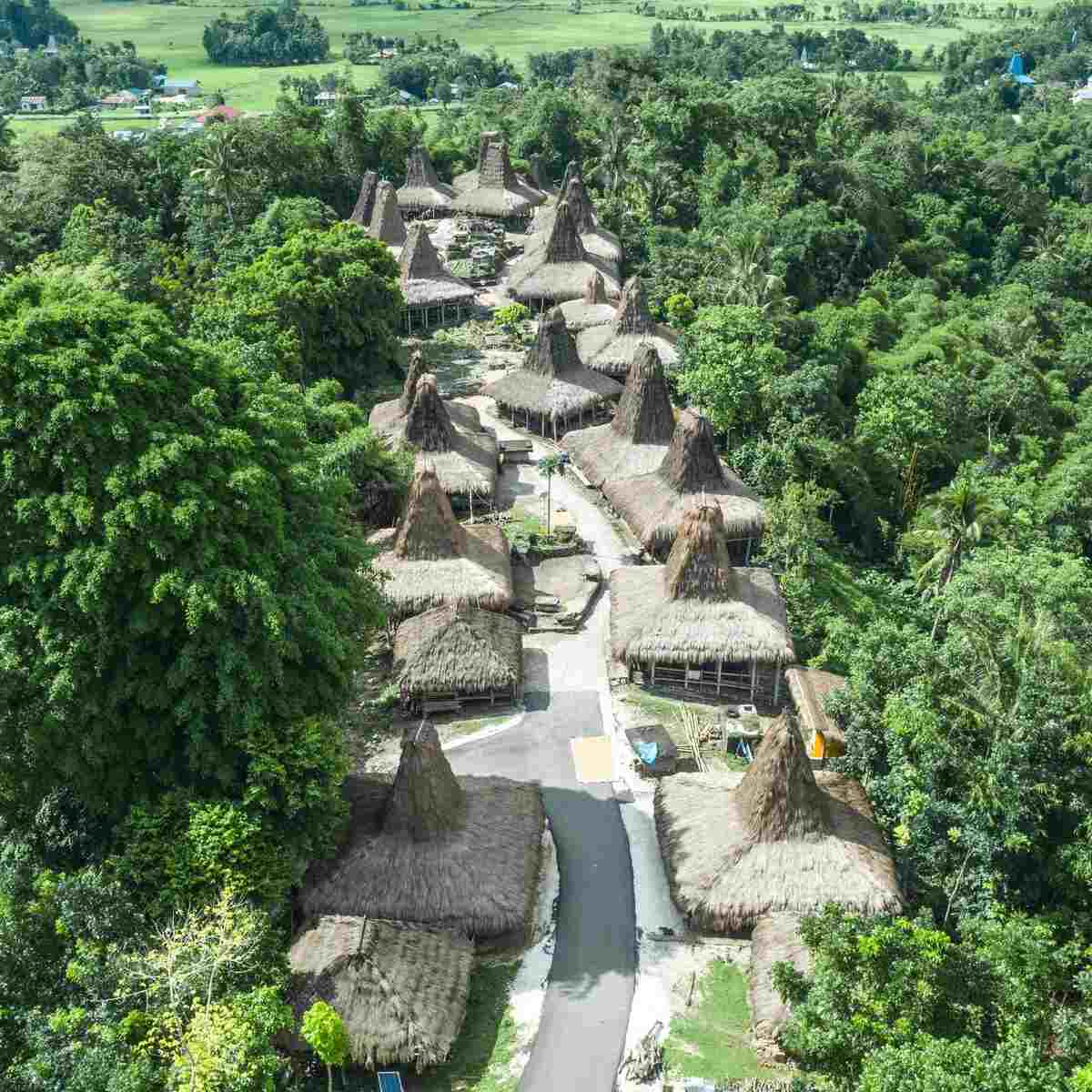
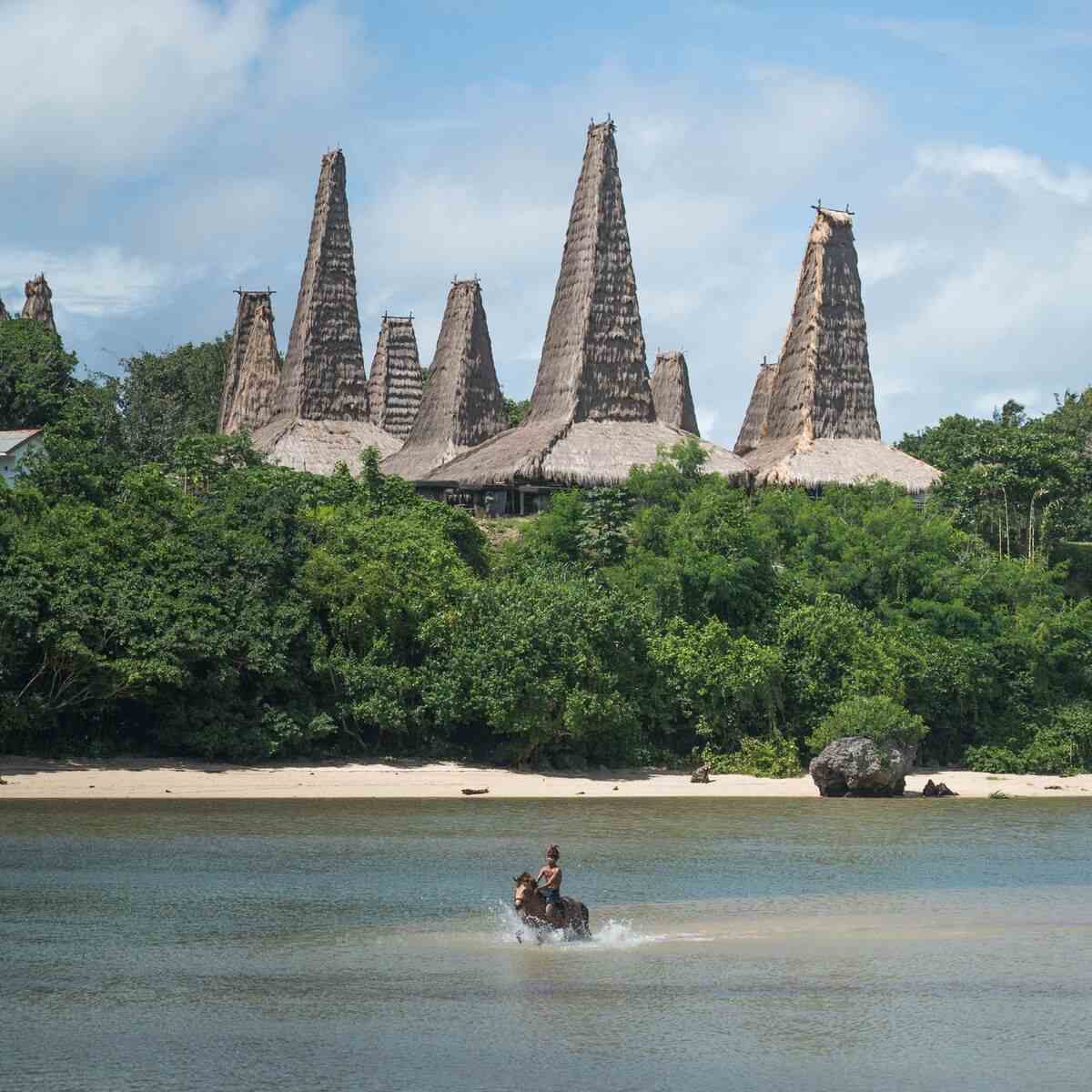
Prai Ijing — also written Praijing — is a hilltop village of around 38 traditional Marapu houses in Tebara, on the edge of Waikabubak in West Sumba, and since early 2026 it carries an ASEAN Tourism Award for community-based tourism, announced at the ASEAN Tourism Forum. That recognition has moved the village from a convenient stopover into a destination in its own right. Guests come for the tiered uma mbatangu houses with their tall thatched towers, the carved megalithic tombs on the central terrace, and the most accessible, most respectful cultural visit on the island: ten minutes from Waikabubak town, a guestbook donation at the gate, and a resident guide who walks beside you. This guide covers entry, etiquette, timing, and how to fold Prai Ijing into a wider Sumba route in 2027.

What Makes Prai Ijing Worth Visiting?

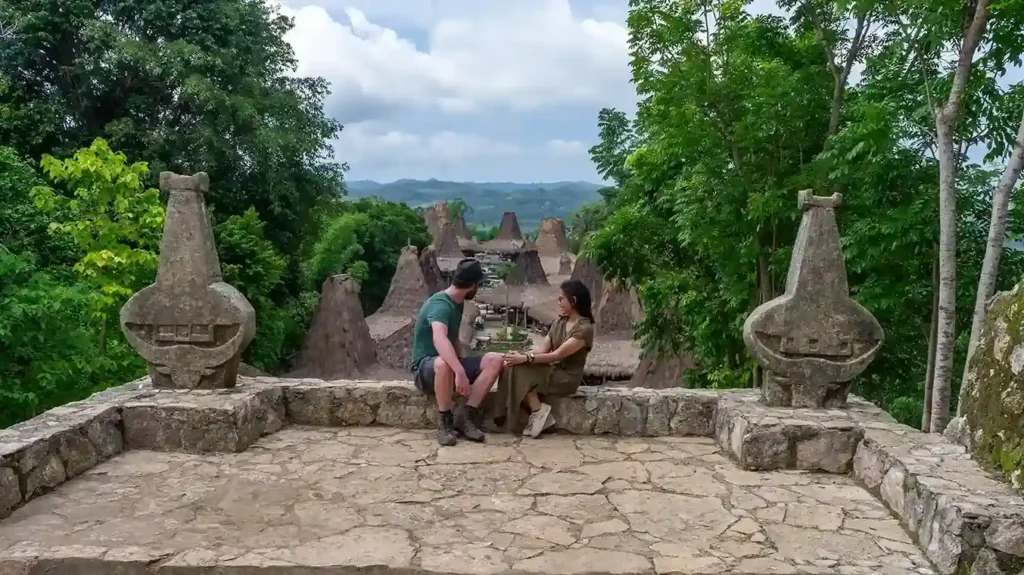
Three things separate Prai Ijing from the dozens of traditional kampung scattered across Sumba. First, the setting: the village steps down a ridge in tidy terraces, so from the wooden viewing deck at the top you can take in the full sweep of peaked roofs against rice fields — a composition few other villages allow. Each uma mbatangu rises in three symbolic levels: livestock and firewood below, family life on the middle platform, and a high thatched tower where heirlooms are kept and the Marapu ancestors are honoured. Second, the tombs: carved stone graves sit in the shared yard between the houses, because in Marapu belief the dead remain part of the household, not apart from it. Third, the stewardship. After earlier national tourism-village honours and now the 2026 ASEAN award, residents run the visits themselves — guiding, weaving, maintaining the walkways — so your donation stays inside the village rather than leaking to outside brokers. It is community-based tourism that actually behaves like the label.

Where Is Prai Ijing and How Do You Get There?

The village sits in Tebara, roughly ten minutes by car from central Waikabubak, the hill town that anchors West Sumba. Most guests fly from Bali to Tambolaka — daily flights, about 1h15m — then drive around 90 minutes to Waikabubak. If you are planning a full island crossing, budget realistic travel time between major Sumba towns: Tambolaka to Waikabubak takes about 1.5 hours, and Waikabubak to Waingapu another 3.5 to 4 hours on a winding but scenic trans-island road. A private car with a local driver-guide runs from about USD 60-90 per day (August 2026 indicative), which for most guests makes far more sense than scooters on Sumba’s long, empty stretches. One practical note: pick up a data SIM card for Sumba travel at Tambolaka airport on arrival. Telkomsel holds the strongest signal in Waikabubak and at Prai Ijing itself, though you should expect quiet zones on the roads between towns.

Entry Fees, Guides and Marapu Etiquette

There is no ticket booth in the commercial sense. You sign the guestbook, leave a donation, and a resident guide accompanies you through the village — this is both courtesy and protocol, since every terrace here is someone’s front yard. A few rules keep the visit warm on both sides. Greet people before photographing them, and always ask before pointing a lens at elders, house interiors, or ritual objects. If you are offered betel nut, receive it with your right hand; you may decline, but do it with a smile and a word of thanks, because the offer itself is the honour. Never climb, sit on, or lean against the stone tombs. Dress modestly — shoulders covered reads as respect in a village where the ancestors are, quite literally, present. Your private guide from our team briefs every guest on this before the gate, so nothing is left to guesswork.

Can You Pair Prai Ijing with Tarung and a Weaving Session?

Yes, comfortably in one relaxed half day. A Tarung village visit is the natural companion: Tarung and adjoining Waitabar crown a hilltop inside Waikabubak itself and serve as the ritual heart of West Sumba, especially during Wulla Poddu, the sacred “bitter month” around October and November when protocols tighten and some areas close to outsiders — your guide checks the ritual calendar before you go. For a dedicated Sumba ikat weaving village visit, you can watch dyeing and back-strap loom work under the houses at Prai Ijing and buy directly from the weaver, which is the fairest way to pay for cloth. If your route continues east, the royal workshops of Rende and Prailiu near Waingapu remain the benchmark for Sumba’s most intricate narrative ikat.

When Is the Best Time to Visit Prai Ijing?

The village receives guests year-round, and the honest answer is that each season trades something for something. Sumba in March means festival and rain in the same breath: this is Pasola season — the mounted spear ritual is confirmed by lunar calendar, usually around February to March, and we track local announcements rather than promising dates — with green hills and short, heavy afternoon showers. Sumba in September is the quieter time: dry paths, golden grass, thinner visitor numbers, and clean morning light on the rooftops. Whatever the month, arrive before 9am or after 3.30pm; midday sun flattens the terraces and sends residents into the shade. Photographers should note the viewing deck faces the full village, so early light from the east is the winning ticket.

A Living Classroom: Students, Climate and the Future of Tradition

The ASEAN award has changed who visits. Alongside travellers, we now arrange school trips to Sumba and university field trips to Sumba for groups studying vernacular architecture, Marapu cosmology, and community-based tourism as a working model — Prai Ijing is one of the few places in Indonesia where all three stand in a single frame. Researchers are also watching the climate change impact on Sumba tourism: longer dry spells stress the springs and rice terraces that feed villages like this, and alang-alang thatch for the towers takes planning to source and replace. The future of Pasola with growing tourism is debated within the communities themselves — how to welcome guests without turning ceremony into show. Our position is simple: small groups, local protocol first, and festivals treated as ceremonies that admit visitors, never performances staged for them.

How Does Prai Ijing Fit a Wider Sumba Route?

Most guests give the village 60 to 90 minutes inside a west-island day. On our West Sumba Tour, Prai Ijing anchors the cultural morning before Lapopu waterfall and the Wanokaka coast; on the Southwest Sumba Tour it slots neatly between Waikabubak and the Kodi coast run of Weekuri Lagoon, Mandorak, and Ratenggaro. If you are crossing the island, visit Prai Ijing in the morning, break the drive at Wairinding’s savanna hills in the late afternoon, and overnight toward Waingapu. Guests continuing to the east coast often ask how early to arrive at Walakiri: plan to be on the sand 60 to 90 minutes before sunset, which leaves margin for the tide and a calm walk out to the dancing mangrove trees.

What Does a Prai Ijing Visit Cost in 2027?

Prai Ijing is included in every overland itinerary we run, so you never pay for it as a bolt-on. Our 4D3N Sumba overland runs from USD 390-700 per pax (as of August 2026, subject to season and group size) — a transparent mirror of Indonesia Juara Trip’s Sumba Tour 4D3N — while a shorter, west-focused 3D2N starts from around USD 300-550 per pax. Unlike the quote-form operators, the price is on the page. If you are eyeing early bird deals for Sumba packages, reserve 60 to 90 days ahead: the February-March Pasola window and the July-August dry peak fill first, and confirming early locks your seasonal rate before it moves.

Plan Your Visit

Speak to our Sumba travel advisor about building Prai Ijing into your 2027 route — a single village stop, a study group, or a full crossing from Tambolaka to Waingapu. Message us on WhatsApp at +62 811-994-1919 or email sales@indonesiajuara.asia, and a local expert who has sat on those terraces will answer, not a call centre. Operated with Indonesia Juara Trip — high-end local Sumba expertise. Part of Juara Holding Group — since 2015.

Similar Posts