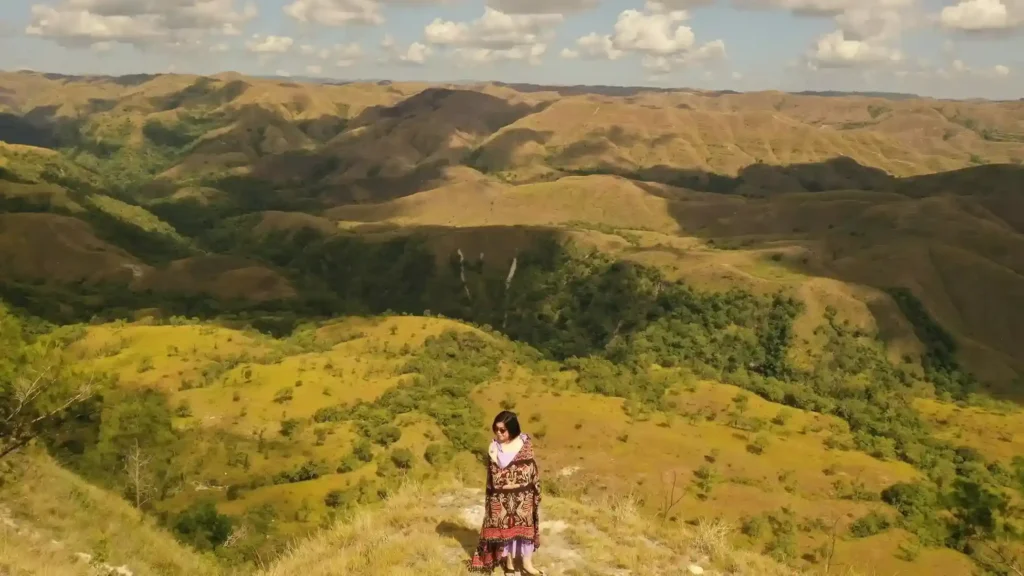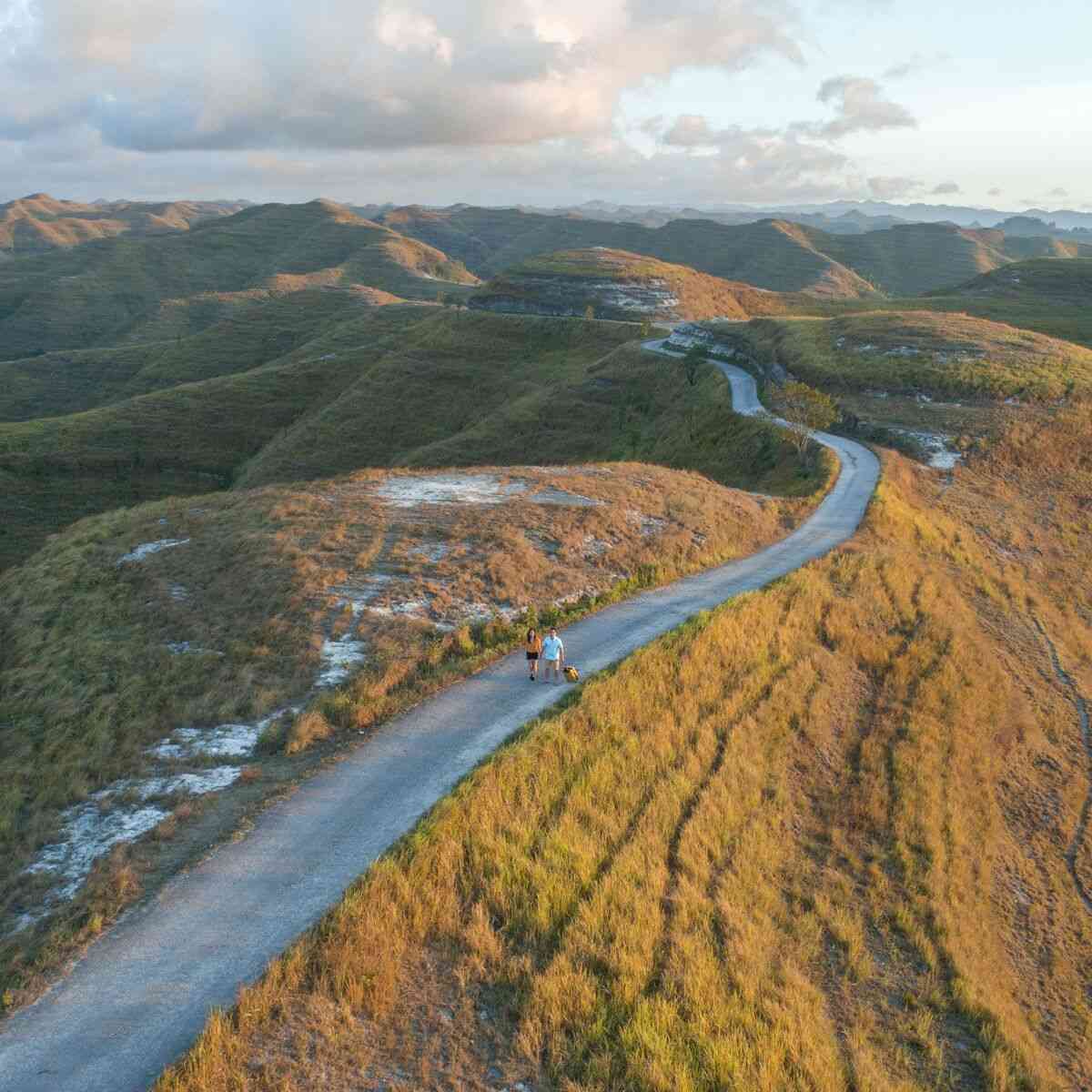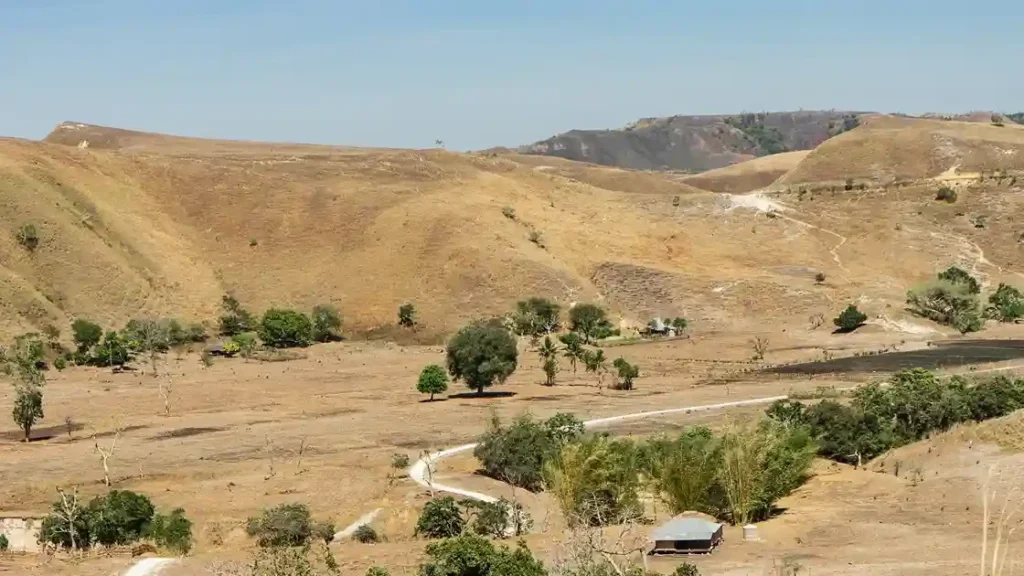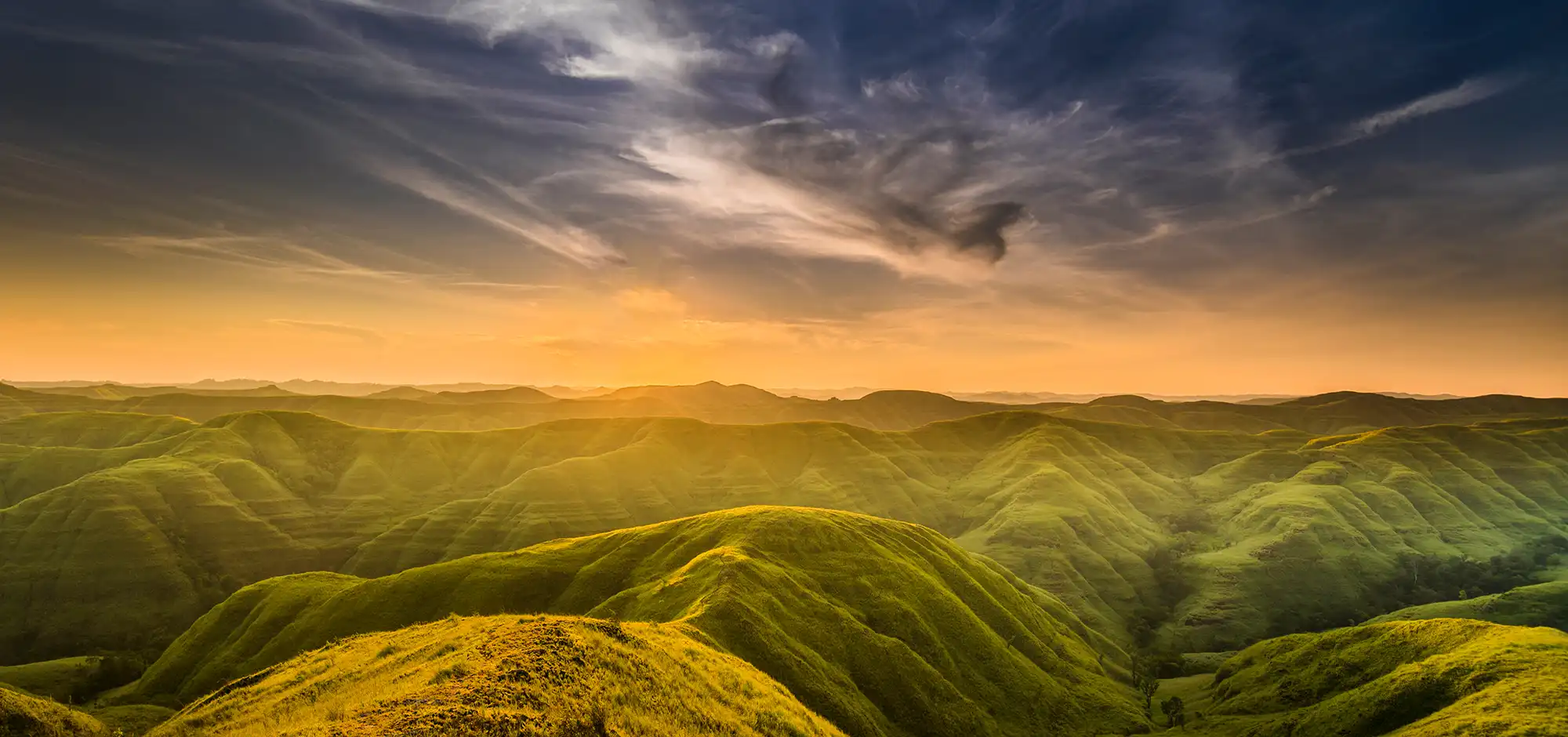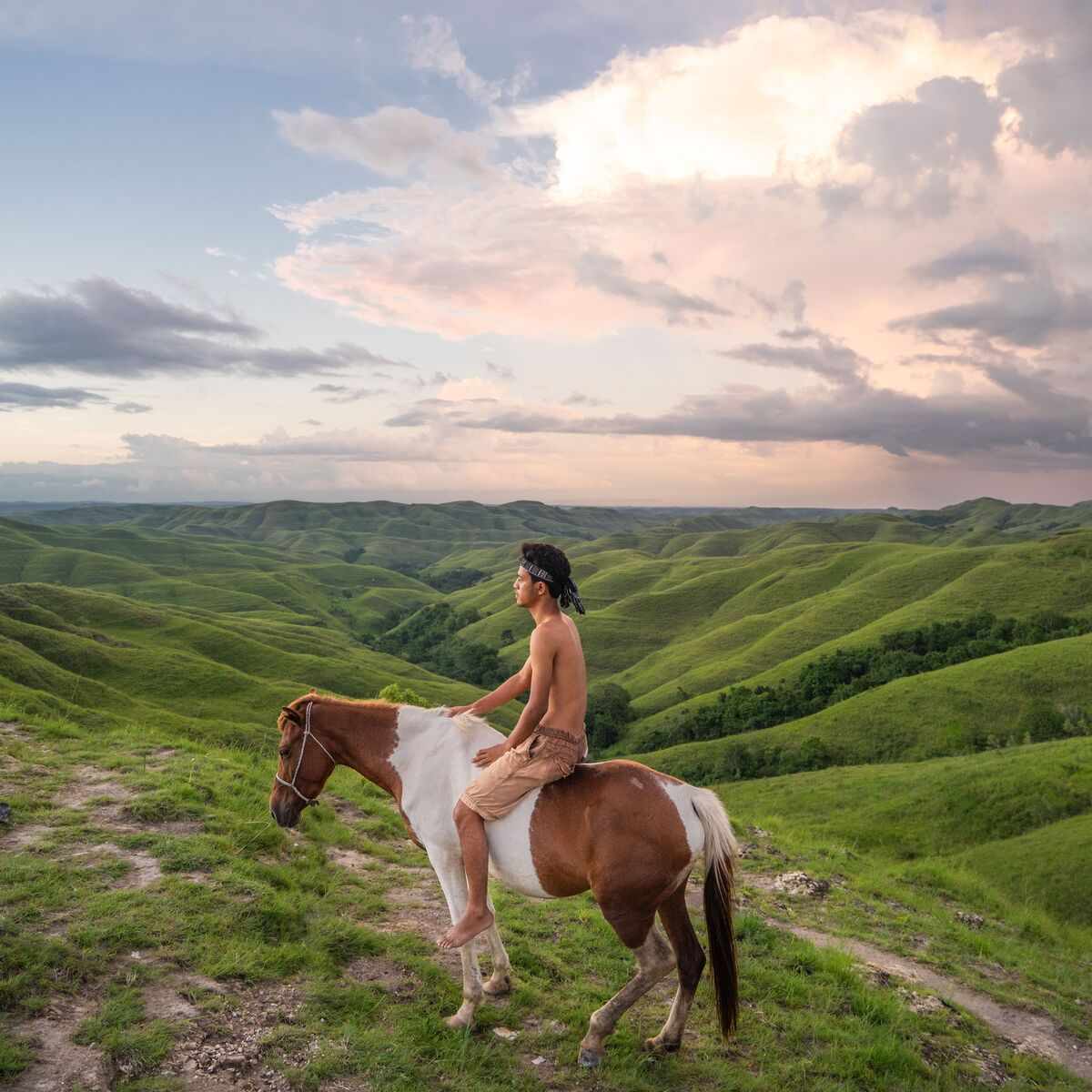
Wairinding Hill savanna viewpoint, East Sumba

Sumba Savanna Hills: Wairinding, Tanarara, Lendongara

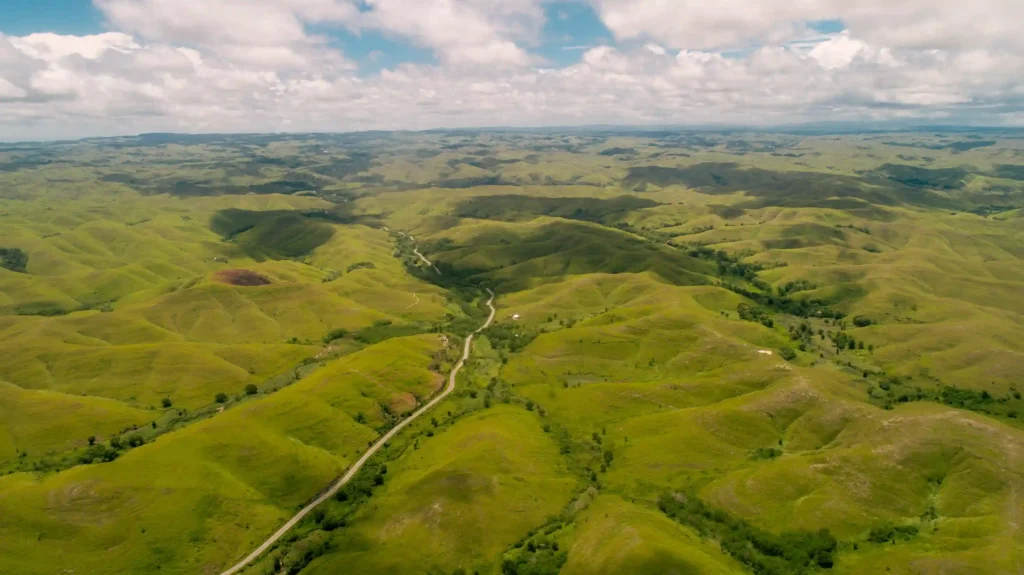
Wairinding Hill, thirty minutes from Waingapu in East Sumba, turns gold between June and October and an improbable, velvet green from late January to April — two seasons, two completely different photographs from the same ridgeline. It is the best known of Sumba’s savanna hills, but it is not the only one worth your time. Tanarara, roughly ninety minutes inland from Waingapu, folds into layered ridges that catch first light, while Lendongara, on the Kodi side near Weekuri Lagoon, is the Southwest’s grass balcony above the coast. This guide comes from the driver-guides who walk guests up these hills most weeks of the year: when each hill peaks, how to time your light, what to expect at the entrance, and how the three fit into a 2027 itinerary.

When Is Wairinding Hill Golden — and When Is It Green?

The short answer: gold from roughly June through October, green from late January through April, with May and November as transition months when the grass sits somewhere between the two. East Sumba’s rains generally arrive in December and taper through March, so the hills green up fast in January, hold their colour into April, then cure slowly to straw as the dry season settles in. Neither season is better. The golden months deliver the lion-hide savanna Sumba is famous for and reliably clear sunsets; the green months bring softer light, afternoon clouds that make the sky interesting, and far fewer people on the ridge. What matters more than the month is the hour — the hills flatten under midday sun and come alive in the last ninety minutes of the day.

HillNearest baseDrive timeBest lightColour peak
WairindingWaingapuAbout 30 minutesSunsetGold Jun–Oct, green Feb–Apr
TanararaWaingapuAbout 90 minutesEarly morningGold Jun–Oct, green Feb–Apr
LendongaraTambolakaAbout 90 minutesLate afternoonGreen holds longer, into May

Wairinding: Sumba’s Sunset Amphitheatre

From the parking area the walk to the first ridge takes ten to fifteen minutes, and that first knoll is where most day-trippers stop. Keep going. The ridgelines run in every direction, so five more minutes of walking usually buys you a foreground with no one in it. Your private guide will aim to have you on the hill about an hour before sunset, which falls close to 6 pm most of the year this near the equator; the final forty minutes, when the grass is backlit and the folds of the hills throw long shadows, are the reason photographers keep returning. Children from the nearby village often tag along as informal hosts — a warm part of the experience, not a hassle. A small local retribution is collected at the entrance, so keep small rupiah notes handy.

Tanarara: Layered Ridges in Morning Light

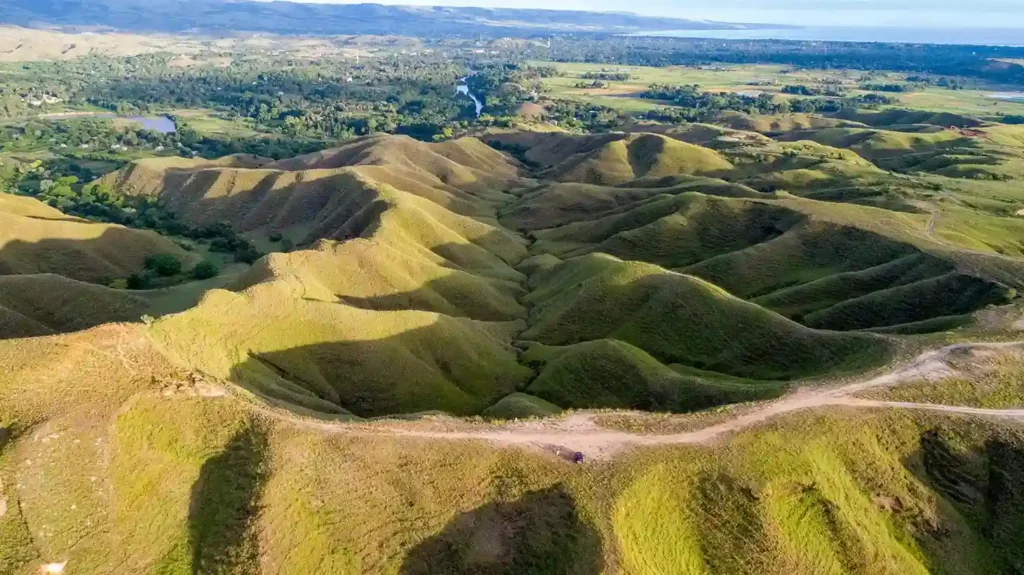
Tanarara rewards the early start. About an hour and a half from Waingapu, its appeal is repetition: ridge stacked behind ridge, fading paler toward the horizon like a paper cut-out. The layering only reads on camera when the light is low and raking, so we schedule it before nine in the morning — typically as the opening stop of a day that continues to Waimarang waterfall and ends with the dancing trees of Walakiri at sunset. In the green season the ridges turn velvet and the gullies between them stay dark, which makes the layers even more graphic. Bring a longer lens if you have one; the best Tanarara frames are compressed, not wide.

Lendongara: Kodi’s Savanna Balcony

Lendongara belongs to the Southwest. It sits in the Kodi area, about ninety minutes from Tambolaka, and slots naturally into the same day as Weekuri Lagoon, Mandorak and the tall-roofed village of Ratenggaro. West Sumba holds its rain longer than the East, so Lendongara stays green well after Wairinding has begun to cure — in May you can photograph golden hills near Waingapu and green ones near Kodi in the same week. The view runs across rolling grassland toward the coast, and late afternoon is the kind hour here, when the light warms and the sea haze turns the horizon silver.

What Can You Do on the Savanna Besides Photograph It?

More than most guests expect. The hills are a natural classroom, and we quietly build these threads into longer itineraries for guests who want them:

  • Geology. Sumba is not volcanic — the island is a raised fragment of old seabed, which is why you see uplifted limestone terraces instead of black volcanic soil. Geology tours in Sumba are really drives with a guide who can read the terraces for you; the story explains both the savanna and the white cliffs of the south coast.
  • Botany. Botany tours in Sumba savanna country focus on the grasses themselves, the lontar palms that punctuate them, and the island’s sandalwood history — the trade that once put Sumba on Asian maps.
  • Birds. Birding tours in Sumba forest patches — the pockets of woodland between the grasslands, richest around Manupeu Tanah Daru National Park — look for endemics including the Sumba hornbill. Serious birders should plan dawn starts.
  • Wildlife, responsibly. The wild horses of Puru Kambera graze open savanna near the coast north of Waingapu. Responsible wildlife tours in Sumba keep vehicles at a distance and never bait or feed the horses; a good guide positions you where the herd’s path does the work.
  • Megaliths. The savanna and the stone tombs are one cultural landscape. Educational tours about megaliths pair a morning on the hills with Anakalang or the royal tombs of Rende — our Sumba traditional villages tour covers the etiquette and the history properly.
  • Stars. With almost no light pollution, new moon stargazing in Sumba is genuinely dark-sky. Time your trip near a new moon between April and September and the Milky Way core rises over the grass; we bring mats and a thermos and let the sky do the rest.

What If It Rains?

In the green months, showers usually build in the afternoon rather than settling in for the day, so we plan hills for the clearest window and keep the schedule soft. Practical rainy day activities in Sumba include ikat weaving sessions with East Sumba weavers, market mornings in Waingapu, and long lunches that this island does well. Some guests combine a Sumba wellness retreat with tours — a coastal resort morning of yoga or massage, then a drive to Wairinding when the sky opens. Rain rarely costs you the trip; it just reorders it, and a local driver-guide who checks the sky by feel is the best weather app you will have.

How Do Payments, Single Supplements and Cancellations Work?

Transparently, because this is where Sumba operators tend to go quiet. A private car with an English-speaking driver-guide runs from about USD 60–90 per day as of August 2026, subject to season, and multi-day bookings keep the same driver throughout. The enquiry we receive most often reads almost word for word: is there a multi day discount with same driver in Sumba? There is — longer routes on one continuous booking price toward the lower end of that range, because a single driver across the whole itinerary costs less for us to run than separate day-by-day hires. Solo travellers ask us often about the single supplement on Sumba tours: because our pricing is per person and varies by group size, a solo guest pays more per head for the same private vehicle, and we show that math in the quote rather than hiding it in a markup. Payment via PayPal for Sumba tours is available for international guests, alongside bank transfer and card links. Cancellation policies for Sumba tours are confirmed in writing with every quote; weather-related reschedules are handled flexibly, while festival-season departures need firmer commitment because dates fill early.

Folding the Hills into a 2027 Route

Wairinding and Tanarara sit naturally inside an eastern loop with Walakiri and Puru Kambera; Lendongara belongs to a Kodi day with Weekuri and Ratenggaro. A one-way overland from Tambolaka to Waingapu collects all three without backtracking. If you travel in the green months, note that the Pasola season — confirmed by lunar calendar around February and March; we track the local announcements — can overlap your dates, and our Sumba Pasola festival tour builds the hills around an active arena. For a first visit, our 4-day overland (from USD 390–700 per person as of August 2026, subject to season and group size) places Wairinding at sunset on day two and Tanarara on day three — the full route mirrors the Indonesia Juara Trip 4D3N Sumba tour.

Speak to our Sumba travel advisor about which season suits the photographs you have in mind — WhatsApp +62 811-994-1919 or email sales@indonesiajuara.asia. Operated with Indonesia Juara Trip — high-end local Sumba expertise, part of Juara Holding Group — since 2015. We show you the real Sumba.

Similar Posts