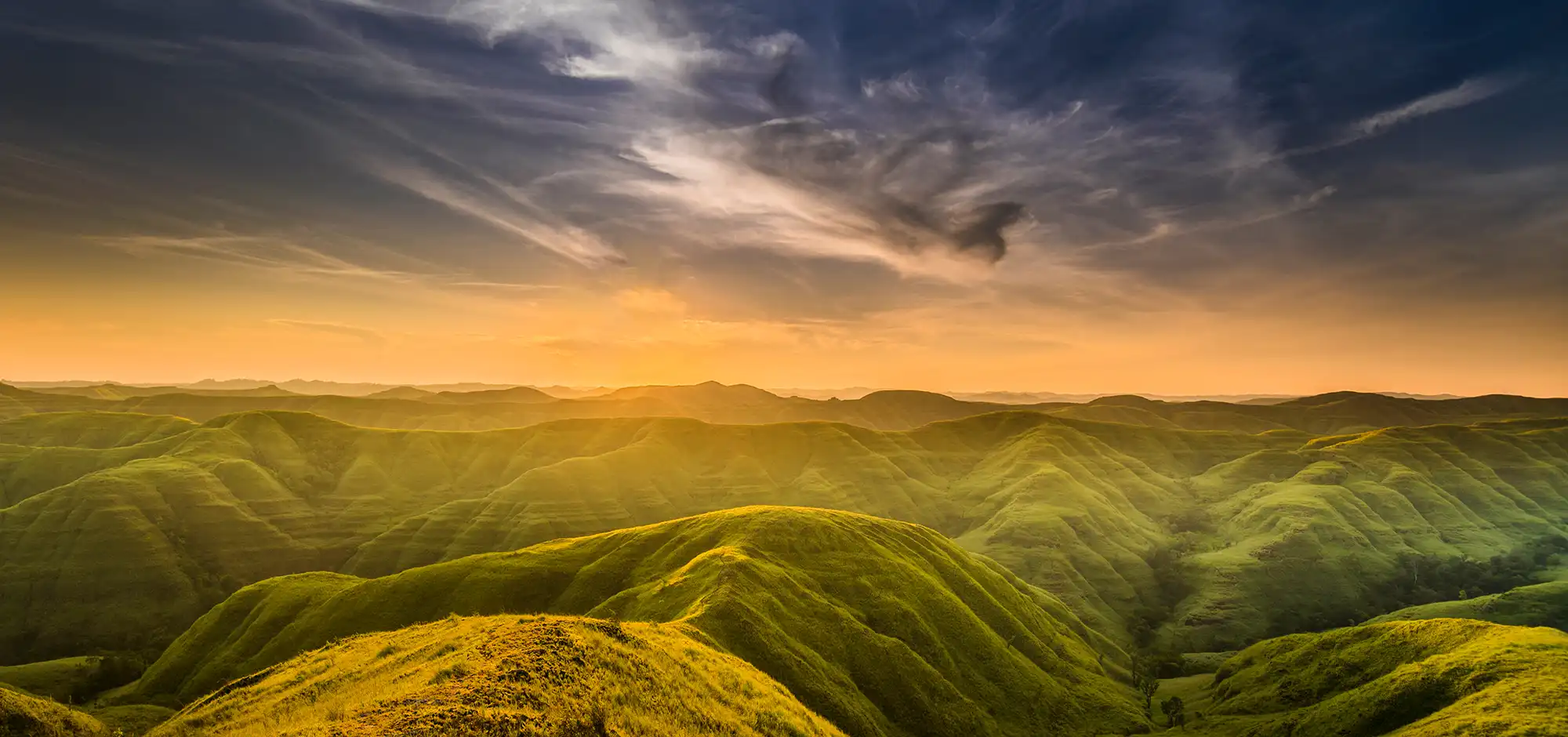
Our East Sumba tour is a private three-day, two-night circuit from Waingapu that gathers the region’s defining landscapes into one unhurried route: the dancing mangroves of Walakiri, the folded grass ridges of Wairinding and Tanarara, the canyon terraces of Tanggedu, the plunge pool at Waimarang, the wild-horse savanna of Puru Kambera, and the carved royal tombs of Rende. It runs from USD 300 per person (3D2N, as of August 2026, subject to season and group size) with a private car, a local driver-guide, and every entrance fee and village donation arranged before you land.
East Sumba is a different island from the west. Where Kodi is coral cliffs and tall clan roofs, the east is horizontal: savanna turning from green to lion-gold, rivers cutting sudden gorges, and pale tidal flats where horses graze. It is also home ground. Your private guide grew up on the Kambera plain, and this route follows the way east Sumbanese move through their own landscape — hills at first light, canyons before the heat, sunset timed to the tide chart rather than the clock.
What Makes East Sumba Worth Its Own Tour?
Most published Sumba itineraries treat the east as a finale: two hurried stops on the way to the airport. Three days based in Waingapu shows why that shortchanges the region. The east holds the island’s best sunrise hills, its most photographed beach, its grandest megalithic tombs still in royal use, and the weaving houses of Rende and Prailiu, where museum-grade Sumba ikat is still dyed with indigo and morinda root. Distances are honest — nothing on this route is more than about two and a half hours from your hotel — so each day carries one anchor sight, generous time on foot, and a slow return for dinner on the bay.
East Sumba Tour Itinerary: Three Days from Waingapu
The sequence below is our standard shape, though your guide will gladly reshuffle it around tides, light, and how your legs feel. Fly in and out through Waingapu (WGP), about 75 minutes from Bali; our Bali to Sumba island tour page covers flights and connections.
Day 1: Wairinding — Tanarara — Walakiri Dancing Trees Sunset
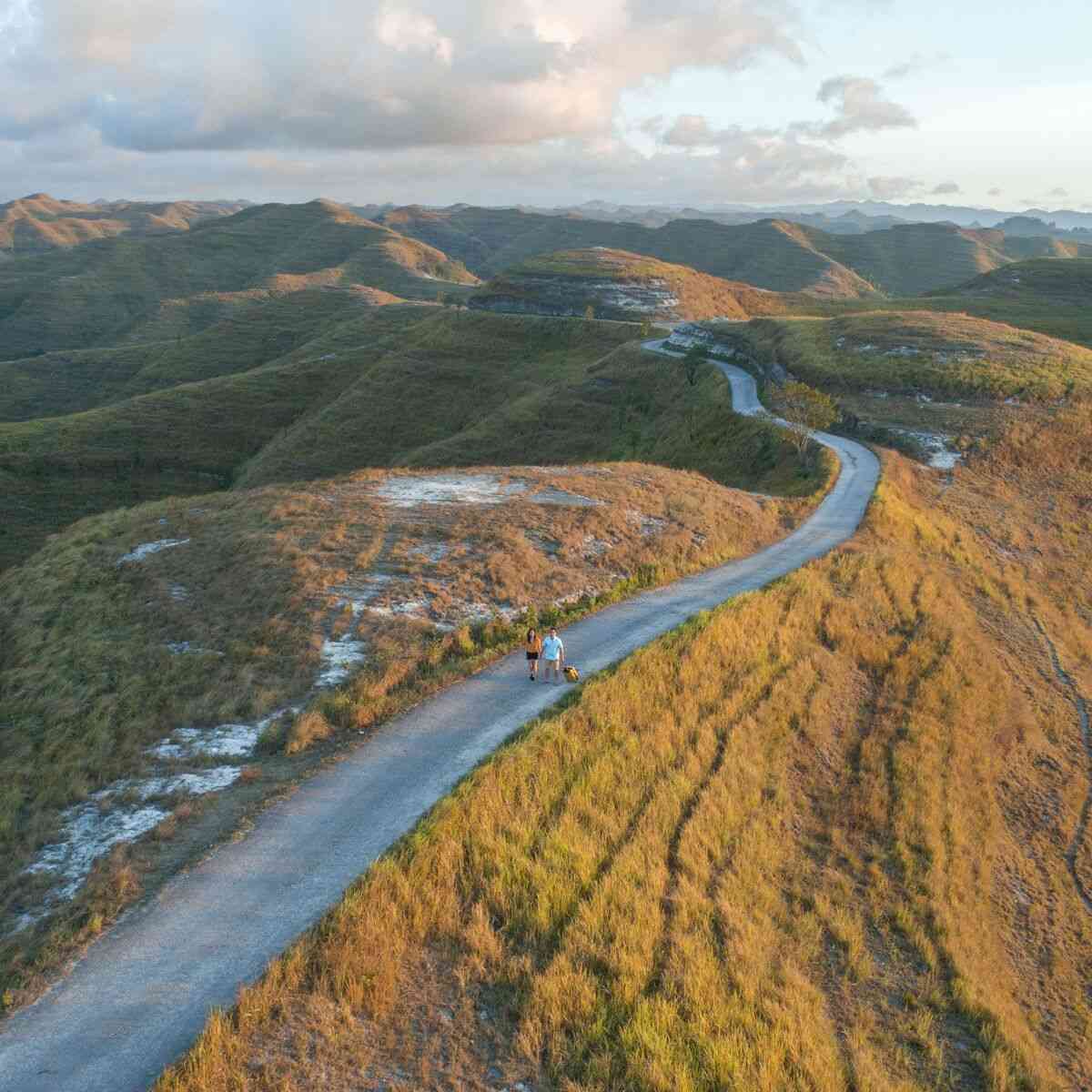
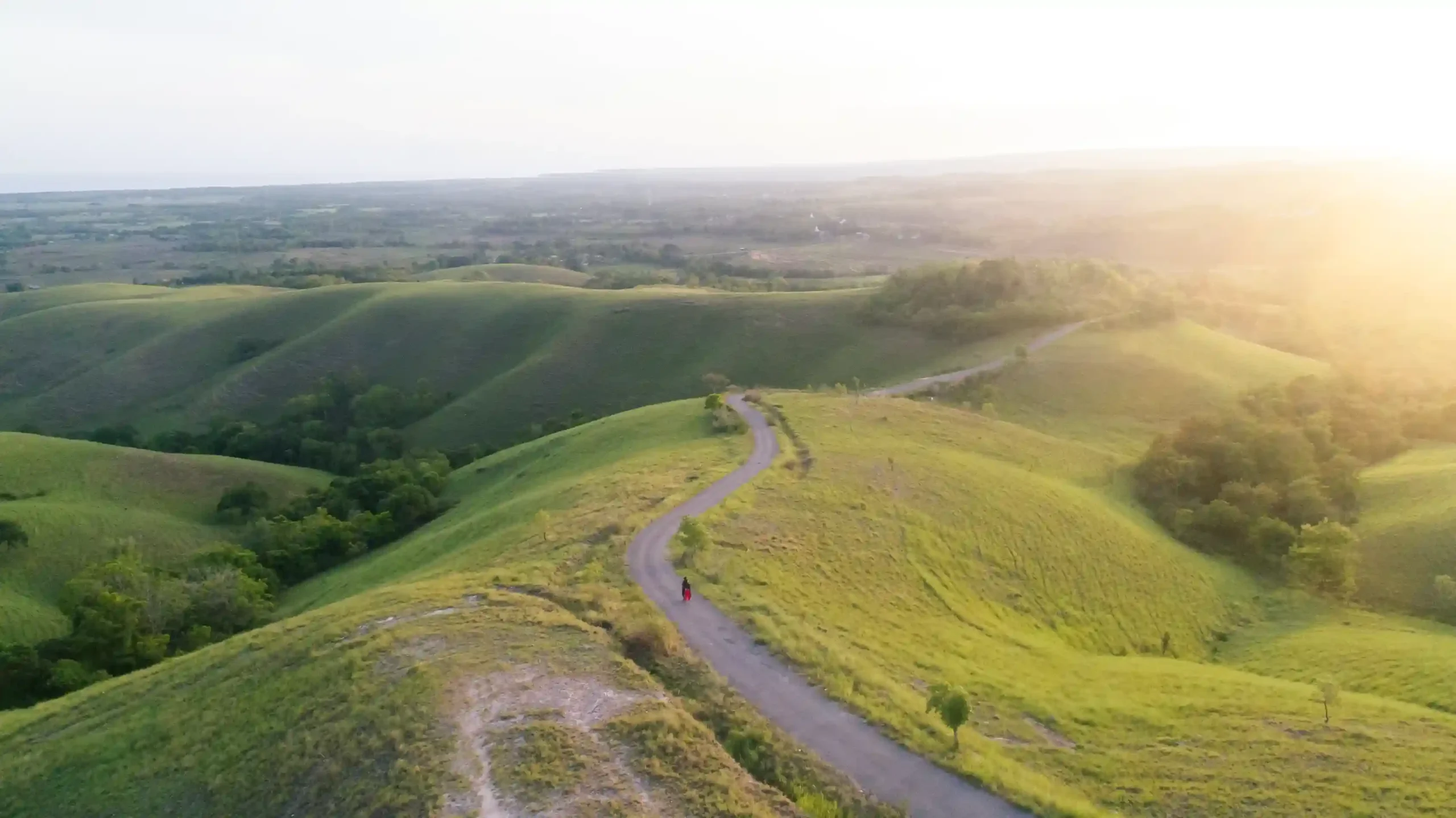
Your guide meets you at the airport or your hotel mid-morning. First stop is Wairinding, an amphitheatre of grass ridges half an hour from town, where you walk the spine of the hills and meet local kids riding bareback between the folds. After lunch you head out to Tanarara, a quieter run of savanna hills photographers often prefer because it stays empty. As the heat softens you continue to Walakiri Beach: wading across warm, ankle-deep flats while the light drops behind the bonsai mangroves locals call the dancing trees. Walakiri Beach sunset time falls between roughly 5:45 and 6:15 pm year-round; your guide plans arrival an hour ahead so you are positioned before the colour peaks.
Day 2: Mondu — Tanggedu Canyon — Puru Kambera Savanna
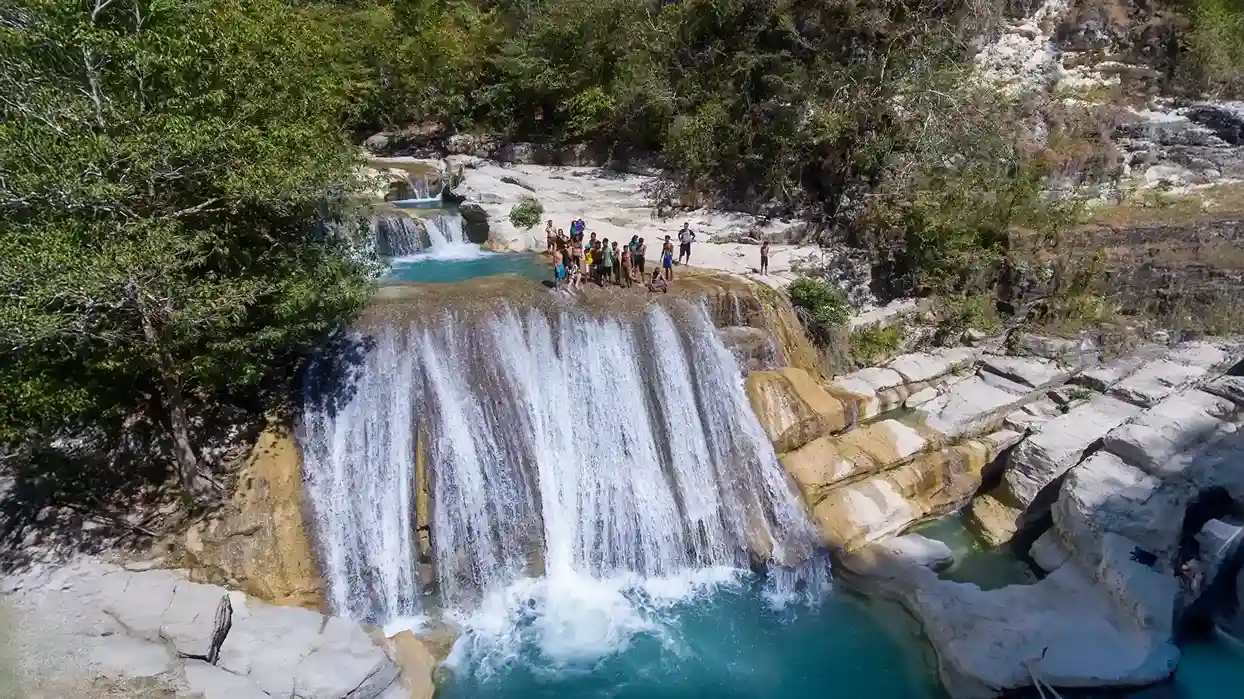
An early start north through Mondu village to Tanggedu, the layered limestone gorge often called Sumba’s Grand Canyon: a ridge track with sea glimpses, then a 30–45 minute walk down to terraces where the river braids into turquoise channels over sculpted stone. Local motorbike riders can shorten the walk. After a picnic lunch you return along the coast to Puru Kambera, the casuarina-fringed savanna where free-roaming sandalwood horses graze between grass and beach. Stay through golden hour; backlit grass, drifting horses, and an empty shoreline make this the east at its most cinematic.
Day 3: Watuparunu Sunrise — Waimarang — Rende Royal Tombs
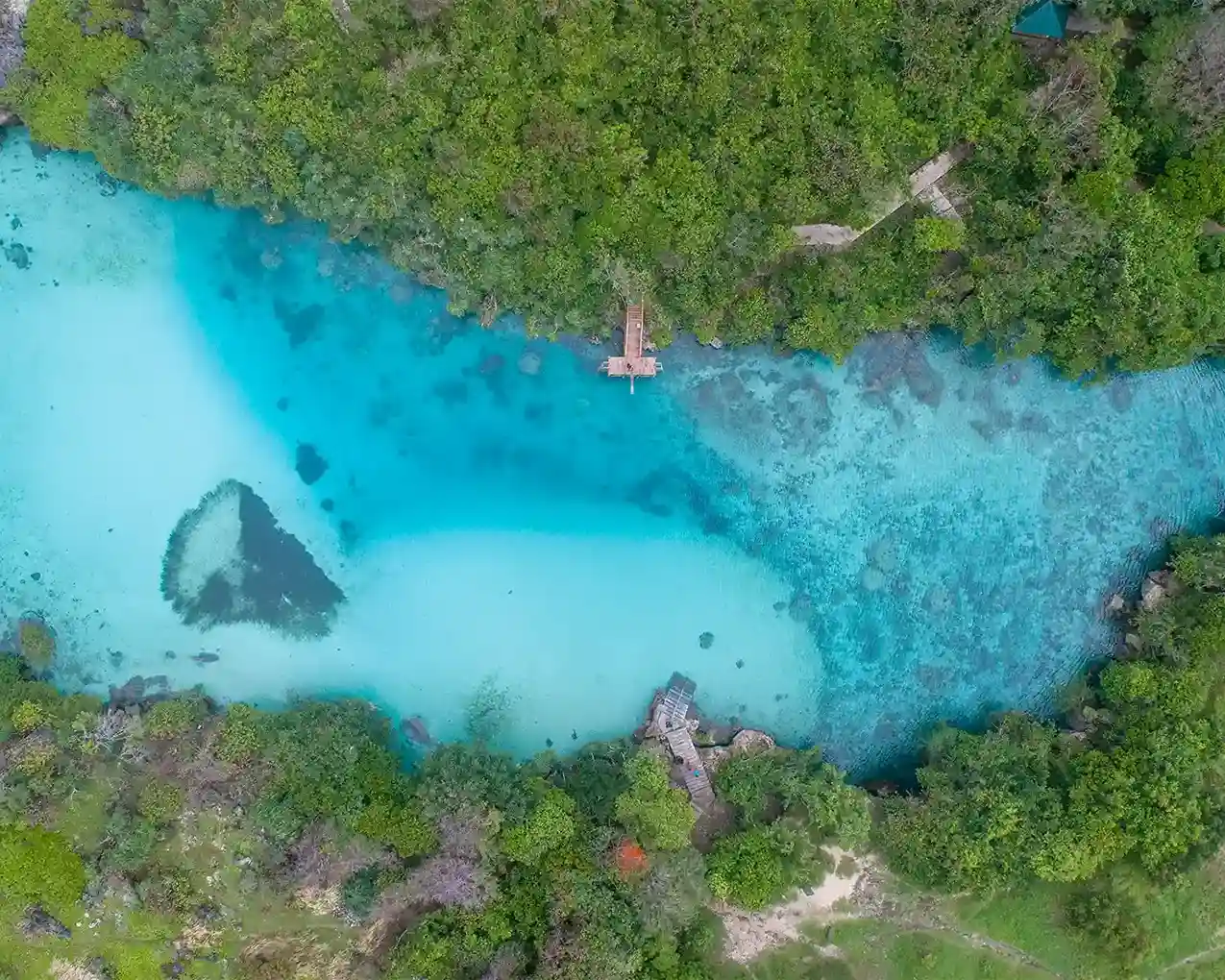
A pre-dawn departure down the Melolo road brings you to Watuparunu for sunrise, where a white limestone arch frames an east-facing beach. After a picnic breakfast, double back for the walk into Waimarang, a jungle plunge pool with a natural jump ledge — bring water shoes, and let your guide read the water before anyone leaps. Early afternoon belongs to Rende, the royal Marapu village whose buffalo-horned megalithic tombs front the old noble houses and whose weavers produce some of the most collected ikat in Indonesia. You are back in Waingapu by late afternoon, in time for an evening flight or one last grilled-fish dinner at the harbour.
How Long Is the Driving Time from Waingapu?
These are honest ranges from our own drivers, not map estimates — roads are mostly sealed but slow in stretches, and that is part of the scenery.
| Destination | Drive from Waingapu | Best light |
|---|---|---|
| Wairinding hill | About 30 minutes | Sunrise or late afternoon |
| Walakiri Beach | About 40 minutes | Sunset, on a falling tide |
| Puru Kambera savanna | About 45 minutes | Sunrise or golden hour |
| Tanarara hill | About 1.5 hours | Afternoon |
| Rende royal village | About 1.5 hours | Morning |
| Waimarang waterfall | About 1.5 hours + 30-minute walk | Midday, when light reaches the pool |
| Tanggedu waterfall | About 2 hours + 30–45-minute walk | Morning |
| Watuparunu beach | About 2.5 hours | Sunrise |
The driving time from Waingapu to Walakiri is the question we hear most — about 40 minutes — with Wairinding closer at half an hour and the driving time from Waingapu to Tanggedu the longest commitment at around two hours before the walk in. The driving time from Waingapu to Puru Kambera is a mere 45 minutes along the coast road, which is why it folds so easily into a sunrise or sunset slot. If you are searching phrases like driving time Waingapu to Walakiri, driving time Waingapu to Wairinding, driving time Waingapu to Puru Kambera, or driving time Waingapu to Tanggedu, the table above is the short answer: 40 minutes, 30 minutes, 45 minutes, and roughly two hours respectively.
When Is Wairinding Hill Green — and the Savanna Gold?
Two entirely different-looking islands share this one calendar. If you are wondering when Wairinding hill is green, the answer is roughly January through April, in and just after the rains, when the ridges turn an improbable emerald and the sky stacks with soft cloud. From June to October the same hills cure to gold, the air dries, and sunrise light turns clean and long. Neither version is better; they are simply different photographs.
If you are weighing the Puru Kambera savanna best season, it follows the same rhythm — green and gentle February to April, dry and golden June to October — with one addition: sunrise at Puru Kambera savanna is a quiet spectacle in any month, horses moving through backlit grass with the sea behind them, and you will usually have it to yourself. Walakiri cares less about season than tide. The best tide level for Walakiri photos is a low to mid falling tide, which exposes the wet sand flats that mirror the mangrove silhouettes; at high tide the trees stand in open water and the reflections vanish. Your advisor checks the tide tables before confirming your running order.
Rende, Prailiu & the Etiquette of the East
Rende is not a museum; it is a living royal village of the Marapu faith, and visiting it well takes a little grace. Your guide introduces you to a household elder before any cameras appear, handles the customary donation, and — if you are willing — walks you through the betel-nut greeting that opens doors across Sumba. Ask before photographing people, keep shoulders covered near the tombs, and let conversations run a beat longer than feels efficient; that patience is repaid in stories the guidebooks never carry. Closer to town, the weaving neighbourhood of Prailiu makes an easy final stop, where you watch ikat move from tied thread to finished cloth and buy directly from the weaver whose hands made it.
Can You Do East Sumba by Scooter — or Arrive by Ferry?
You can rent a scooter in Waingapu, and for Walakiri or Wairinding on a dry day it is a genuinely lovely ride. For Tanggedu, Watuparunu, and the southeast, long distances, hard sun, and unsignposted junctions make two wheels a tougher call — most guests keep the scooter for evenings in town and take a private car with driver-guide from about USD 60–90 per day (August 2026 indicative) for the landscape days. Overlanders sometimes arrive on the Ende to Waingapu ferry from Flores, a long crossing on a rotating schedule that shifts with season and sea state; ask our advisor to check the current timetable, and treat the flight via Bali as the reliable default.
Birdwatching, Beach Camping & Ways to Extend
Birdwatching in East Sumba savanna country is understated but rewarding: brahminy kites patrol Puru Kambera, kingfishers and bee-eaters work the river mouths, and patient observers sometimes flush the endemic Sumba buttonquail from the grass. Tell us in advance if birds matter to you and we will build in early starts. For something rarer still, we can arrange beach camping near Puru Kambera — tents, a cook, and village permission handled by our team — for a night of full-dark stargazing on one of the least light-polluted coastlines in Indonesia.
Many guests continue west from here: our Central Sumba tour adds the megalith complexes of Anakalang and the waterfalls of Manupeu Tanah Daru National Park, while travellers arriving in February or March can pair the east with our Sumba Pasola festival tour — Pasola dates are confirmed by the lunar calendar each year around February–March, and we track the local announcements so you do not have to.
What’s Included — and How Fit Should You Be?
- Private air-conditioned car with an English-speaking local driver-guide
- Two nights’ accommodation in Waingapu, with upgrade options on request
- All entrance fees and customary village donations
- Daily drinking water and picnic meals on canyon and sunrise days
- Tide-and-light planning for Walakiri and Watuparunu
- Airport transfers at Waingapu (WGP)
Difficulty is easy to moderate. The only sustained exertion is the walk into Tanggedu and the shorter descent to Waimarang; everything else is a stroll from the car. Guests from their twenties to their seventies complete this route comfortably.
East Sumba Tour Price (August 2026)
The private 3D2N program runs from USD 300–550 per person, as of August 2026, subject to season and group size — the range settles toward the lower end for parties of four or more. Want both halves of the island? The 4D3N Sumba overland runs from USD 390–700 per person on the same basis. We publish these figures because we believe you should not have to fill in a quote form just to learn what a tour costs.
Speak to our Sumba travel advisor to check dates and tides: WhatsApp +62 811-994-1919 or email sales@indonesiajuara.asia. This tour is operated with Indonesia Juara Trip — the team behind the 4-day Sumba overland — high-end local Sumba expertise: we show you the real Sumba. Part of Juara Holding Group — since 2015.
East Sumba Tour FAQ
How many days do you need for an East Sumba tour?
Three days from Waingapu covers Walakiri, Wairinding, Tanarara, Tanggedu, Puru Kambera, Watuparunu, Waimarang, and Rende without rushing. Two days is workable if you drop the Watuparunu sunrise and Waimarang; one day limits you to Wairinding, Puru Kambera, and Walakiri.
What time is sunset at Walakiri Beach?
Between about 5:45 and 6:15 pm year-round. Arrive an hour early and aim for a low, falling tide, which exposes the reflective sand flats the dancing trees are famous for.
When is Wairinding hill green?
Roughly January through April, during and just after the rainy season. From June to October the grass cures to gold, which photographs just as well in a completely different mood.
Is the Tanggedu trek difficult?
Moderate: a 30–45 minute walk each way on uneven ground, hot by mid-morning. Local motorbike riders can carry you most of the distance, and we schedule it early to beat the heat.
Can you rent scooter in Waingapu?
Yes. Most guesthouses in town arrange daily rentals, and on a dry day the ride out to Walakiri or Wairinding is genuinely lovely. For Tanggedu, Watuparunu, and the southeast, long distances and hard sun make two wheels a tougher call, so most guests keep the scooter for evenings in town and use a private car with driver-guide for the landscape days.