Southwest Sumba Tour: Weekuri Lagoon & Ratenggaro

The southwest Sumba tour covers Kodi, the most photogenic corner of the island, in one focused route: Weekuri (also written Waikuri) Lagoon, Mandorak Beach, the 15-metre roofs of Ratenggaro, the tomb fields of Wainyapu, sunset at Pero, and — for guests who add a second day — the Bwanna cliff arch and Lendongara hill. You can run it as a full-day loop from Tambolaka with a private car and local driver-guide from USD 60-90 per day, or as the heart of a 3D2N program from around USD 300-550 per person (as of August 2026, subject to season and group size). Every departure is operated with Indonesia Juara Trip: high-end local Sumba expertise, which matters in Kodi above all — this is living Marapu country, and a warm welcome depends on knowing the protocol.

What Does the Southwest Sumba Tour Cover?

Kodi occupies the far southwest of Sumba, roughly 1 to 1.5 hours’ drive from Tambolaka airport on sealed but narrowing roads. Within a 30-minute radius of each other you find a tidal saltwater lagoon, a twin-cliff cove, the tallest traditional roofs in Sumba, one of the island’s densest concentrations of megalithic tombs, a working fishing village with a west-facing sunset, a limestone sea arch, and a savanna viewpoint. No other part of the island packs this much into so few kilometres, which is why we treat the southwest as its own product rather than a drive-through day on a longer crossing. The table below is how our advisors brief guests before they choose a one-day or two-day version.

StopDrive from TambolakaDifficultyBest light
Weekuri (Waikuri) LagoonAbout 1.5 hoursEasy — flat paths and a short boardwalk08:00-10:00, before day-trip arrivals
Mandorak Beach10 minutes from WeekuriEasyLate afternoon on the cliff tops
Ratenggaro VillageAbout 1.25 hoursEasyGolden hour, roofs against the sea
Wainyapu VillageAbout 1.5 hoursEasyMid to late afternoon
Pero BeachAbout 1.5 hoursEasySunset
Bwanna cliff archAbout 2 hoursModerate — steep 20-minute descentMorning, at lower tide
Lendongara HillAbout 1.5 hoursEasy to moderate — short open walkSunrise or the last hour of light

Day-by-Day Itinerary

The classic version below runs across two days with a night in the Kodi area. Your private guide can compress Day 1 into a single day trip from Tambolaka, or stretch the whole route into the opening days of a longer west-to-east crossing — the sequencing stays the same either way, because it is built around light and tides rather than a checklist.

Day 1: Weekuri Lagoon, Mandorak, Ratenggaro, Wainyapu & Pero Sunset

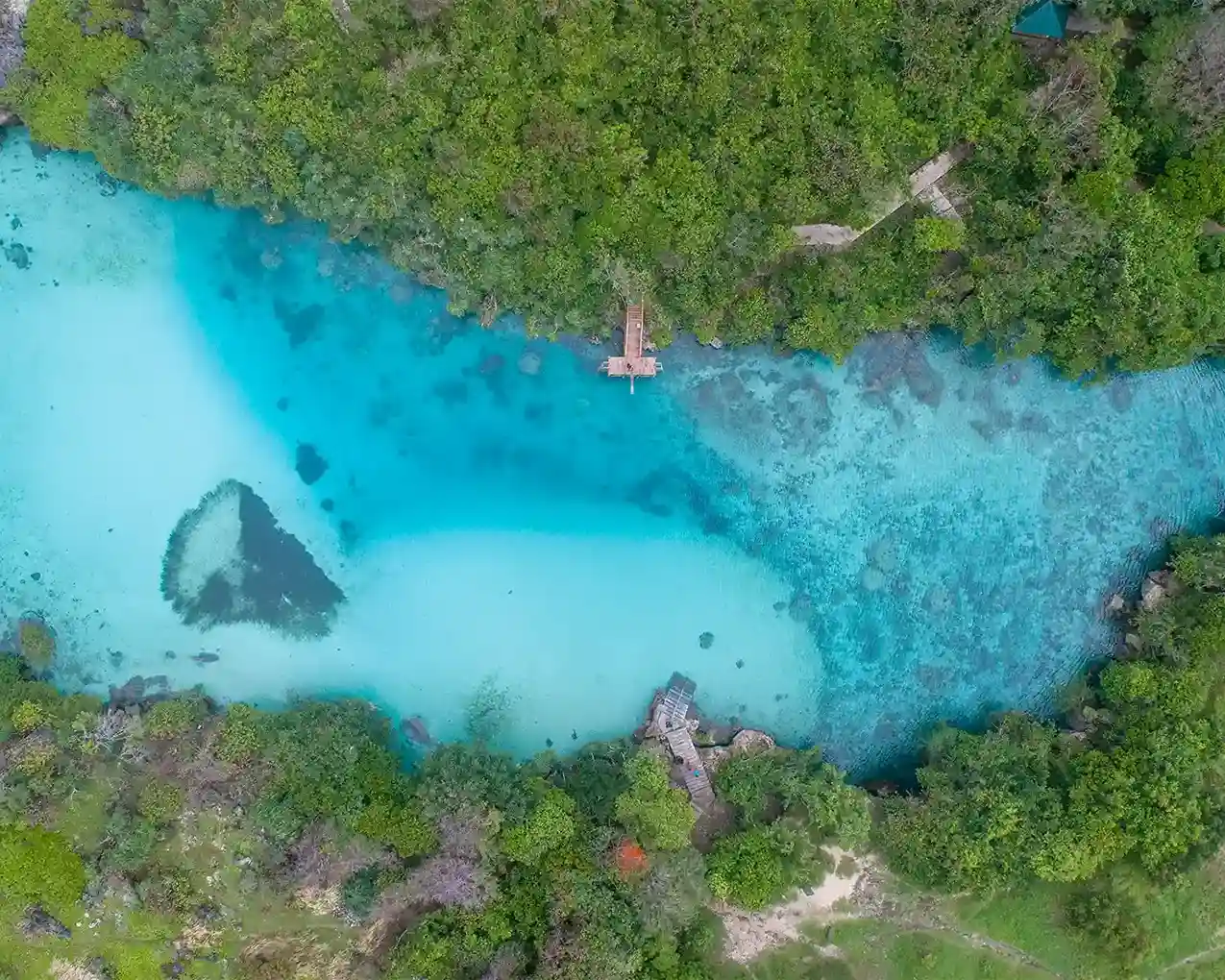
We collect you early so you reach Weekuri Lagoon by mid-morning, when the water is at its clearest and the site is at its quietest. The lagoon is seawater, pushed through gaps in the limestone with every swell, so it rises and falls gently with the tide; you float, swim, and walk the boardwalk to the blowhole side where spray bursts over the rock shelf. Ten minutes on, Mandorak Beach is a pocket of white sand squeezed between two cliff walls. On swimming safety at Mandorak Beach, our guides are direct: the channel between the cliffs can pull hard on a falling tide, so treat it as a place to wade, photograph, and picnic rather than swim laps — Weekuri an hour earlier is the safe swim of the day. After lunch you continue to Ratenggaro, where the peaked alang-alang roofs climb to around 15 metres above a river mouth facing the Indian Ocean. Your guide carries betel nut, makes the introductions, and walks you through which tombs and houses welcome a camera. Across the river mouth, Wainyapu holds hundreds of megalithic graves between its clan houses — quieter than Ratenggaro and, for many guests, more affecting. The day closes at Pero, a Kodi fishing village where outrigger boats come back through the surf as the sun drops straight into the sea.

Day 2: Bwanna Cliff Arch & Lendongara Hill

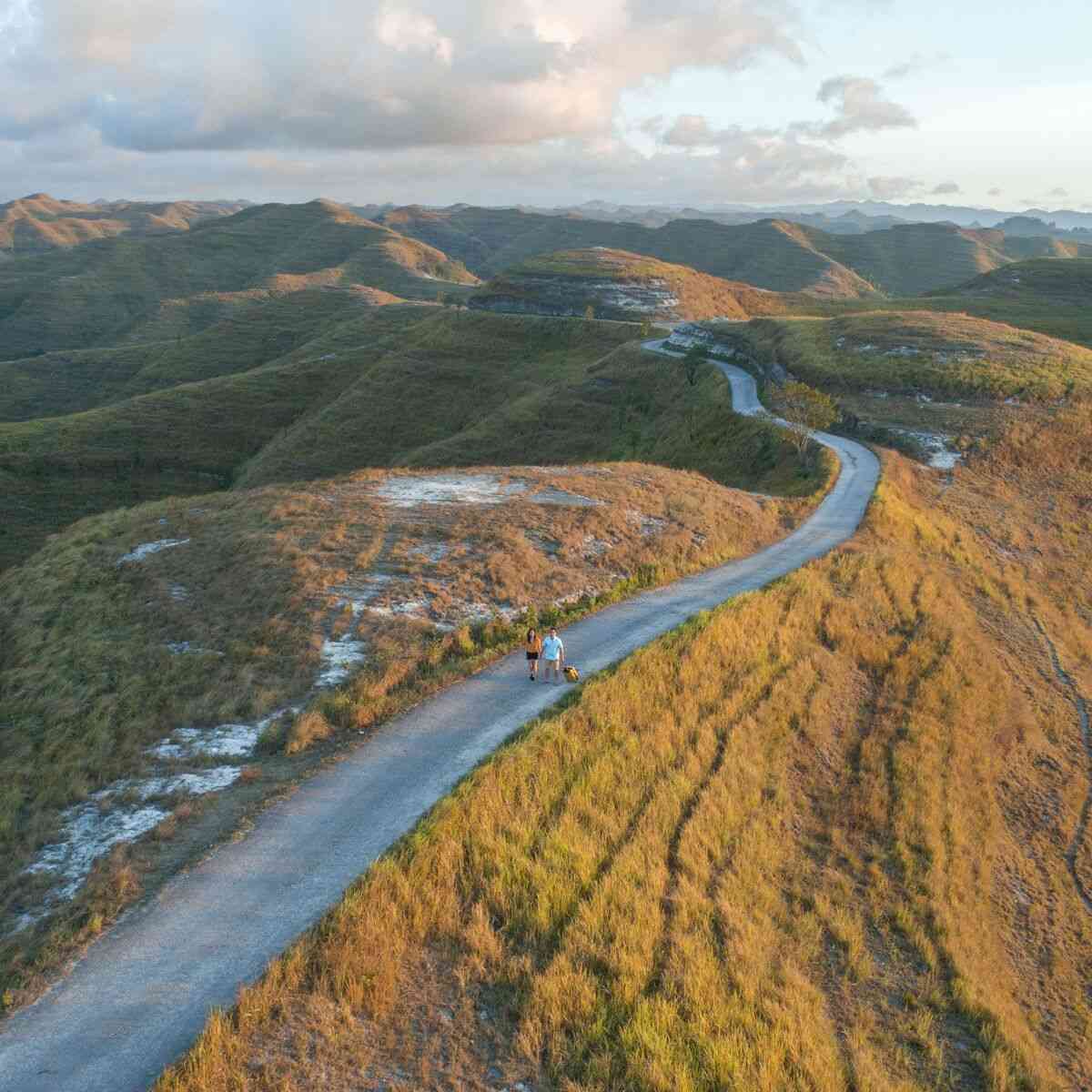
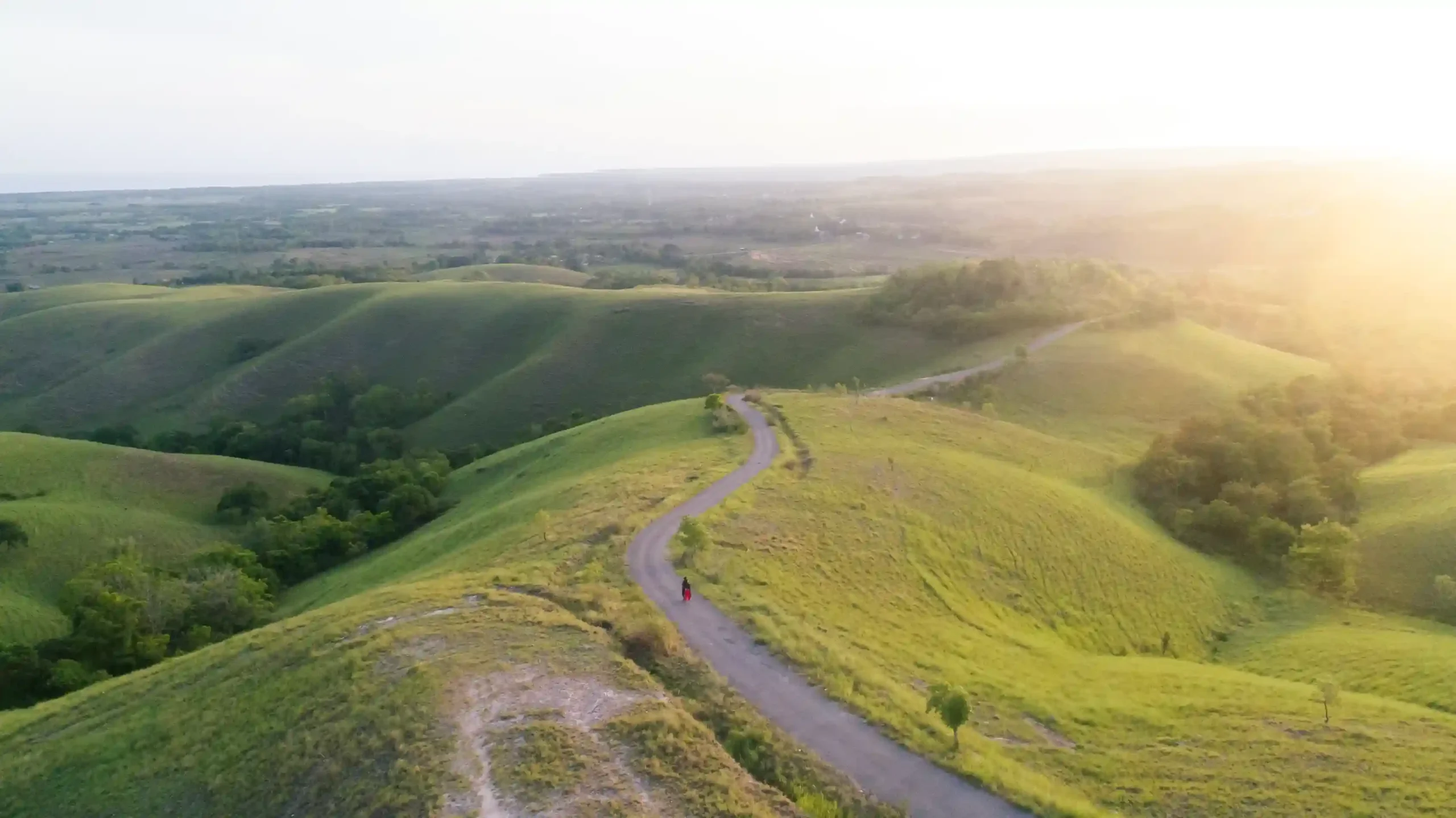
Day 2 starts early for the drive south to Bwanna, the white-sand cove beneath a freestanding limestone arch that has become the southwest’s signature image. The final approach is a steep cliff path of roughly 20 minutes; your guide reads the tide before committing, because the beach narrows to nothing at high water. It is the one stop on this route we grade moderate, and we quietly skip it for guests with knee trouble in favour of the clifftop view. On the return leg you climb Lendongara hill, a grass dome with a long view over the Kodi coastline and savanna — green and soft from roughly December to May, copper-gold from June to November. From here you either roll back to Tambolaka for an afternoon flight, or continue east with us toward Waikabubak and beyond.

How Much Does a Southwest Sumba Tour Cost?

Transparent numbers, because this is where most Sumba operators go vague. A private air-conditioned car with an English-speaking local driver-guide runs from USD 60-90 per day (as of August 2026, indicative), which covers the vehicle, fuel, parking, and the guiding itself. Built into a stay with accommodation and airport transfers, a 3D2N southwest-focused program starts from around USD 300-550 per person depending on group size and hotel tier. The southwest loop also forms the opening days of our 4-day island crossing from USD 390-700 per person, mirrored from Indonesia Juara Trip’s Sumba Tour 4D3N program. All rates are as of August 2026 and subject to season; you receive a written price before any deposit, not a quote form that goes quiet for three days.

  • Included on private tours: car, fuel, driver-guide, parking, village entrance donations, and drinking water.
  • Not included: flights to Tambolaka, meals, and accommodation (we book these at cost estimates you approve first).
  • Rates vary with group size — couples pay the upper band per pax, groups of four to six the lower.

Is Weekuri Lagoon Safe for Kids — and When Is the Water Clearest?

Yes, with normal supervision, and it is honestly one of the best swim stops in Indonesia for families. The entry side of the lagoon shelves gently and stays waist-deep at most tides, while the far side near the rock wall runs deeper and livelier where the sea pushes through — keep younger children on the shallow side, and rent one of the life jackets available at the entrance for around a dollar. Snorkeling conditions at Weekuri Lagoon are modest but charming: this is not a coral reef, but juvenile fish shelter along the rock edges, and visibility is best at mid-to-high tide when fresh seawater has just flushed the basin. Water clarity by season follows the rain: from May to October the lagoon is glass; from roughly December to February, heavy showers can cloud it for a day at a time, though it clears fast. Crowd levels at Weekuri Lagoon follow a simple rule: weekday mornings before 10:00 are near-empty, while Sunday afternoons bring local families and a louder, happier scene. For the month-by-month picture across the whole island, see our best time to visit Sumba guide.

What About Drones and Long-Exposure Photography?

Photographers plan whole trips around this route, so the practical notes matter. Drone rules at Weekuri Lagoon are permissive as of August 2026 — there is no formal no-fly zone — but Indonesian regulations still apply: stay under 120 metres, keep line of sight, and never overfly swimmers in the lagoon. At Ratenggaro and Wainyapu, ask before you launch; your guide will request permission from the kepala desa or an elder, and the answer is almost always yes when it is asked properly. Long exposure at Weekuri Lagoon works best on the blowhole shelf, where a 6-stop ND filter turns the surge into mist against the dark limestone — bring a tripod with spiked feet for the rock. At Ratenggaro, the classic frame is from the beach across the river mouth in the last hour of light, roofs stacked against the sky.

Where Should You Stay in the Kodi Area?

Three honest tiers. Homestays near Ratenggaro village are the simplest and most memorable: fan-cooled rooms with local families in and around the village and in nearby Bondo Kodi and Pero, where dinner is whatever the boats brought in. Ratenggaro homestay options suit travellers who value proximity over comfort — you wake inside the view everyone else drives to. Mid-range guesthouses cluster back toward Tambolaka, useful for early flights. And boutique stays near Weekuri Lagoon are led by one name: Cap Karoso, the designer resort on the Kodi coast that sits in Sumba’s premium-boutique tier alongside Lelewatu, while Nihi Sumba — typically from around USD 1,000+ per night, resort-published and seasonal — anchors the luxury end further east in Wanokaka. For Cap Karoso guests we run a dedicated Cap Karoso lagoon and village tour: pick-up at the resort, a quiet-hours visit to Weekuri, then Ratenggaro and Pero with your own guide, back before dinner. Camping near Weekuri Lagoon is possible too — with village permission we set tents on the grass flats above the lagoon for a genuinely dark sky — though most guests choose it for one night, not three.

Visiting Ratenggaro and Wainyapu Respectfully

These are inhabited Marapu villages, not open-air museums. The entry fee for Ratenggaro village is a modest entrance donation — roughly IDR 20,000-50,000 per visitor in cash at most Kodi villages — which we include and your guide handles, so you are never fumbling notes at a doorway. Beyond the fee, the protocol is simple and your guide models it: greet before photographing, ask before entering a house or climbing on a tomb, accept betel nut if it is offered even if you only hold it, and keep shoulders covered when invited inside. Kodi is also a Pasola region; the mounted spear-fighting festival is confirmed by lunar calendar around February-March each year, and we track local announcements rather than promise dates, so ask our advisors if your travel window overlaps.

How Does This Route Connect to the Rest of Sumba?

Most guests pair the southwest with at least one neighbouring region. The natural next step is our West Sumba tour — Praijing village, Lapopu waterfall, and the Wanokaka coast — which shares the same base towns and adds waterfalls to the coastline. Travellers with more time continue into the Central Sumba tour for the Anakalang megalith complex and Matayangu falls, turning the Kodi loop into the first act of a full west-to-east crossing. Your advisor will sequence the days around flights into Tambolaka and out of Waingapu so nothing is backtracked.

Why Book This With a Sumba-Based Team?

Because in Kodi, access is relational. Our driver-guides were raised in West Sumba, greet village elders by name, and know which afternoon Ratenggaro hosts a funeral and should be left in peace. That standing turns a photo stop into an hour on a bale platform hearing what the roof heights mean — and it is why we publish USD prices instead of hiding them behind a quote form. Operated with Indonesia Juara Trip, part of Juara Holding Group — since 2015, we show you the real Sumba.

Speak to our Sumba travel advisor to shape your southwest route — one day or three, homestay or Cap Karoso. WhatsApp +62 811-994-1919 or email sales@indonesiajuara.asia for a same-day written itinerary and price.