Sumba Journal
Is Sumba Worth Visiting in 2027? An Honest Verdict
8 min read
Yes — Sumba is worth visiting in 2027 if you want vast savanna hills, a living megalithic culture, and beaches you will often have entirely to yourself, all about 1h15m by air from Bali. It is not worth visiting if your ideal trip runs on nightlife, café mornings, and improvised scooter days. We are a local operator, and we would rather tell you this plainly than sell you a trip you will not enjoy. What follows is the honest briefing our guests ask for before they commit: who the island rewards, who it frustrates, what it really costs, and the practical details most brochures leave out.
Who Will Love Sumba — and Who Won’t?
Sumba rewards travellers who judge a destination by what it still is, not by what has been built for them. The guests who come back glowing are usually:
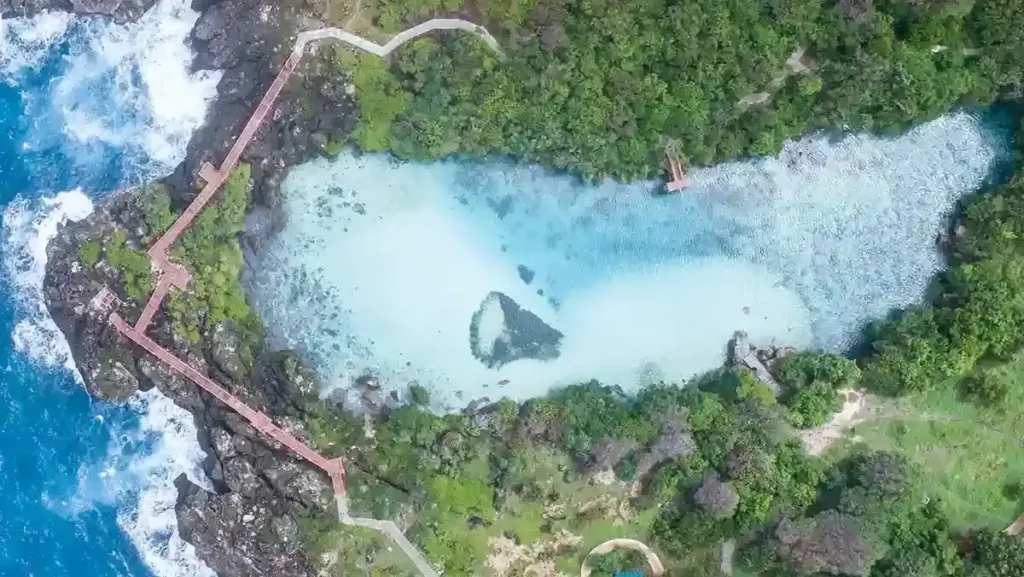
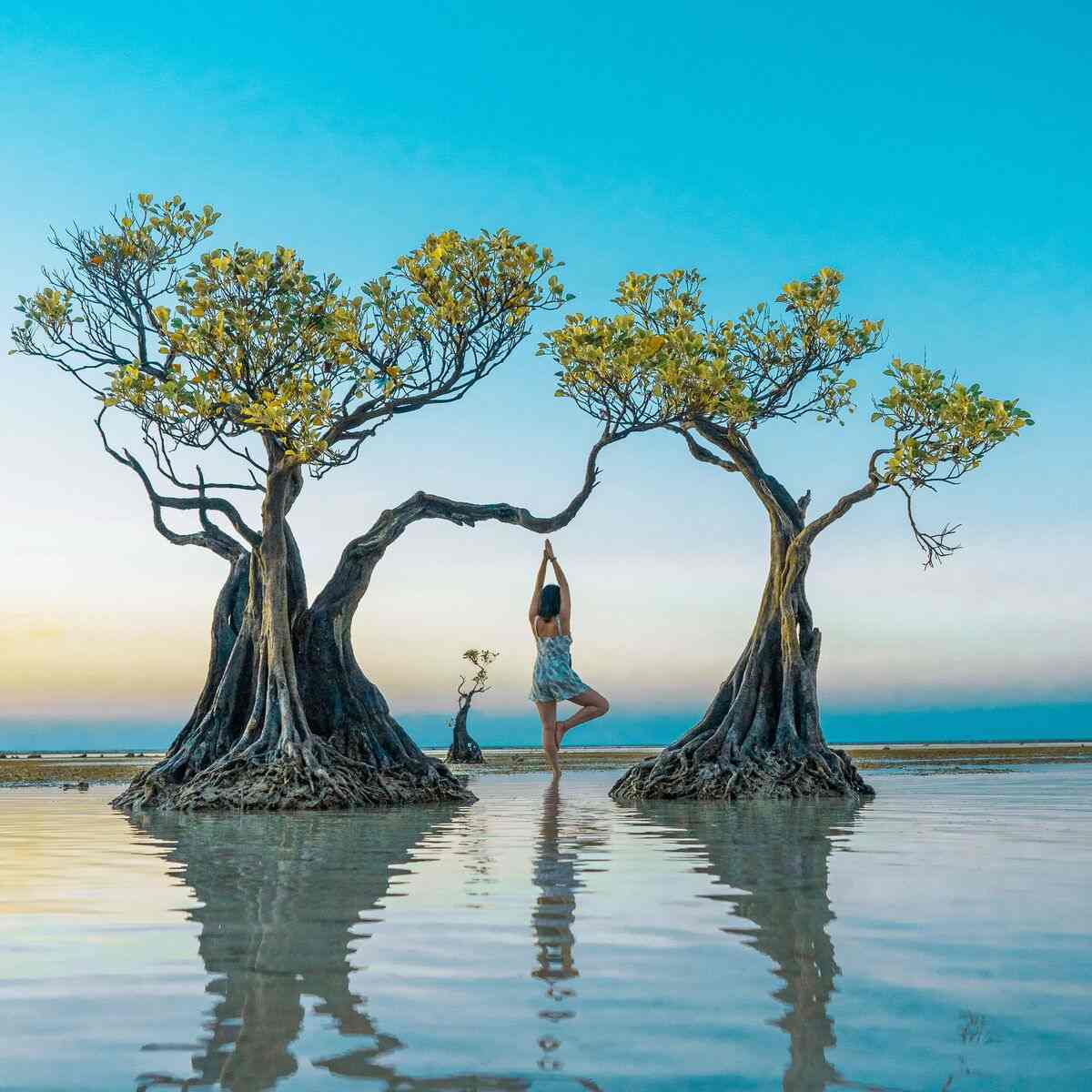
- Photographers and honeymooners chasing the golden grass of Wairinding, the dancing mangroves of Walakiri at low tide, and the turquoise bowl of Weekuri Lagoon;
- Culture-first travellers who want to walk into a megalithic village such as Ratenggaro or Prai Ijing — the latter recognised with an ASEAN Tourism Award in 2026 — with your private guide handling introductions and betel-nut etiquette;
- Couples and families who prefer one comfortable car, one trusted driver-guide, and almost no other tourists on the road;
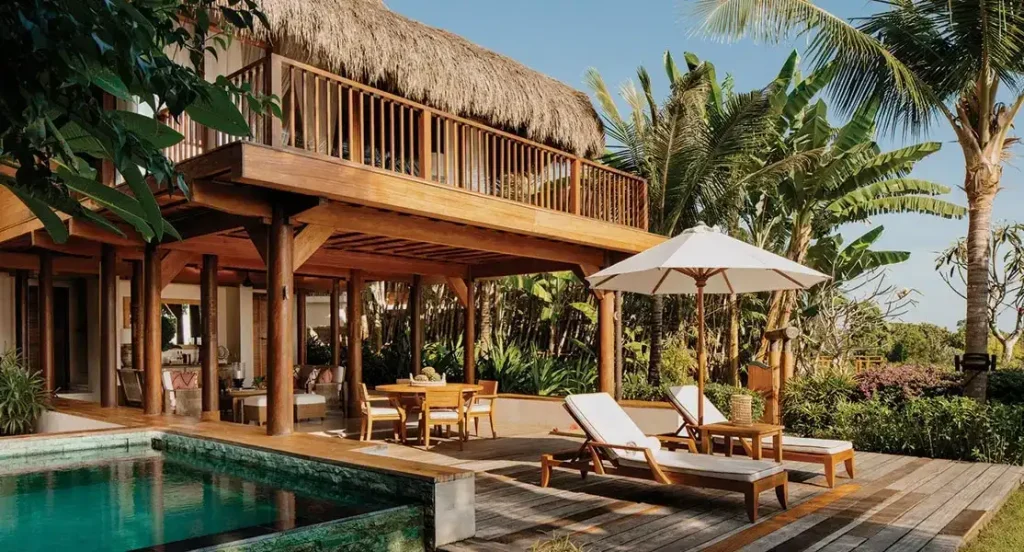
- Resort travellers ready for Nihi Sumba, Lelewatu, or Cap Karoso, where world-class hospitality faces a coastline that is still honestly wild.
The island will frustrate you if you want to improvise. There is no Gojek, very little public transport, and dinner choices in Waingapu or Tambolaka can be counted on one hand. Nightlife in Sumba means a quiet drink at your hotel, and the price of beer in Sumba restaurants runs noticeably above Bali’s, because nearly everything arrives by ship. If that paragraph made you wince, choose Bali or Lombok this time. If it made you curious, keep reading.
What Makes Sumba Genuinely Different?
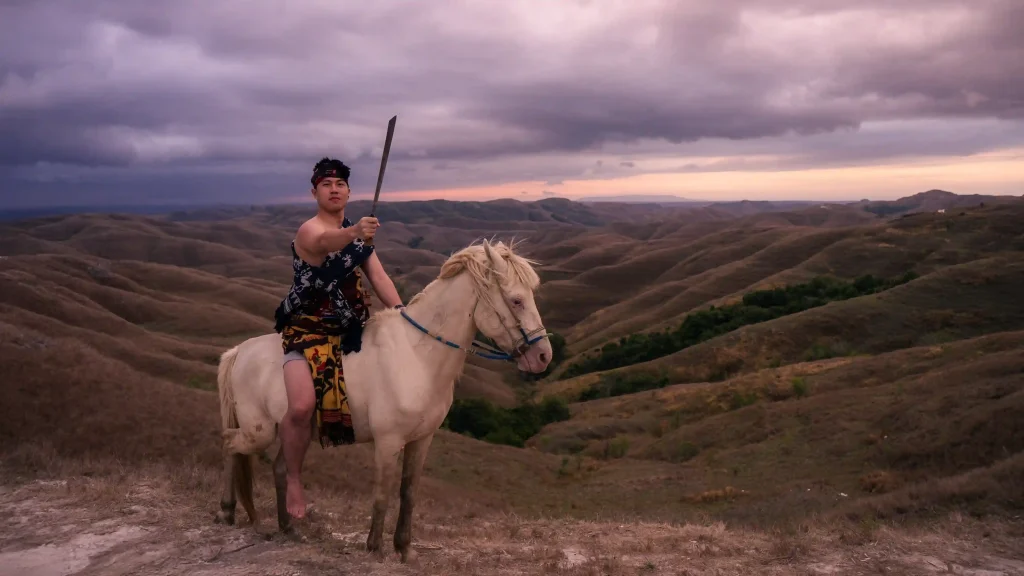
Three things, and none can be copied elsewhere in Indonesia. First, the landscape: savanna that turns gold from June to October, limestone lagoons, and canyon waterfalls such as Tanggedu and Waimarang. Second, Marapu — the ancestral faith still practised alongside Christianity — continues to shape daily life, from peaked clan roofs to carved stone tombs standing in family front yards. Sumba origin myths and legends tell of first ancestors who came down from the sky world at Cape Sasar on the island’s northern tip, and village elders still recount those stories beside the very tombs where their lineages continue. Third, Pasola: the mounted spear ritual of the island’s west, confirmed by lunar calendar around February–March — we track local announcements each season rather than promise fixed dates.
Will Sumba Become Another Bali?
This is the question guests ask most, so here is the straight answer: not in this decade. Bali counts international arrivals in the millions each year; Sumba counts visitors in numbers that are a small fraction of that, spread across an island nearly the size of Bali and Lombok combined. There are two small airports, long driving distances, and a hotel inventory that would fit inside a single Kuta block. What is changing is the top end: Nihi Sumba is regularly named among the world’s best resorts, with published nightly rates typically from around USD 1,000+ depending on season, and boutique properties such as Lelewatu and Cap Karoso have raised the bar again. The realistic 2027 outlook is a better-run, slightly busier Sumba — not a second Bali. If you want the island while villages still outnumber resorts, this is the window. Our Sumba resort stay-and-tour combinations exist exactly for guests who want the wild island and a world-class bed in the same week.
The Honest Downsides
- Distances are real. Tambolaka to Waingapu is a long day’s drive, so a well-planned itinerary flies into one airport and out of the other instead of backtracking.
- Food is simple. Expect grilled fish, chicken, rice, and noodles done well — not variety. Nutrition options for picky eaters in Sumba take planning: we brief kitchens ahead, keep fruit and snacks in the car, and the resorts run full Western menus.
- Connectivity is patchy. Telkomsel is strongest, but signal fades in the far southwest and inside the canyons. Sensible internet backup options in Sumba are a Telkomsel SIM plus a second eSIM, offline maps downloaded before you fly, and telling your office you may be unreachable for an afternoon.
- Discounts are informal. Senior discounts in Sumba hotels are rare and never advertised; where a property offers one, your advisor negotiates it into the quote so you never have to ask at the desk.
How Do You Get There — and Should You Fly or Ferry?
Fly, in almost every case. Daily propeller flights link Bali (DPS) with Tambolaka (TMC) and Waingapu (WGP) in about 1h15m. Do note the baggage restrictions on propeller planes: cabin allowances on ATR aircraft are tighter than on jets, so pack soft bags and confirm your fare’s checked limit before you go shopping for ikat.
The ferry is the budget and overlander route. Guests often ask how to buy ferry tickets to Sumba: the main crossing between Sape on Sumbawa and Waikelo in the northwest sells through the official ASDP Ferizy app, while smaller eastern crossings toward Flores are usually bought at the harbour a day ahead. ID requirements for ferries in Indonesia are enforced — tickets are name-registered, so book with your passport and carry it at boarding. Be honest with yourself about seasickness on ferries to Sumba, too: these are open-water crossings of many hours, so choose a midship seat and take tablets before departure, not after the rolling starts. With four to nine days on the island, the flight is worth every dollar of the difference.
What Does a Sumba Trip Cost in 2027?
We publish transparent from-prices in USD per person — as of August 2026, subject to season and group size:
| Trip style | Indicative price |
|---|---|
| 3D2N highlights (west or east) | From ~USD 300–550 per pax |
| 4D3N signature overland | From USD 390–700 per pax |
| 6D5N complete island | From USD 570–1,020 per pax |
| Private car with driver-guide | From ~USD 60–90 per day |
| Nihi Sumba resort nights | Typically from ~USD 1,000+ per night, seasonal |
Our 4D3N pricing mirrors the Indonesia Juara Trip 4-day Sumba tour, so you can compare line by line instead of waiting on a quote form. For the full west-to-east crossing without a single repeated road, the Sumba overland tour flies you into Tambolaka and out of Waingapu.
Practical Answers Guests Ask Before Deciding
What camera gear should I bring? Our camera gear recommendations for Sumba are short: a wide zoom for the savanna, a polarising filter for Weekuri’s glare, a light tripod for Walakiri at dusk, and twice the batteries you think you need, because village power can cut out overnight.
How do I keep my footprint small? Guests who ask how to reduce waste when visiting Sumba get the same short list: bring a refillable bottle (our cars carry refill gallons), decline plastic bags and straws, carry out everything you carry in, and put your souvenir budget into ikat bought directly from the weaver rather than imported trinkets.
The Verdict
Sumba is worth visiting in 2027 — decisively — for travellers who want landscape and living culture with almost nobody else in the frame, and it will stay this quiet for only so long. Come with a private driver-guide, realistic expectations about food and Wi-Fi, and at least four days, and the island gives back far more than it asks.
Speak to our Sumba travel advisor to pressure-test whether the island fits you — we will tell you honestly if it does not. WhatsApp +62 811-994-1919 or email sales@indonesiajuara.asia. Sumba Island Tour is operated with Indonesia Juara Trip — high-end local Sumba expertise, part of Juara Holding Group — since 2015.
Keep reading
More from the journal.