Sumba Journal
Nihi vs Lelewatu vs Cap Karoso: Sumba Resorts 2027
8 min read
The short answer: Nihi Sumba is the icon — the surf-born estate on the Wanokaka coast that made the island famous, with nightly rates typically from ~USD 1,000+ (resort-published, seasonal, as of August 2026). Lelewatu is the private all-pool-villa alternative on the same coastline, and Cap Karoso is the design-led newcomer on the Kodi peninsula, a short drive from Weekuri Lagoon; both sit in a premium-boutique tier below Nihi. All three count among the best luxury hotels in Sumba — the right one for you depends on temperament, location, and how much of the real island you want to see beyond the gate.
How do the three resorts compare at a glance?
| Resort | Setting | Signature | Indicative rate (Aug 2026) | Best for | Nearby sights |
|---|---|---|---|---|---|
| Nihi Sumba | Wanokaka coast, West Sumba | Protected surf break, swimming horses, Sumba Foundation | Typically from ~USD 1,000+/night (seasonal) | Milestone trips, surfers, honeymooners | Wanokaka valley, Marosi Beach, Lapopu Waterfall |
| Lelewatu | Clifftop above the Wanokaka coastline | All-pool-villa privacy, Sumbanese architecture | Premium-boutique tier | Couples who want seclusion | Praijing village, Lapopu Waterfall |
| Cap Karoso | Karoso Beach, Kodi peninsula, Southwest Sumba | Design-led estate, working farm, beach club | Premium-boutique tier | Food and design travellers, families | Weekuri Lagoon, Mandorak Beach, Ratenggaro |
Rates are indicative as of August 2026 and move with season and villa category — we confirm live pricing before you commit to anything.
Nihi Sumba: the estate that put the island on the map
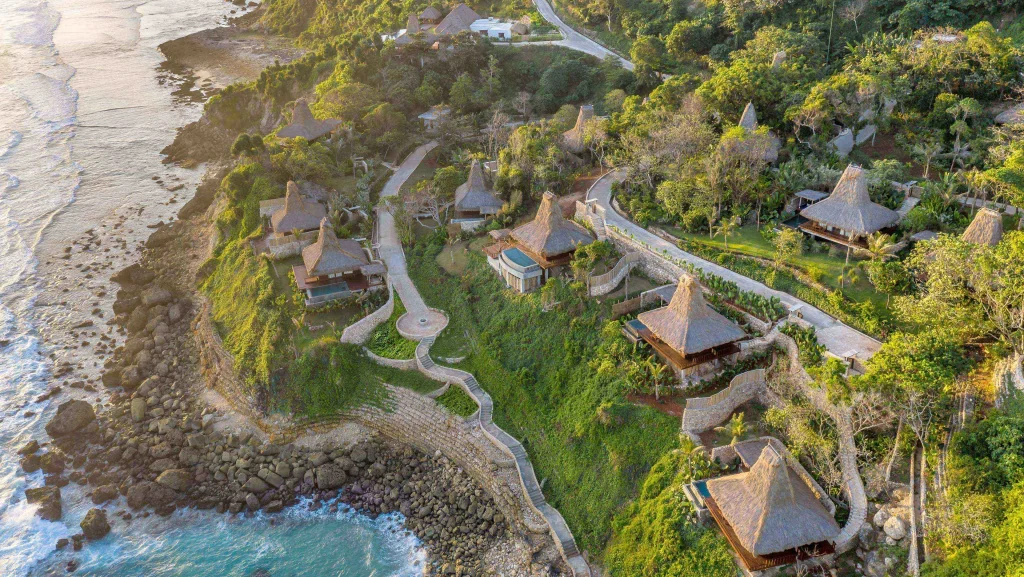
Nihi grew out of Nihiwatu, the surf lodge built beside one of Indonesia’s most protected left-hand waves, and the surf-camp soul survives under the luxury: guest numbers on the break are capped each day, Sandalwood ponies swim in the shallows at sunrise, and the bar still trades in salt-crusted stories. Guests here are buying a legend as much as a resort — and through the Sumba Foundation, that legend helps fund malaria clinics and clean-water projects across West Sumba. Active guests should ask about guided trail running routes in Sumba’s hill country behind the coast; the ridgelines above Wanokaka are some of the finest running terrain in eastern Indonesia, best covered with a local guide at dawn.
Lelewatu: pool-villa privacy above the Indian Ocean
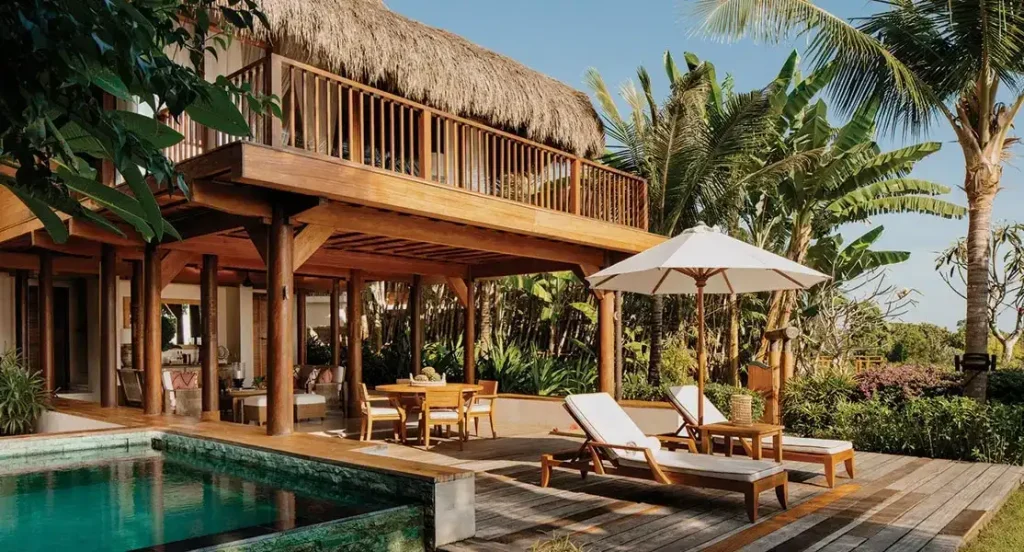
Lelewatu takes the same coastline and turns the volume down. This is an all-villa estate perched above the Wanokaka cliffs, where each villa has its own pool, carved Sumbanese detailing, and a long view of the Indian Ocean; dinner can be a private table over the water rather than a scene. It suits guests who like the idea of Nihi’s setting but want their days quieter and fully their own — and its position keeps Lapopu Waterfall, Praijing village, and the Wanokaka valley within easy day-trip range with your private guide.
Cap Karoso: Kodi’s design-led newcomer
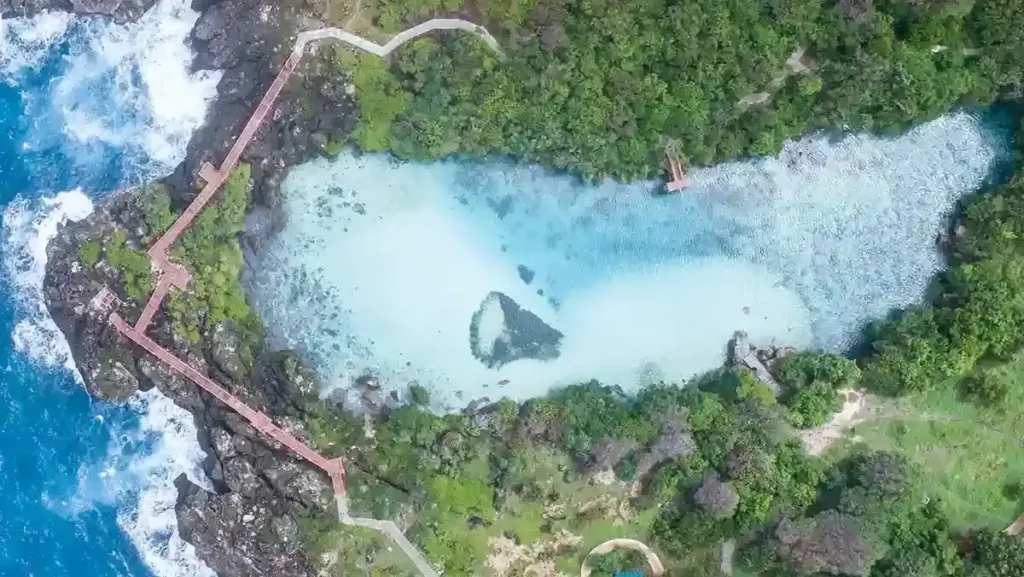
Cap Karoso Sumba opened in 2022 at the far southwestern tip of the island and changed the conversation quickly. The estate on Karoso Beach mixes rooms and pool villas with a working farm that supplies its kitchens, visiting-chef residencies, and a beach club that hums at sunset. The design reads contemporary European in dialogue with Sumbanese craft, and the location is the practical trump card: Weekuri Lagoon, Mandorak Beach, and the towering roofs of Ratenggaro village are all a short drive away, so your sightseeing hours go to the sights rather than the transfers.
How much do Sumba’s luxury resorts cost in 2027?
As of August 2026, Nihi Sumba’s published nightly rates typically start around USD 1,000+ per night and climb with season and villa category — festive weeks sit well beyond that. Lelewatu and Cap Karoso occupy the premium-boutique tier beneath it; their exact rates shift by date and room type, which is why we confirm live pricing for your travel window rather than printing numbers that age badly. For context, our private overland tours run from USD 390–700 per person for four full days — a complete circuit of villages, lagoons, and savanna can cost less than a single resort night. That gap has a side effect: investing in Sumba boutique hotels is now a live topic among our guests. Our honest note — land here is customary-owned and deals run on long leaseholds with local partners, so admire the model, and walk carefully before wiring money.
Where are they — and how do you actually get around?
All three resorts sit in the island’s west. You fly Bali (DPS) to Tambolaka (TMC) — daily flights, about 1h15m — then drive roughly one to two hours by private car to any of the three, depending on road conditions and photo stops. Beachfront hotels in West Sumba cluster along this southwest arc, from the trio above down to simple surf stays near Pero; beachfront hotels in East Sumba are a different species — modest guesthouses near Walakiri and the Puru Kambera savanna — which is exactly why most guests base west in comfort and tour east by day. Public transport will not help you here: bemo routes in West Sumba link the market towns of Tambolaka and Waikabubak, and bemo routes in East Sumba radiate from Waingapu, but none reach the resort coasts. A private car with an English-speaking local driver-guide runs from ~USD 60–90/day (August 2026 indicative) and is the standard we build every itinerary on.
Which resort works for seniors, families, or guests with limited mobility?
Honest answers, because the brochures rarely give them. Wheelchair access in Sumba hotels is limited: Nihi and Lelewatu occupy terraced clifftop sites with steps between levels, while Cap Karoso’s flatter beachfront layout is the most manageable of the three — yet no property on the island is fully step-free, so tell us your mobility needs and we will confirm specific rooms directly with the resort. Age-friendly Sumba tours for seniors are very doable: we pace drives along sealed roads, favour viewpoints reachable by car, and keep walks short and optional. Pet-friendly accommodation in Sumba effectively does not exist at this level, so plan for a sitter at home. And internet speed in Sumba hotels has improved markedly — the resorts run satellite links comfortable for video calls, though we would still save the big uploads for Bali.
Are they genuinely eco-friendly resorts?
Sustainability claims deserve scrutiny anywhere this remote. The substance: Nihi channels a share of its success into the Sumba Foundation’s clinics and water projects; Cap Karoso grows a real portion of its own produce and trains a largely Sumbanese team; Lelewatu staffs heavily from surrounding villages. Judged by water, waste, and wages — the measures that matter — these are among the more credible eco-friendly resorts in Sumba, though none is perfect. If a resort’s community programme will influence your choice, say so; our advisors know which claims hold up on the ground.
Should you book a resort, an overland tour, or both?
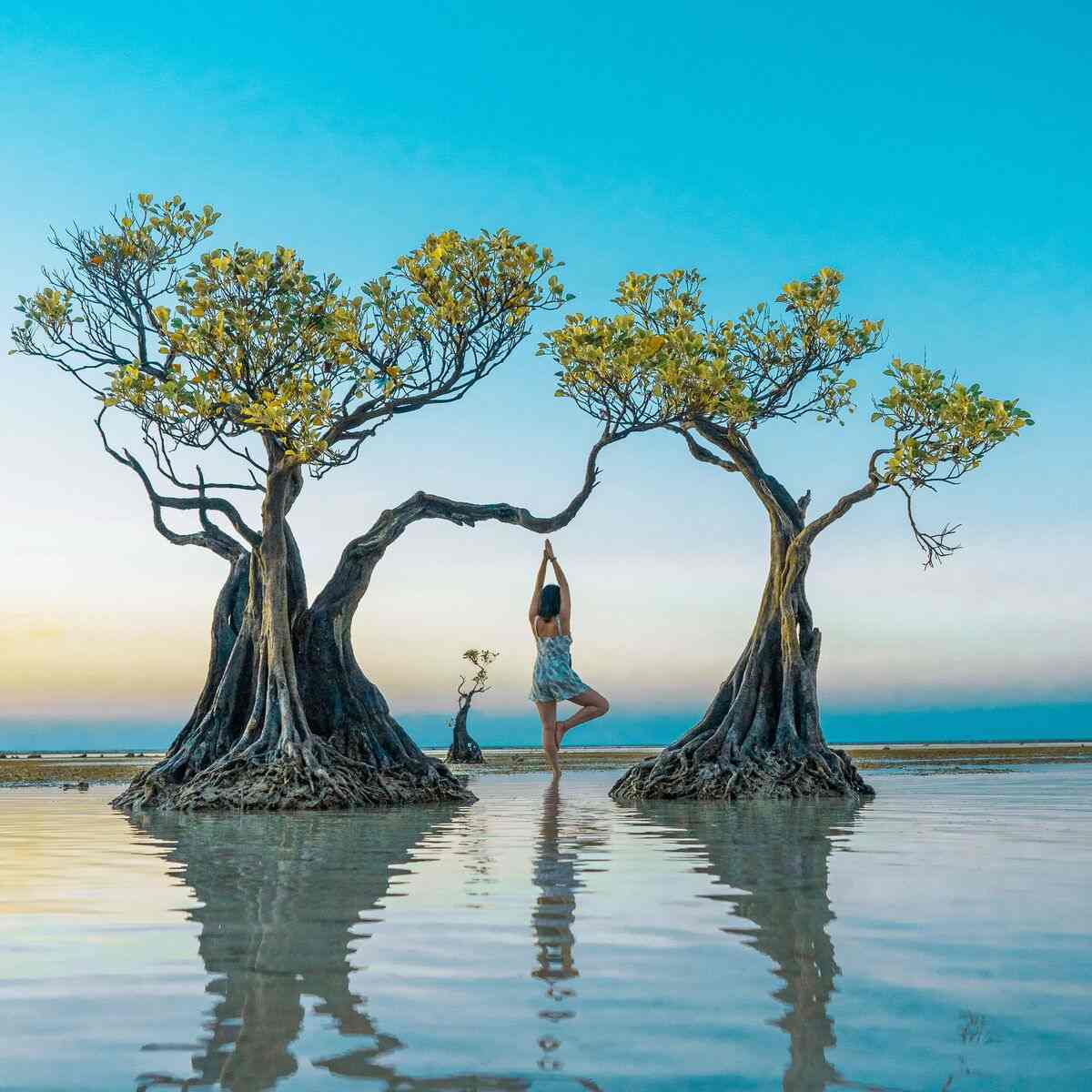
Both, in the right order — that is the advice we give most often. Sumba’s essential sights — Ratenggaro’s roofs, Weekuri’s tidal lagoon, the Wairinding hills, Walakiri’s dancing trees — spread across a five-hour-wide island, and resort day rates are an expensive way to chase them. Our guests typically tour first and rest second: a private 4-day Sumba itinerary (from USD 390–700 per person, August 2026) or the 6-day complete circuit (from USD 570–1,020) with a local driver-guide, finishing with two or three resort nights once the dust is earned. It mirrors the 4D3N Sumba tour by Indonesia Juara Trip, our operating network — same local guides, same vehicles, the same transparent pricing.
Undecided between the three — or between coasts? Speak to our Sumba travel advisor on WhatsApp at +62 811-994-1919 or email sales@indonesiajuara.asia, and we will match resort, season, and route to the way you actually travel. Sumba Island Tour is operated with Indonesia Juara Trip — high-end local Sumba expertise, part of Juara Holding Group — since 2015.
Keep reading
More from the journal.