Sumba Journal
Marapu Religion Explained: Sumba’s Living Faith
9 min read
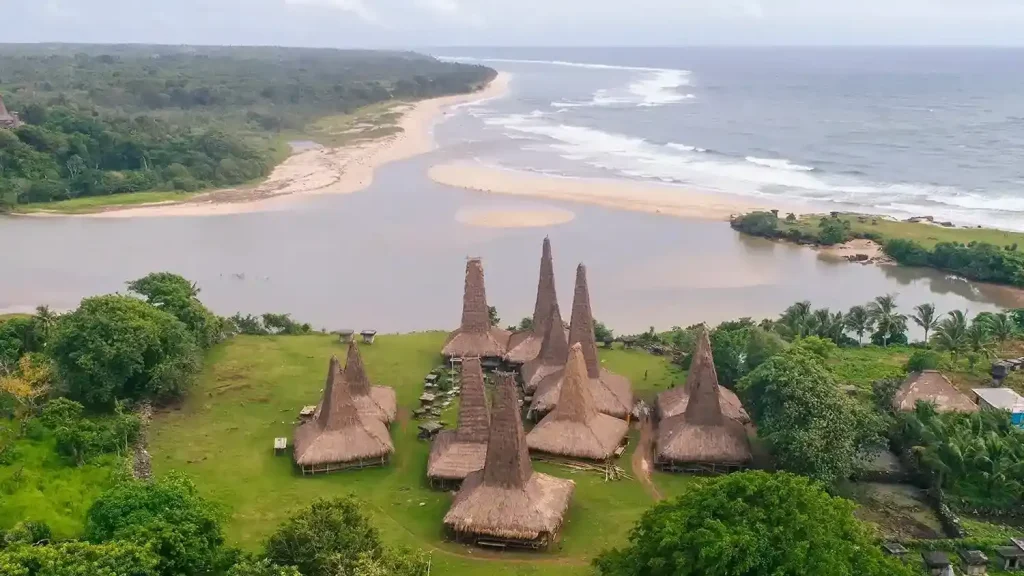
Marapu is the indigenous ancestral religion of Sumba — a belief system in which the living remain in daily relationship with their ancestors, who carry prayers to a creator considered too exalted to be addressed directly. It is not a relic. Marapu still decides how villages are laid out, why Sumbanese houses rise into steep peaked roofs, when Pasola riders take the field, and how a family buries its dead beneath carved megalithic tombs. Understand even a little of it, and a village visit changes from a photo stop into something closer to a formal introduction.
This guide follows the protocol our local driver-guides use every week in villages such as Ratenggaro, Wainyapu, and Prai Ijing: what Marapu actually is, what its followers believe, which ceremonies you may encounter in 2027, and how to behave as a guest in a place where the ancestors are considered present.
What is the Marapu religion?
The word marapu refers both to the deified ancestors themselves and to the religion built around honoring them. It predates the arrival of Christianity in Sumba by many centuries and has no written scripture; its prayers, genealogies, and ritual speech are memorized and passed down through generations of rato, the Marapu priests. Estimates vary, but roughly a quarter of Sumba’s population still follows Marapu openly, and many Christian families continue its ceremonies alongside church life. The faith is strongest in West and Southwest Sumba, which is why the island’s most intact traditional villages cluster there.
What do Marapu followers actually believe?
Marapu divides the universe into a visible world of the living and an unseen world where the ancestors dwell. Neither is complete without the other: the living owe the ancestors remembrance and offerings, and the ancestors in turn guard harvests, health, and harmony. Above both stands a creator so sacred that speaking to it directly is considered improper — which is why prayer travels upward through the marapu, the way a request in a royal court passes through trusted elders.
The rato leads this exchange. He recites ritual speech in paired poetic couplets, reads omens in the entrails of a sacrificed chicken or the liver of a pig, and determines when the spiritual calendar permits planting, building, marrying, or burying. Nothing important in a Marapu community happens on a date chosen for convenience; it happens when the ancestors agree.
How does Marapu shape a Sumbanese village?
Look at any traditional village and you are reading Marapu in architecture. The classic peaked house, the uma mbatangu, is built in three levels: livestock below, the family in the middle, and a tall roof loft above reserved for sacred heirlooms and the marapu themselves. In Ratenggaro, those roof towers reach around fifteen meters — the tallest in Sumba — precisely because roof height honors the ancestors dwelling in it.
The village plan repeats the same logic. Houses face a central courtyard ringed by megalithic stone tombs, so the dead rest in the middle of daily life rather than at its edge. You will see this arrangement in Prai Ijing near Waikabubak, in the royal tomb complexes of Anakalang in Central Sumba, and at Rende in the east, where carved slab tombs of the former ruling families still anchor the village square.
Which ceremonies are rooted in Marapu?
Pasola
Sumba’s famous mounted spear ritual is, at its heart, a Marapu rite: a mock battle that returns blood to the earth to secure the harvest, held after the arrival of the nyale sea worms on the coast. Dates are never fixed in advance — each arena is confirmed by the lunar calendar and the rato’s reading of the nyale, usually around February to March in Lamboya, Kodi, Wanokaka, and Gaura. We track local announcements every season for guests planning a Pasola festival tour.
Wulla Poddu
The “bitter months” observed in parts of West Sumba, typically around October to November, are a closed ritual season of restraint and purification centered on villages such as Tarung. Some rites are off-limits to outsiders; your private guide will know what may be respectfully observed in a given year.
Tarik batu — stone pulling
When a family commissions a megalithic tomb, the capstone may be dragged from the quarry by hundreds of people over days, accompanied by chants and feasting. These stone-pulling ceremonies still happen, most often in West and Central Sumba, and witnessing one is a matter of timing and local relationships rather than booking.
Funerals and feasts
Marapu funerals can involve the sacrifice of buffalo, pigs, and horses, sometimes years after death once the family has gathered resources. If your visit coincides with one, entry is by invitation — which a trusted local guide can sometimes arrange, and will never force.
Is Marapu officially recognized in Indonesia?
Yes, in a meaningful sense since 2017, when Indonesia’s Constitutional Court ruled that followers of indigenous belief systems may have their faith acknowledged on the national identity card rather than leaving the religion column blank or borrowing an official religion’s name. For Marapu communities this was a quiet turning point: the faith of their grandparents could finally be stated in writing. In practice, most Sumbanese today identify as Christian while keeping Marapu obligations — the two coexist in the same households, and guests should treat both with equal seriousness.
How should guests behave in a Marapu village?
Sumbanese hospitality is generous, but it follows protocol. Our guides brief every guest before the first village, and these are the essentials:
- Enter with a local guide who is known to the village, and greet the head family first — arriving unannounced and wandering between houses reads as intrusion.
- Respect the sirih pinang (betel nut) custom. Offering a small bundle, or graciously receiving what you are offered, is the traditional handshake of Sumba; your guide will carry some for you.
- Ask before photographing people, and especially before photographing a rato, ritual objects, or the interior of a house. A smile and a raised camera with a questioning look works in any language.
- Never climb, sit, or place bags on the stone tombs. They are graves, not benches or tripod platforms.
- Do not ask to see or handle heirlooms, and do not attempt to enter the roof loft of a house — that level belongs to the marapu.
- Dress modestly, keep voices low during any ceremony, and follow your guide’s lead on where to stand.
- Sign the guest book and leave the customary donation; it maintains the village and is expected of every visitor, local or foreign.
Where can you experience Marapu culture respectfully?
The deepest concentration of living Marapu tradition sits in the island’s west. A West Sumba tour pairs Prai Ijing and the Wanokaka Pasola arenas with waterfalls and coastline, while a Southwest Sumba tour reaches Ratenggaro, Wainyapu, and the Kodi coast at Pero — the region with the tallest roofs and some of the strictest adherence. For a cross-island route built around villages, weaving, and royal tombs from Ratenggaro to Rende, see our Sumba traditional villages tour.
Costs stay transparent, as always: a private car with a local English-speaking driver-guide runs from around USD 60–90 per day, and a complete 4D3N overland package from USD 390–700 per person, as of August 2026 and subject to season and group size.
Frequently asked questions
Is it disrespectful to visit Marapu villages as a tourist?
No — villages such as Ratenggaro and Prai Ijing welcome guests, and visitor donations help maintain the houses. What matters is how you arrive: with a known local guide, observing betel-nut etiquette, asking before photos, and staying off the tombs.
Can travelers watch Marapu ceremonies?
Often, yes. Pasola arenas are public once dates are confirmed by the lunar calendar around February–March, and stone-pulling or funeral feasts may be open by invitation through local connections. Some Wulla Poddu rites remain closed to outsiders, and a good guide will tell you honestly which is which.
Is Marapu still practiced today?
Yes. Roughly a quarter of Sumbanese follow Marapu openly, many more practice it alongside Christianity, and since a 2017 Constitutional Court ruling the faith can be acknowledged on Indonesian identity cards.
Plan a culture-first Sumba journey
Speak to our Sumba travel advisor about building Marapu heritage into your route — most guests weave the western villages into a full-island itinerary such as the Sumba 4D3N overland tour. WhatsApp +62 811-994-1919 or email sales@indonesiajuara.asia, and we will match the season, the ceremonies, and your pace.
Sumba Island Tour is operated with Indonesia Juara Trip — high-end local Sumba expertise, part of Juara Holding Group — since 2015. We show you the real Sumba.
Keep reading
More from the journal.